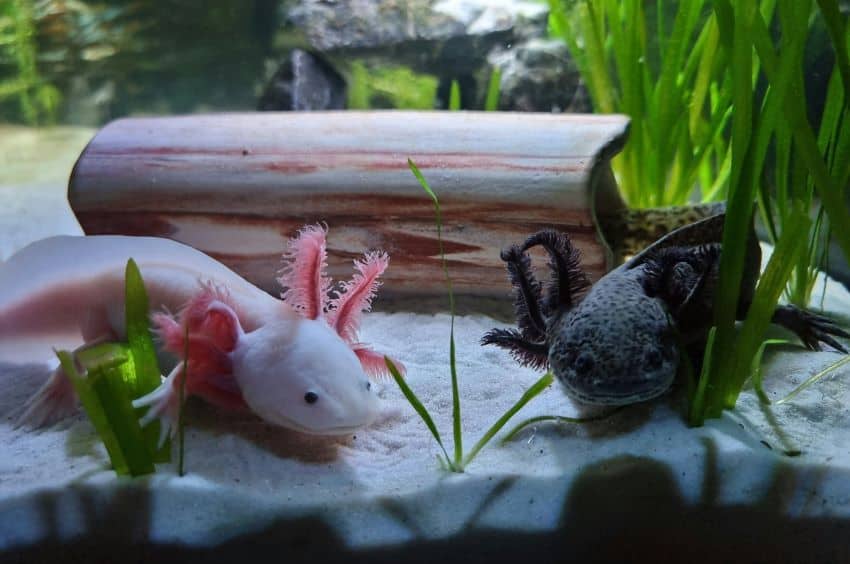
Axolotls, the oh-so-cute but critically endangered salamanders endemic to the canals of southern Mexico City, can successfully adapt to wild habitats after being bred in captivity, according to a new study.
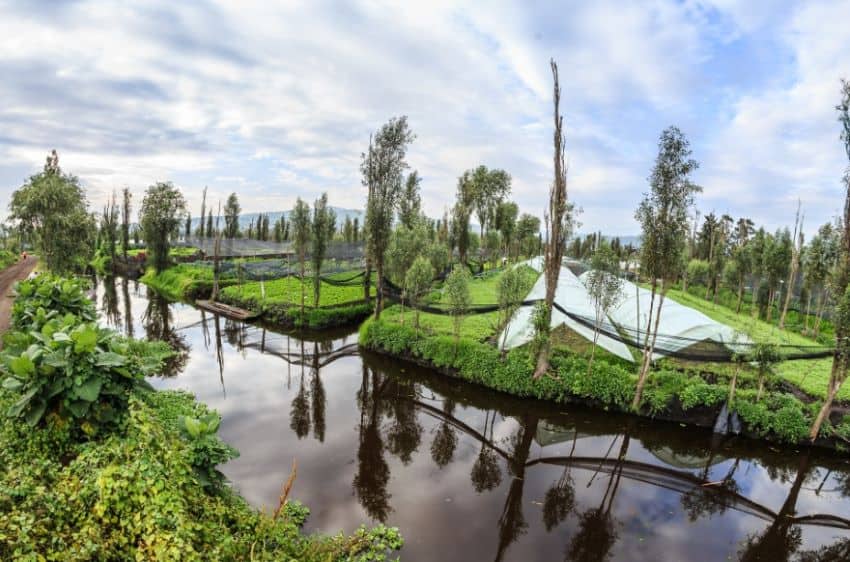
The findings, published last week in the scientific journal PLOS One, offer a lifeline for the species, whose wild population — now limited to the precarious and deteriorating canals and wetlands of Lake Xochimilco — has plummeted due to pollution, invasive species and habitat loss.
As noted by the study’s lead author, Alejandra Ramos, in an interview on NPR’s “All Things Considered” this week, researchers from the National Autonomous University of Mexico (UNAM) and Conservation International released nine male and nine female axolotls into the wild.
Two sites in southern Mexico City were chosen: restored wetlands in Lake Xochimilco, the species’ last natural stronghold, and La Cantera Oriente, a semi-natural/artificial wetlands in the Ecological Reserve of San Ángel.
Harnessed with tiny, high-frequency trackers, the amphibians — whose image has been on the back of 50-peso bills since late 2021, having replaced the Morelia aqueduct and monarch butterflies — were monitored for 40 days, with all individuals surviving the duration and three recaptured specimens showing weight gain, indicating successful foraging.
The axolotls displayed distinct movement patterns, with those in Xochimilco covering larger territories (2,747 square meters) compared to La Cantera (382 square meters).
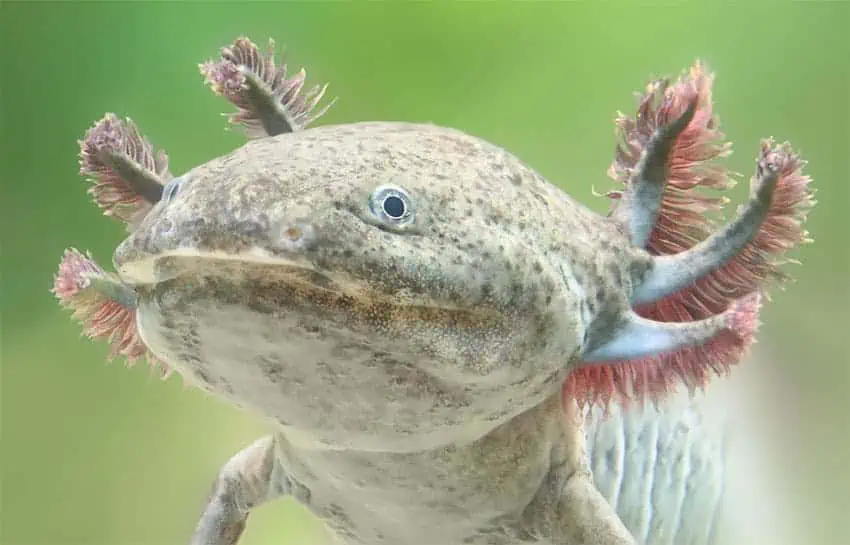
Overall, females traveled farther on a daily basis — 86.75 meters versus males’ 54.33 meters — while older axolotls moved shorter distances, possibly due to territory selection.
“If they had been skinny or ill, that would have been really bad for us,” said Ramos, a biologist at the Autonomous University of Baja California, underscoring the health of recaptured individuals.
Despite these successes, predatory birds emerged as a critical challenge. Great egrets were observed preying on two axolotls in Xochimilco, prompting calls for pre-release predator awareness training to improve survival rates.
“High mortality due to predation is a major cause of failure in reintroduction programs,” the study noted, emphasizing the need for adaptive strategies.
The study also highlighted the potential of human-made wetlands like La Cantera as complementary habitats.
“It’s kind of like having a Plan B,” said Esther Quintero of Conservation International Mexico.
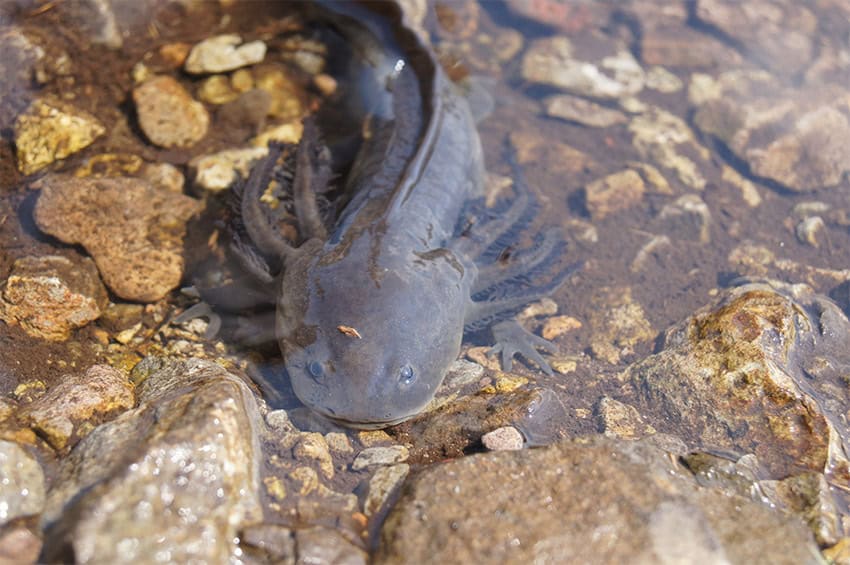
However, scientists stress that revitalizing Xochimilco remains paramount.
“We have to preserve Xochimilco in order to have axolotl,” said UNAM biologist Luis Zambrano, comparing the effort to safeguarding the Arctic for polar bears.
Axolotls, revered in Aztec mythology and valued for their regenerative abilities as well as their cuteness, have seen wild populations drop by over 80% since 2006 due to sewage contamination and agricultural runoff.
Restoration of Xochimilco’s chinampas — human-made Aztec agricultural islands that created networks of canals — has become a focal point, with the study’s authors advocating for expanded habitat rehabilitation.
The findings coincide with broader initiatives to protect the species — such as the 2-year-old “Adopt an Axolotl” campaign and a newly announced partnership involving Axolotitlán: the National Axolotl Museum and RappiCard.
Together, the museum (in southern Mexico City’s Tarango Ecological Park) and RappiCard (a product originally offered by the food-delivery app Rappi and now owned by Banorte) have launched a documentary, “Axolotitlán: Encuentros de resiliencia y regeneración” (“Land of the Axolotl: Encounters of Resilience and Regeneration”) and a new debit card to fund conservation.
The 15-minute doc can be seen on RappiCardMX’s YouTube channel; it’s in Spanish, but auto-generated English subtitles can be selected in the settings.
“If we can restore this habitat in a city of 20 million people,” Zambrano said, “we have hope for humanity.”
With reports from Uno TV, Mongabay, Smithsonian Magazine, Chilango and Animal Político