Police used tear gas Saturday in Chiapas against members of the one caravan in Mexico whose destination is not the United States.
The caravan — made up of as many as 500 displaced indigenous people — had been marching from San Cristóbal de las Casas to the capital, Tuxtla Gutiérrez, arriving in time for the annual report to the state Congress by Governor Manuel Velasco Coello.
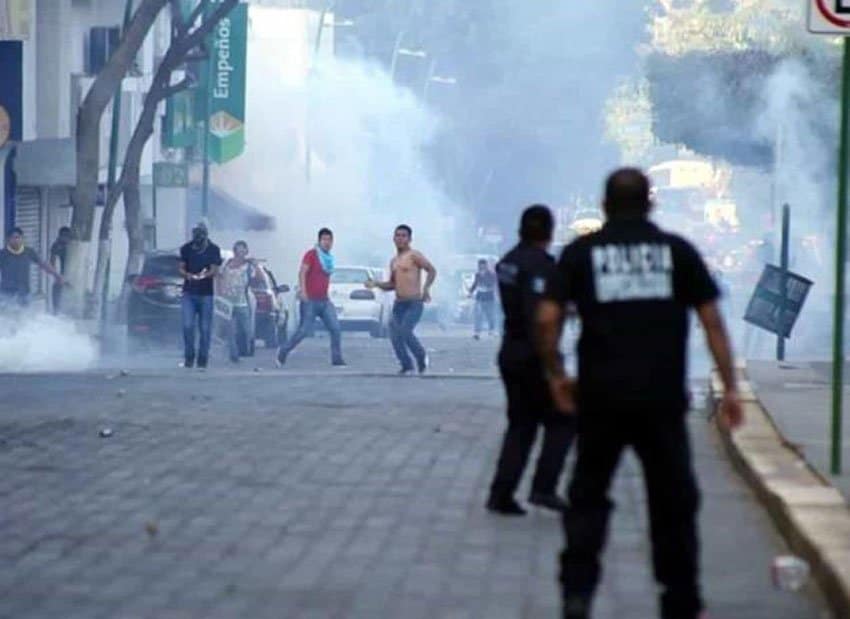
Police responded with tear gas when the marchers attempted to enter the building, which triggered a counterattack in which the latter threw rockets, stones and other projectiles at police.
The protesters also set fire to a truck and took down a section of the security fence set up around the Chiapas Congress.
Later, the Tzotzil people requested the intervention of the human rights commissions, alleging repression.
They weren’t the only ones with a beef against the government. Also on hand were health workers, teachers and teaching students who were demanding salaries and bonuses — and scholarships in the case of the students — that allegedly had not been paid.
Police disbanded the protest but several injuries were reported in the process.

Meanwhile, Governor Velasco gave his sixth and final report on the state of affairs in Chiapas while the protests continued outside.
He said he was leaving the state in healthy financial condition, with gains in tourism and security.
“Chiapas is no longer one of the 10 most indebted states in the country” and is also one of the safest, Velasco claimed.
However, it has not been especially safe for the marchers who arrived the same day from San Cristóbal. They were displaced from their homes in Chenalhó, Ocosingo and Zinacantán by attacks by armed civilians, and have been afraid to return.
Source: Milenio (sp), El Universal (sp)