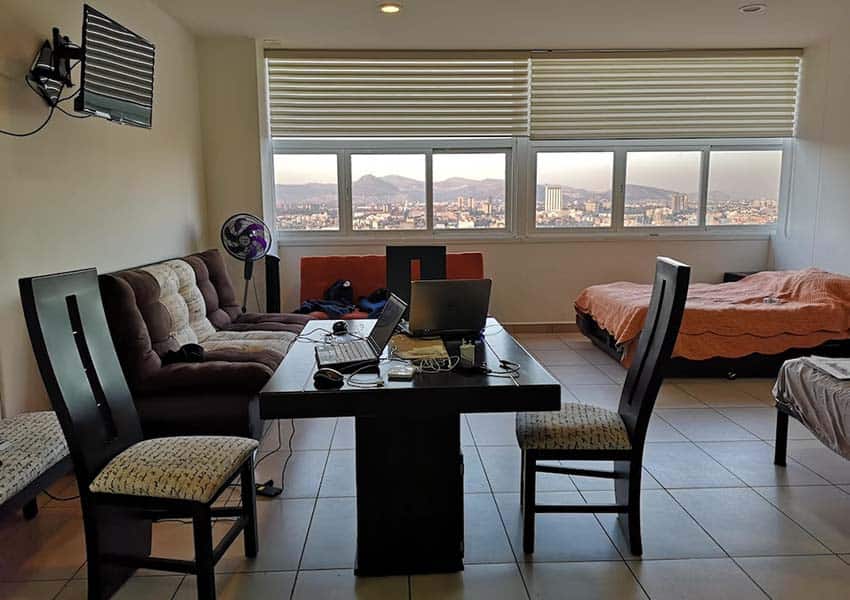
The Mexico City government has entered into a partnership with the accommodation booking platform Airbnb and the United Nations Educational, Scientific and Cultural Organization (UNESCO) to promote the capital to digital nomads.
Airbnb said in a statement that the partnership will also “showcase cultural and creative stays and experiences on Airbnb that enhance Mexico City’s reputation as the capital of creative tourism.”
The company has created a dedicated website for remote workers interested in living and working in Mexico City, which is already a popular destination for digital nomads, especially United States citizens.
Airbnb said that its partnership with the Mexico City government and UNESCO will support the capital’s “ambition to become a global hub for remote workers and the capital of creative tourism.”
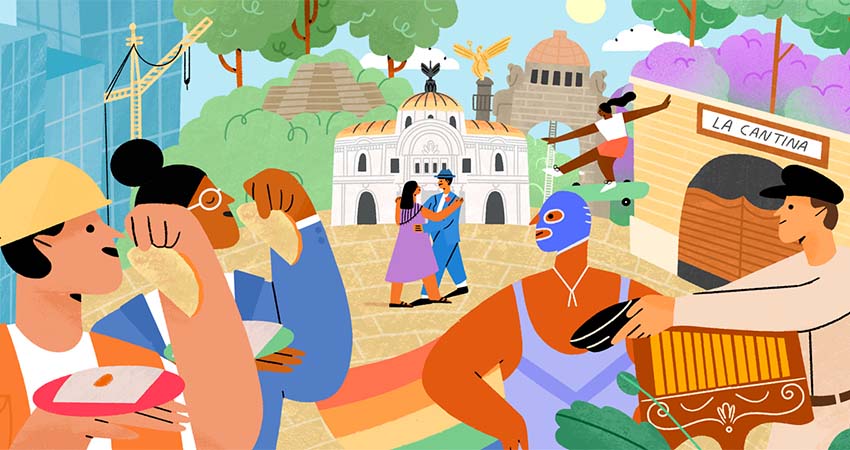
“Guests come to Airbnb to look for unique and special experiences hosts provide, and these partnerships will help ensure there is an abundance of uniquely Mexican experiences on offer,” it added.
The company also said that “Mexican entrepreneurs will participate in UNESCO-led trainings to develop authentic cultural experiences that represent Mexico City’s unique, cultural and creative traditions.”
At an event in the capital, Airbnb cofounder Nathan Blecharczyk said that his company was proud to partner with the city government and UNESCO to “cultivate the next generation of cultural entrepreneurs…”

“With the rise of remote working around the world, destinations must consider how to ensure that the benefits of remote work are felt by the wider community. The best approach is one that not only attracts remote workers but also integrates them into communities so that all residents can benefit from this rising trend,” he said.
Some Mexicans have expressed concerns about the influx of digital nomads to certain parts of the capital during the pandemic, asserting that their presence has pushed up rents and driven locals out of desirable neighborhoods such as Roma and Condesa.
But Mexico City Mayor Claudia Sheinbaum said that the alliance with Airbnb won’t result in higher rents. She did say, however, that her government is reviewing the impact remote workers have had on rents in Roma, Condesa and other central neighborhoods popular with digital nomads.
“We asked the planning institute to do a review. We have no [knowledge] that … [higher rents] are associated with Airbnb,” Sheinbaum said.
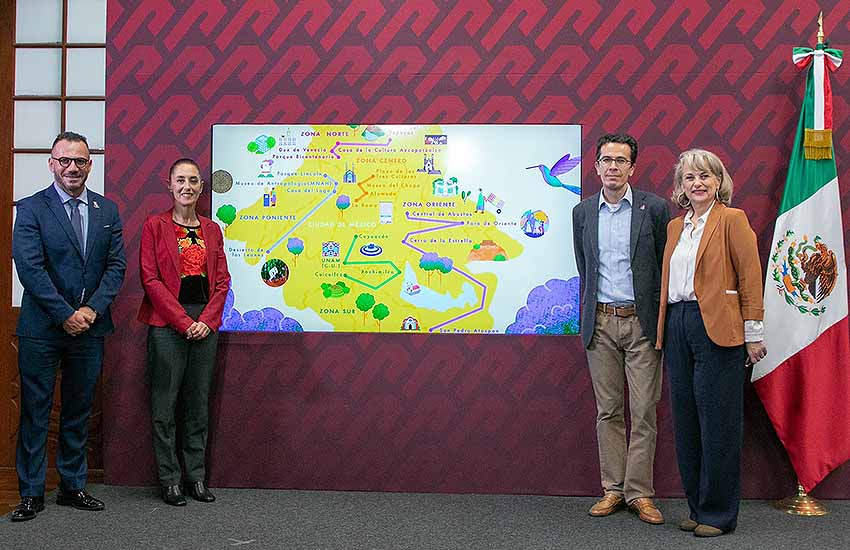
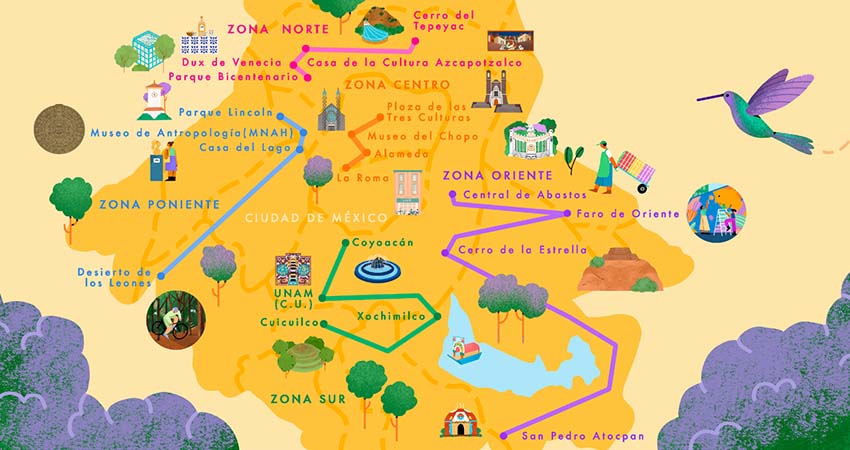
Ángel Terral, Airbnb’s Mexico director, said that parts of the capital beyond the “traditional tourism corridor” will be promoted via the alliance with the city government and UNESCO. Places such as the Central de Abastos – the capital’s massive wholesale market in the sprawling Itzapalapa borough – and the Desierto de los Leones National Park on the city’s southwestern outskirts are featured in a PDF guide that can be downloaded from Airbnb’s new Mexico City website.
Mexico City Tourism Minister Nathalie Desplas said that the partnership will help the capital tap further into a lucrative market.
There are approximately 30 million digital nomads around the world, 15.5 million of whom are U.S. citizens, she said. If just 5% of the latter number spend time in Mexico City each year, they will inject some US $1.4 billion into the local economy, Desplas said.
“If they come with their partner or family, we found that [revenue] could be $3.7 billion a year; that’s the impact … digital nomads [can have],” the tourism minister said.
She added that Mexico City meets all the needs of such visitors as it is safe, has an air and land transport hub and good internet connections. Desplas also noted that the capital’s coworking and co-living spaces make it an attractive destination.
“The majority of the [digital] nomads are young, and they want spaces where they can work,” she said.
With reports from Animal Político and Expansión