An attempt by the Federal Electricity Commission (CFE) and the government of Tabasco to get more than half a million electricity customers to start paying their bills by canceling their longstanding debt fell well short of its goal: only one-third of the targeted customers signed up for the debt forgiveness program.
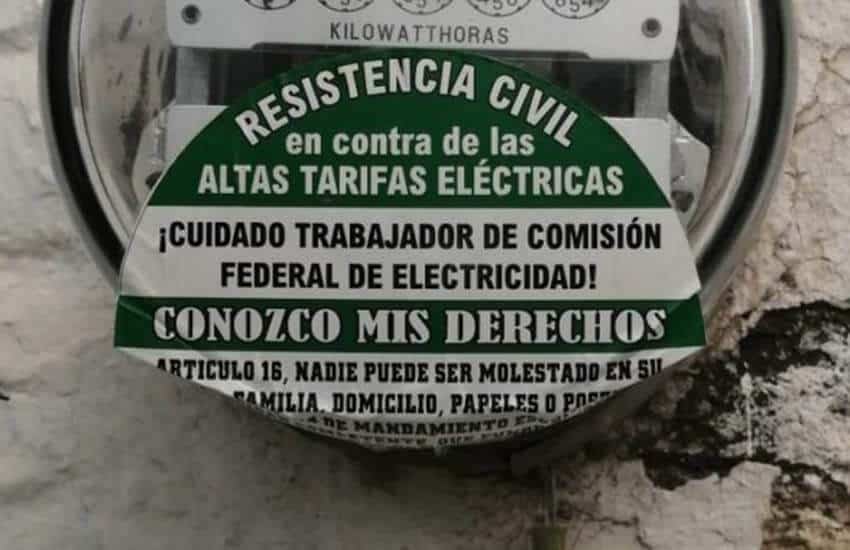
Former Tabasco governor Adán Augusto López Hernández (now the federal minister of the interior) announced in May 2019 that his government had reached an agreement with the CFE for a “clean slate” to apply for customers in the Gulf coast state who joined a civil resistance movement against the public utility that began more than two decades ago.
But only 183,164 of 569,903 civil resistance debtors – 32.1% of the total – signed up to the Adiós a tu Deuda (Goodbye to your Debt) program, according to the Federal Auditor’s Office (ASF).
The majority of the almost 570,000 customers, who had a combined historic debt of almost 10.3 billion pesos (US $496.6 million), declined the offer to join the program despite being given the opportunity to have their individual debt canceled and to start paying bills at the CFE’s lowest rate.
The Tabasco government committed to paying the debt of CFE debtors who didn’t join the debt forgiveness program, but the ASF said in an audit report that it failed to do so.
The state government would have had to pay the CFE almost 7.2 billion pesos to meet its commitment, but it argued it wasn’t in a position to make the transfer in 2020 because it had to respond to the coronavirus pandemic and severe floods that affected several parts of Tabasco.
The government and the CFE reached an agreement in February that changed the commitment of the former. Instead of being required to pay the combined historic debt of more than 386,000 customers who didn’t join the Adiós a tu Deuda program, the Tabasco government would pay the debt they incurred during the period in which registration in the program was open – June 1, 2019 to January 31, 2021.

That lowered the state government’s obligation from almost 7.2 billion pesos to just over 2 billion pesos, the ASF said without mentioning whether the money had been paid.
Some CFE customers who did join the debt forgiveness program failed to meet their commitment to pay their bills. The ASF said that the pandemic and associated economic downturn had affected customers’ capacity to pay.
With reports from Reforma