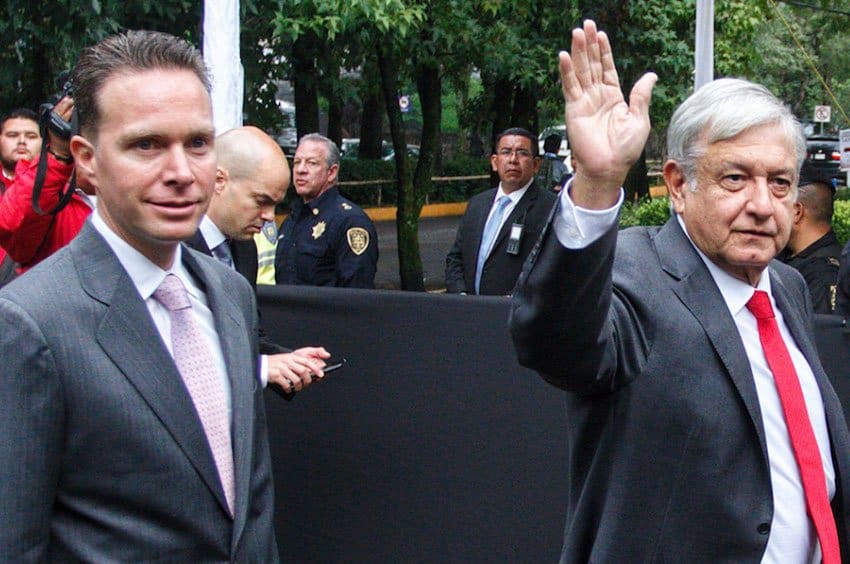
The former governor of Chiapas and his attorney general will have state-paid personal security for the next 15 years in accordance with a law approved during the previous government’s last year in office.
Manuel Velasco, who governed the southern state for the Ecological Green Party (PVEM) between 2012 and last Friday, and Raciel López Salazar, who served during the past two governments, will be the beneficiaries of the law that was promulgated in July 2017.
Decree 223 says they will be entitled to a personal security detail “for services rendered to the state” and stipulates that the state Secretariat of Finance must allocate funds for the purpose.
The president of the Supreme Court of Chiapas, who remains in active service, and the former state security secretary, who is now the attorney general, will also be afforded bodyguards after they leave public office for the same length of time they served in their final public role.
The newspaper El Universal sought comment from Velasco, who served as a federal lawmaker before becoming governor, about the law and the size of the security detail he will have but didn’t receive a response.
President López Obrador said at his daily press conference this morning that “if it’s true” that Velasco will have personal protection “it’s an excess that shouldn’t be allowed.”
He added: “My personal opinion is that there shouldn’t be privileges, that special treatment for officials should end.”

López Obrador, who took office on December 1, has disbanded the Estado Presidencial Mayor, which for more than 90 years was the institution charged with protecting the president of Mexico.
The president has claimed that “the people will protect me” and travels only with a small, unarmed security detail made up of just three women and two men with no police training.
Source: El Universal (sp), Forbes México (sp)