Chiapas, one of Mexico’s most economically neglected states, has approved a new state coat of arms that replaces the historical design of colonial origin.
The new shield better represents the Indigenous identity, natural diversity and history of Chiapas, according to a statement from the State Congress. The new design will come into official use on January 1, 2026.
Como resultado de un proceso de consulta, se aprobó un nuevo escudo que representa el pasado, el presente y el futuro de nuestra identidad.
Un símbolo que honra nuestros orígenes y proyecta un #Chiapas orgulloso de su historia y su riqueza cultural.#69LegislaturaChiapas pic.twitter.com/9iHXtbUI5W
— Honorable Congreso del Estado de Chiapas (@congresoChis) December 30, 2025
“Its main objective is to visually represent the region’s identity in the state shield, merging its natural, historical and cultural heritage with a focus on reconciliation and preservation of the mestizo history and sustainability,” the Congress said.

Lawmakers noted that the new elements in the Chiapas coat of arms “reclaim, from a humanist perspective, the people, to give them a voice and strengthen their identity.”
These changes are officially reflected in the Law of the Coat of Arms and Anthem of the State, which was amended following discussions with various social sectors and Indigenous communities. The goal of the reform is to ensure that the shield truly represents the current identity of Chiapas and reflects the future that the state aims to build.
What has actually changed?
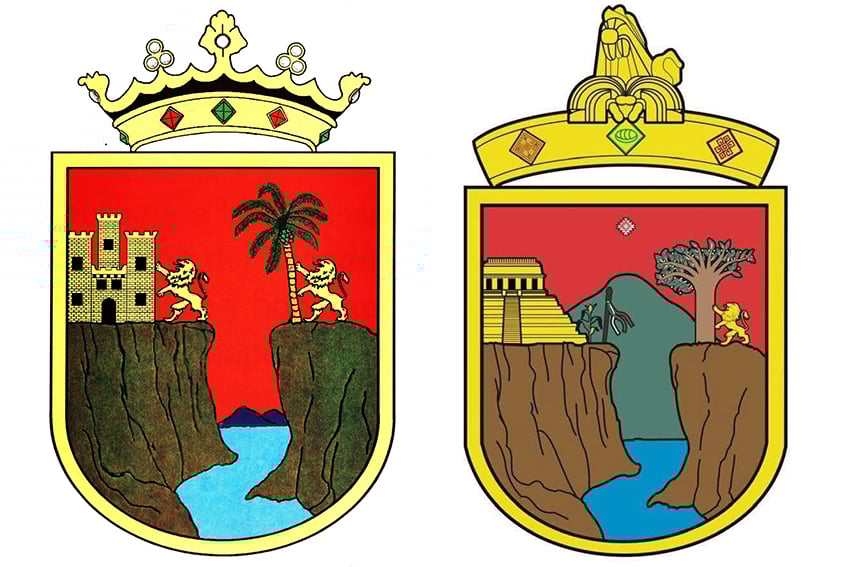
The old coat of arms of Chiapas was a colonial-era shield with a red background, two mountain ranges, a river in the center, a golden castle, two lions, and a crown at the top. It represented both the geography of the Sumidero Canyon and the power of the Spanish Crown, as well as the fusion of Indigenous and Spanish cultures.
The new coat of arms replaces the castle with a pyramid, which is the Temple of the Inscriptions of Palenque that symbolizes the archaeological legacy. It also replaces a palm tree with a ceiba tree, which in local mythology is a sacred tree that unites heaven, earth, and the underworld and symbolizes life, spirituality and biodiversity.
The new coat of arms also includes a Maya headdress inspired by King Pakal, which features a Maya zero symbol, a butterfly embroidery and a textile embroidery that represents the ancestral worldview. The Tacaná Volcano and Sumidero Canyon highlight the strength of nature in the territory, its natural wealth, and the historical memory of Indigenous resistance, while a corn plant alludes to the food, economic, and identity foundation of the peoples of Chiapas.
With reports from La Jornada