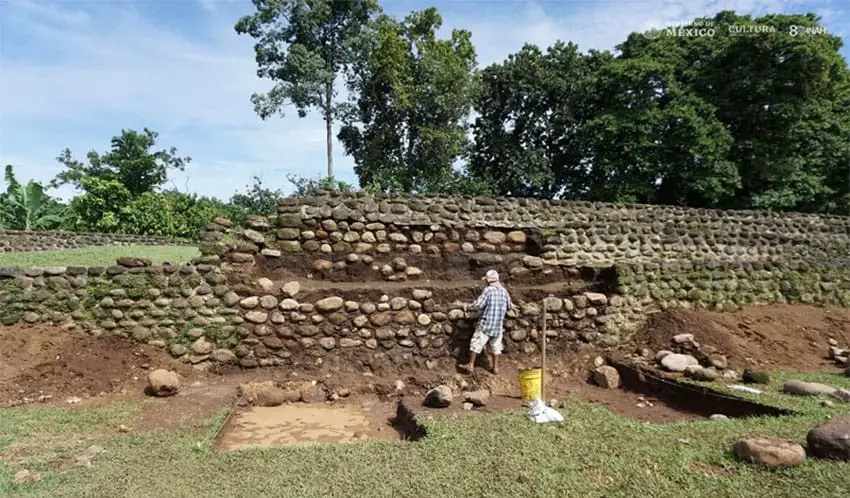
Archaeologists with the National Institute of Anthropology and History (INAH) are carrying out a project to study and restore Izapa, a pre-Hispanic city in Chiapas built with clay.
Located on the Izapa River near Tapachula and the Tacaná Volcano, which straddles the Mexico-Guatemala border, the Mayan city features more than 30 stone monuments engraved with mythical scenes associated with the exercise of power by ancient rulers. The carvings haven’t been studied for more than 50 years.
Led by the archaeologist Alejandro Uriarte Torres, the Izapa Research and Conservation Project (PICI) is restoring the splendor of the monuments and the site in general, INAH said in a statement.
Uriarte said that the work is being carried out to repair damage to the site’s structures caused by their proximity to Tacaná, an active volcano that last erupted in 1986.
He explained that when the PICI team first examined Izapa in 2015, they found that parts of the clay structures were displaced, crumbling or cracked due to seismic activity linked to rumblings and eruptions at the volcano.
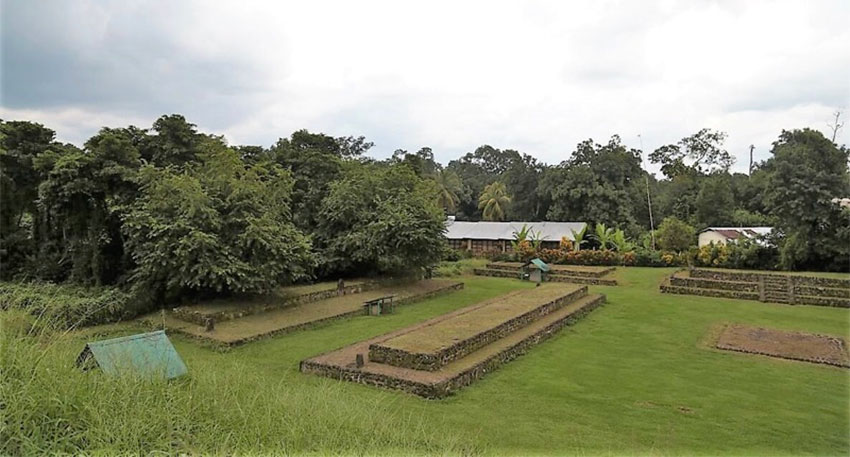
While carrying out the restoration work, archaeologists were able to identify the construction systems and materials used at Izapa, Uriarte said, adding that a study will be carried out to determine where the materials came from.
All of the structures are made out of clay, the archaeologist said, explaining that after they were built, their exterior walls were covered with river stones measuring 50-60 centimeters in diameter. All of the restoration work has been carried out with respect for the original construction techniques, Uriarte said.

“We learned to value the earthen architecture in Mesoamerica, which is much more common that we think. … There are a great quantity of sites like Izapa, where only the walls are made with stone … The whole interior is clay,” he said.
“This is something that we have to study more deeply because we generally have the idea that all the Mesoamerican buildings are stone.”
The archaeologist explained that the stone monuments, or steles, are being cleaned of lichen and other types of fungi that thrive in the year-round humid climate at Izapa, one of the most important archaeological sites in the Soconusco region of Chiapas.
After cleaning, archaeologists are photographing the monuments with the aim of establishing a visual registry of their iconography before further deterioration occurs.
Some steles were removed from the site before the current project began and are on display at the National Museum of Anthropology in Mexico City and the Soconusco Museum in Tapachula.
INAH said that the microorganisms growing on the steles are also being studied to determine how they can be removed in the future without harming them. Alejandro Medina, an INAH biologist, is leading the work.
Izapa reached its peak between 850 B.C. and 100 B.C. but was abandoned completely sometime around 1200, a year which corresponds to the early post-classic period of pre-Hispanic Mesoamerica.
Mexico News Daily