Coca-Cola stopped selling several of its products in elementary schools across Mexico as of Thursday, the Mexican Coca-Cola Industry (IMCC) announced in a statement last week.
The IMCC “firmly supports this strategy, sharing the goal of contributing to the health care of Mexican girls and boys” reads the statement.
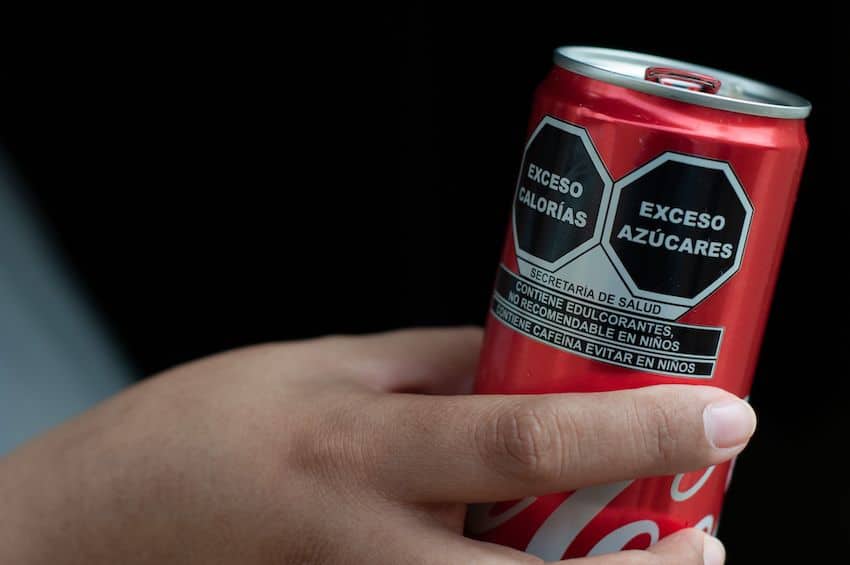
“The IMCC reinforces its commitment not to sell any product in its portfolio that has warning labels or warnings on its front label in elementary schools in Mexico,” it adds.
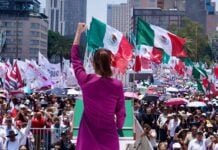
The IMCC recently joined Mexico’s “Live Healthy, Live Happy” program, a strategy launched by President Claudia Sheinbaum on Feb. 25.
The national strategy aims to ban the sale of ultra-processed and high-calorie food and drink in public and private schools, instead offering healthy alternatives with training being provided to school officials on the menus. It will also promote access to drinking water, raise awareness among parents and pressure the food industry to develop more nutritious products.
According to the National Health Survey, around 98% of Mexico’s schools sell junk food, while 95% sell sugary drinks.
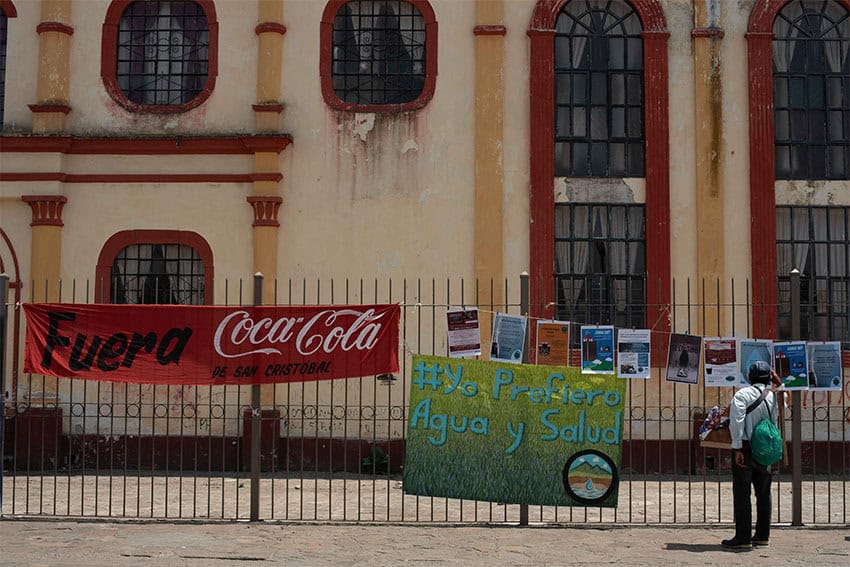
Meanwhile, obesity affects around 40% of children and adolescents in Mexico. The program aims to improve the health of 11 million elementary students and reduce public spending on the cost of diseases related to overweight.

Studies suggest that Mexico is the highest consumer of Coca-Cola globally, with an annual consumption rate often estimated at 160 liters per capita.
The policy to ban junk food in schools was published in the Official Gazette of the Federation (DOF) on September 30, 2024.
The DOF published the following standards for food and drink in schools:
- Foods must be of natural origin or minimally processed
- Seasonal fruits and vegetables must be offered
- For foods of animal origin, only poultry, such as chicken and turkey, is allowed and must be prepared without fat and skin
- These foods should be cooked using minimal sugar and oil
- Access to drinking water must be guaranteed, free of charge
- Caffeinated drinks are prohibited
In October, Education Minister Mario Delgado told reporters at a press conference “We are one of the countries with the world’s highest levels of childhood obesity and we can’t continue like this anymore.”
The new rules on unhealthy food and drink will come into effect on March 29. Schools that do not comply with the ban could be fined between 545 and 5,450 pesos (US $27 and $273).
The sale of drinks with warning labels will also be prohibited in stores and by street vendors in areas surrounding schools.
A government-sponsored health campaign commenced in schools across the country on March 12. The scheme will provide health checks for 35,000 students from 2,094 elementary schools, including measuring students’ height and weight, eye and oral health checks, and the creation of digital records.
With reports from El Sol de México, Revista Zócalo and El Cronista