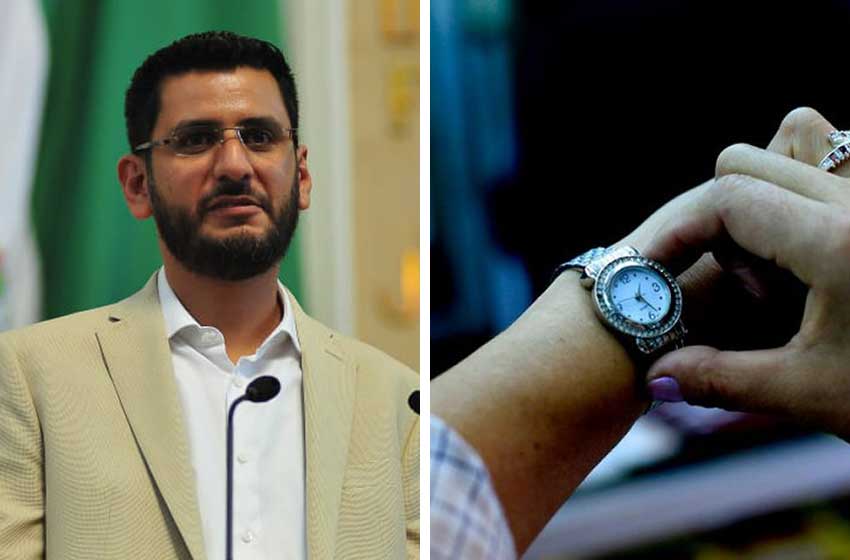
A citizens’ committee of the Mexico City Congress will analyze a proposal to eliminate daylight saving time in the capital.
If approved, Mexico City authorities will ask the federal government to exclude the capital from putting clocks forward an hour on April 7.
The proposal is backed by the Morena party, which is in power both in Mexico City and nationally.
Carlos Castillo Pérez, a Morena lawmaker who represents the borough of Coyoacán, said in Congress yesterday that changing the time twice a year has “harmful consequences” on people’s health, claiming that the elderly and children are particularly vulnerable.
He also said that adopting daylight saving time doesn’t bring any economic benefits or help save energy.
To support his claim about the effects on health, Castillo cited a 2018 survey carried out by the European Commission which found that changing the clocks can cause stress and fatigue and affect people’s ability to concentrate.
“The survey is an indicator that the change of time disrupts people’s natural biological rhythm and becomes a factor for stress and disagreement among the population and that makes us reconsider its functionality,” he said.

The lawmaker said that daylight saving time was introduced in 1996 with the aim of making better use of natural light and saving electricity.
But “there are sectors that believe that the measure doesn’t generate energy savings and on the contrary, it has a negative impact on the lives and well-being of families,” Castillo said.
“Several studies have shown that the possibility of suffering a heart attack increases by 5% for three days after a time change. There are also statistics that show that on the Monday after a time change, there are more accidents on the road and at work,” he added.
Castillo also said people’s performance at work and school can be affected, contending that time changes can cause extreme fatigue, irritability, insomnia, anxiety and poor concentration “while the body adjusts to the new schedule.”
President López Obrador has been a longtime opponent of the summer time regime, clashing frequently on the issue with former president Vicente Fox while he was mayor of Mexico City between 2000 and 2005.
He has also floated the idea of holding a national public consultation on the matter.
Daylight saving time will start this year on April 7 and conclude on October 27.
Most of Mexico observes the same time changes but municipalities on the northern border follow the daylight saving time schedule of the United States.
Source: Notimex (sp)