The Federal Economic Competition Commission (Cofece) has warned that electricity rates could go up as a result of measures that will delay the commencement of new renewable energy projects and ramp up production at old state-run power plants.
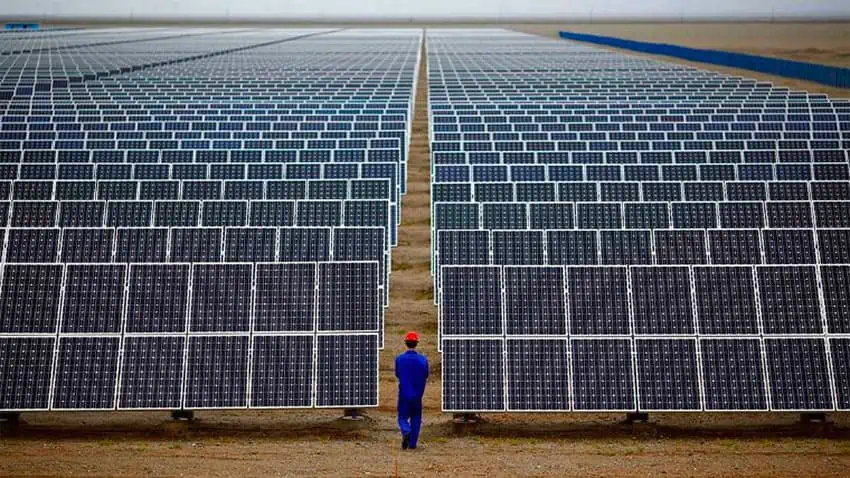
The National Energy Control Center (Cenace) published an agreement last week that suspended trials that allowed wind farms and solar parks to provide electricity for the national grid. The decision will cause delays to 28 new wind and solar projects because they can’t begin selling electricity to the Federal Electricity Commission (CFE) until they have completed the trials.
Cenace also said that fuel oil produced by Pemex as part of the oil refining process will be used to ramp up power generation at old CFE plants in order to “to improve the reliability of the electricity system” during the coronavirus pandemic.
The competition commission said in a statement that it had advised the federal Energy Ministry, the Energy Regulatory Commission and the National Energy Control Center that the Cenace agreement could lead to higher power prices and force the federal government to increase electricity subsidies.
Private energy companies including those that operate renewable projects sell electricity to the CFE at prices that are much lower than it costs the state-run commission to generate it itself. Therefore, the greater the quantity of power the CFE supplies to the national grid itself, the higher electricity rates will be.
Cofece also said that the Cenace decision that delays the entry into operation of new renewable energy projects could be in violation of competition rules and generates investment uncertainty.
The commission criticized the Cenace agreement for not stipulating the length of the suspension of the renewable energy trials and not establishing “clear and measurable criteria” under which the trials can be resumed, “thus worsening the uncertainty for planned and future investments in wind and solar generation projects.”

It also said that the Cenace measures create uncertainty for wind and solar power plants that already operate in the market and which “usually have lower production costs than conventional plants.”
“For wind and solar generators this could imply, although it is not totally clear, that their dispatch is limited in favor of conventional power plants that currently have idle available capacity, as could be the case of those of the Federal Electricity Commission.”
Cofece recommended a review of the Cenace agreement, stating that the measures that concern wind and solar projects should be based on “strict technical criteria directly linked to aspects of reliability, continuity and stability” of the national electricity system. The criteria should be made available to the public, Cofece added.
“During the health emergency, competitive electricity prices are of the utmost relevance. Cofece’s recommendations seek to avoid a permanent increase in electricity rates or an increase of subsidies by the federal government in a context of budgetary constraints.”
Source: El Universal (sp)