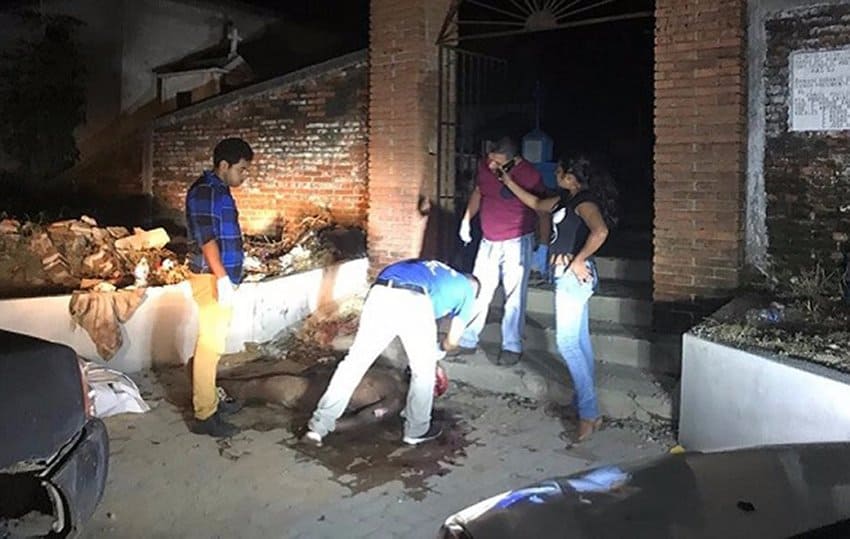
Oaxaca coroner Lázaro Ramírez Jiménez says he was forced to improvise when he conducted an autopsy on the sidewalk outside the cemetery at Santiago Jamiltepec.
In an interview with the newspaper Milenio, Ramírez explained that he arrived at the Jamiltepec cemetery late Saturday evening only to find that municipal authorities had already left.
When cemetery staff refused to let him in to conduct an autopsy, the medical examiner decided to improvise and conduct the procedure on the street.
Photos of Ramírez’s pop-up operating theater were posted online and local authorities expressed their concern and denounced his conduct.
Milenio said Ramírez works in the expert services department at the state Attorney General’s office. He completed his medical studies at the Benito Juárez Autonomous University of Oaxaca and recently did training in forensic sciences courtesy of the United States embassy.
Before working for the FGE, Ramírez was director of the regional hospitals in Pinotepa de Don Luis and in Puerto Escondido, both in the state of Oaxaca, where he was described as a “model professional.”
Source: Milenio (sp)