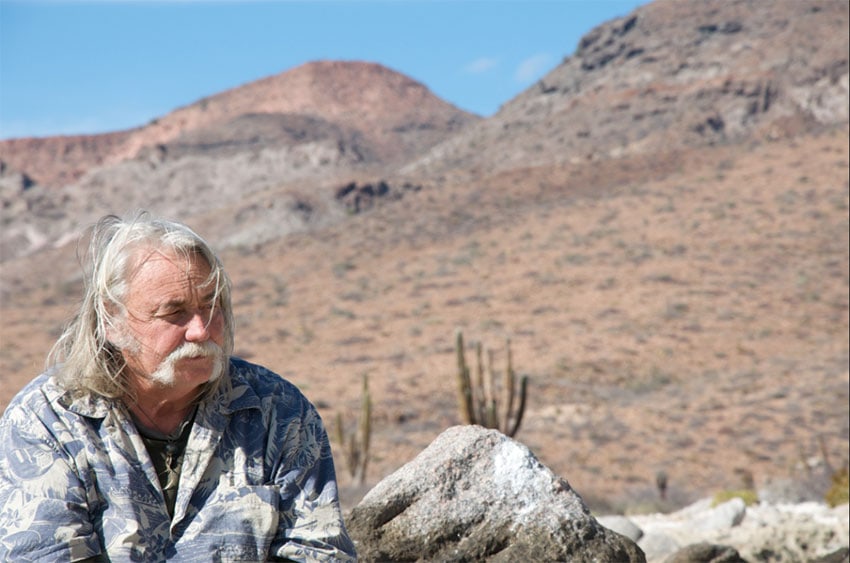
A pioneer ecotourism operator and conservationist in the Gulf of California and on the Baja peninsula died August 13 in San Diego due to complications with diabetes.
Timothy Irwin Means Heineman, 75, was born in Pennsylvania and raised in Arizona, where he fell in love with the Sonoran desert at an early age.
He turned his childhood fascination with the wild deserts into a lifetime of commitment to conservation and eco-adventures for more than five decades, sharing his vision and inviting people to connect with the natural world.
Friends say that “gravity brought Tim Means to Baja California” – metaphorically following the rapids of the Colorado River in the Grand Canyon, where he was a raft guide in his early career.
That gravity took him down to the waters of the Gulf of California where he founded Baja Expeditions in 1974 in La Paz, then a quiet port and home to fishing families and today the bustling city where he lived for the rest of his life.
A Mexican citizen since 1993, Means and Baja Expeditions welcomed thousands of visitors from around the globe and supported research and education dedicated to marine and wildlands conservation. He devoted his life to the preservation of the deserts of Baja California and the Gulf of California.
Means worked with fishermen, scientists and politicians to draw attention to the depletion of sea life and loss of wildlands posed by overfishing and rampant development.

He was a catalyst for the federal designation of Isla Espíritu Santo as a national protected area in 1994.
Just before the island’s official protection, development pressure was intense and a developer wanted to build a resort casino on the island.
Means bought land in the middle of the developer’s property, forcing him into negotiations, then enlisted the support of donors to purchase the property and donate it to the federal government.
With the threat of the casino gone, he and a coalition of conservationists put together another deal to purchase and permanently protect the entire island and provide public access. The successful campaign resulted in a thriving ecotourism sector and sustainable artisanal fishery in La Paz.
As a result of Means’ work, Isla Espíritu Santo and 244 other islands were named a UNESCO World Heritage Site in 2005.
Concerned over the threat of rapid coastal development in Baja, Tim and others founded the Sociedad de Historia Natural Niparajá in 1990 to preserve the coastal wildlands of the Baja peninsula and promote sustainable fishing.
Means and several partners also bought an old ranch on the coast of the Sierra La Giganta as a reserve for bighorn sheep and other species.
Means believed that conservation starts with education, and supported and led countless expeditions and programs for students, scientists, filmmakers, politicians and citizen scientists to invite people to enjoy a connection with the natural world and emphasize the need to preserve wildlands for healthy ecosystems.
Timoteo, as he was affectionately called, was a colorful and influential figure in the community who helped support and inspire a whole generation of young explorers, collectors of La Paz’s solid waste recycling and conservationists.
A public celebration of his life will take place on September 13 in La Paz.
Mexico News Daily