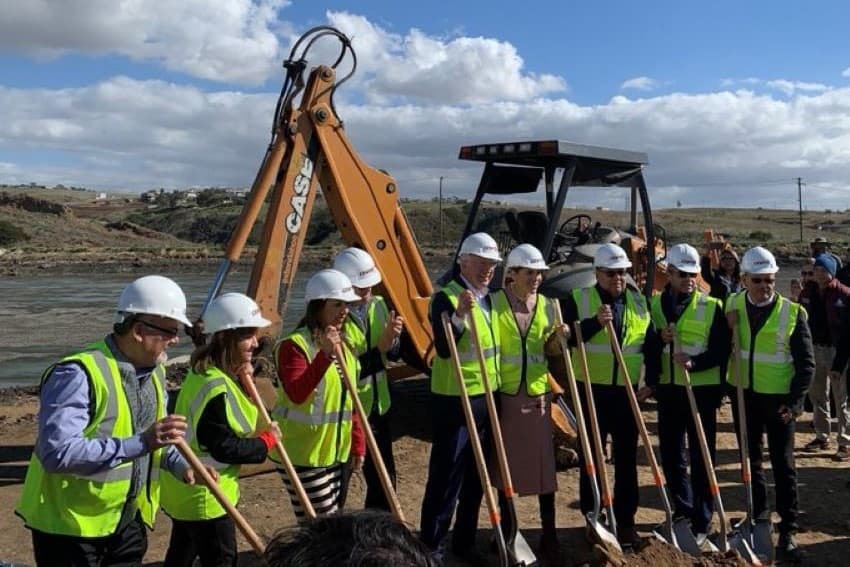
Mexico and the United States have initiated a joint construction project at the San Antonio de los Buenos wastewater treatment plant in Tijuana.
The upgrade is part of an estimated US $500 million project that aims to clean up the sewage from Tijuana that ends up in San Diego Bay.
The work will refurbish an old plant that has had significant failures since 2015 and pretty much stopped working in 2017.
The binational, multiyear project is being spearheaded by Mexico’s Ministry of National Defense (Sedena) — marking yet another project under the purview of the Mexican military.
At the groundbreaking ceremony Thursday, the U.S. Ambassador to Mexico, Ken Salazar, emphasized the significance of environmental safeguards irrespective of borders and upcoming elections.
San Antonio de los Buenos, which receives about 25% of Tijuana’s sewage, is part of a larger commitment outlined by the International Boundary and Water Commission (IBWC), an entity created by the U.S. and Mexico in 1889.
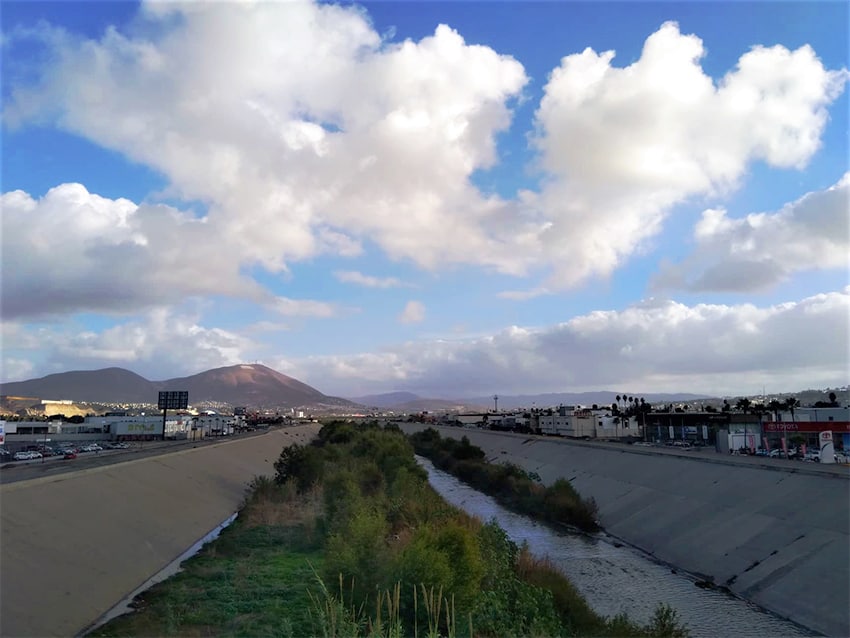
An agreement in 2022 saw the two countries commit to investing almost US $500 million in different projects in the San Diego and Tijuana region to address the flow of garbage, sediment and wastewater into the Pacific Ocean.

For more than a decade, U.S. officials have been particularly concerned about Tijuana’s sewage reaching California’s coasts, thereby forcing beach closures.
“We have an emergency situation. Our beaches have been closed every day last year and so far this year,” said Imperial Beach Mayor Paloma Aguirre, who was born in San Francisco but largely raised in Mexico.
She attended the groundbreaking along with Baja California Governor Marina del Pilar Ávila Olmeda and other officials.
President Andrés Manuel López Obrador, who wasn’t there, announced two months ago a completion date of September 2024 for the upgrade. His six-year term is set to end Oct. 1.
The plant is in Punta Bandera, Baja California, which is on the coast about 10 kilometers west of downtown Tijuana and 9 kilometers south of the U.S.-Mexico border.
The plant’s reconstruction will involve innovative technologies and cost approximately 530 million pesos (US $31.5 million). It is being paid for through the North American Development Bank, an entity funded and run equally by the federal governments of the U.S. and Mexico to provide financing for infrastructure projects.
Wastewater treated at the reconstructed plant will potentially be repurposed for agricultural or industrial use, officials said.
With reports from La Jornada and Zeta Tijuana