U.S. experts monitoring Mexico’s compliance with the tough labour provisions of the USMCA free trade treaty issued a stark warning before Christmas: “No more business as usual.”
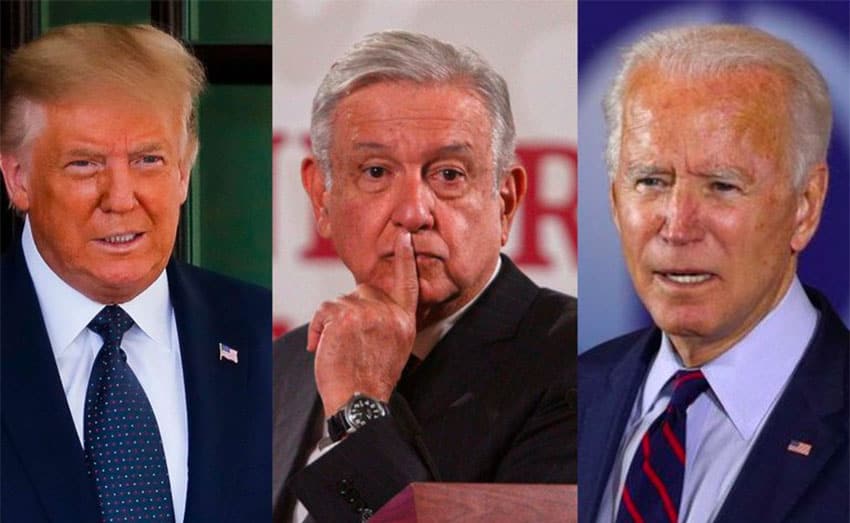
Although they were referring to Mexico’s slow progress in implementing commitments under the NAFTA replacement, the phrase could just as well describe bilateral relations as Joe Biden enters the White House.
Strained security co-operation will loom high on the agenda between the neighbouring countries, overshadowing their US $600-billion trade relationship, as will the two leaders’ diametrically opposed views on climate change and renewable energy.
Mexico’s worsening business environment — with independent regulators and respect for contracts under threat from President López Obrador — promises to pile on the pressure.
“A Biden presidency could be quite uncomfortable for AMLO,” said one member of the U.S. transition team, using the Mexican leader’s nickname. López Obrador kept things sweet with Donald Trump in exchange for little U.S. “interference” with his domestic agenda, the person added.
Biden’s approach will be more institutional and “there’ll be no Jared for anyone to call.” The outgoing president’s son-in-law and senior adviser, Jared Kushner, was a frequent interlocutor with Mexico on migration and development co-operation.
Trump’s threats to withdraw from NAFTA and impose sanctions on Mexican exports unless it cracked down on migrant flows strained relations at times, but López Obrador refused to engage.

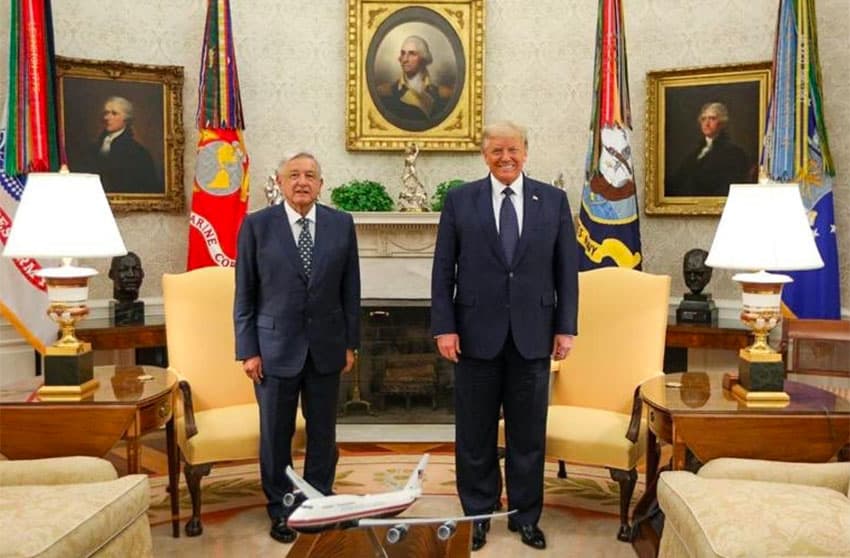
Despite Trump’s insults towards Mexicans and insistence that the country pay for his border wall, López Obrador broke his self-imposed ban on foreign travel to meet the U.S. president at the White House.
By contrast, Mexico’s president took six weeks to congratulate Biden on his election victory, eventually sending an uneffusive letter in which he reminded the president-elect he must respect Mexican sovereignty.
Jeffrey Davidow, a former U.S. ambassador, has likened Mexico’s at-times prickly relationship with Washington to that of a porcupine facing a bear.
“With Biden, López Obrador intends to be a porcupine again — he didn’t show his spines with Trump, but he’s going to now,” said Denise Dresser, a political scientist and professor at Mexico’s Itam university.
“It’s as if López Obrador were pre-emptively trying to create a straw man to fight with … using anti-Americanism and nationalism to score political points in Mexico, particularly in an election year,” she added. Mexico holds midterm elections on June 6.
Mexico delivered two slaps to the U.S. this month. It offered political asylum to Julian Assange, the WikiLeaks founder whose extradition the U.S. is seeking from the U.K. to face charges over the massive leak of classified documents in 2010. Then it accused Washington of fabricating drug trafficking charges against its former defence minister, General Salvador Cienfuegos.
Tensions in the energy sector, where U.S. firms have big investments, have also been rising for months as Mexico has sought to clamp down on permits, curb renewable energy generation and favour its state oil and electricity companies, Pemex and the Federal Electricity Commission. López Obrador is a fossil fuel champion, whereas Biden wants to make the U.S. carbon-neutral by 2050.
In a January 11 letter to their Mexican counterparts, outgoing secretary of state Mike Pompeo, energy secretary Dan Brouillette and commerce secretary Wilbur Ross warned that “hundreds of millions of dollars” of U.S. public investments in Mexico could be at risk as a result of Mexican policy.
“While we respect Mexico’s sovereign right to determine its own energy policies, we are obligated to insist that Mexico lives up to its USMCA obligations, in defence of our national interests, which include investments funded by the U.S. taxpayer,” the letter warned.
Labour relations including collective bargaining agreements and union rights, preconditions for securing U.S. Democrats’ support of the USMCA trade deal, are expected to provide more friction.
“I think it’s only a matter of time before the first case is presented [against Mexico under USMCA],” said Juan Carlos Baker, managing director of Ansley Consultores, who helped negotiate the revised treaty as deputy foreign trade minister. “The message could not be more ominous.”
Vice president-elect Kamala Harris voted against the USMCA when she was a senator for California, and Baker expected that the two countries, whose economies are closely intertwined, “are going to clash very, very quickly.”
López Obrador has already scrapped a partially built U.S. brewery and renegotiated gas pipeline contracts he considered too onerous. Now he is taking aim at Mexico’s independent regulators, which he wants to amalgamate with ministries, something experts say could infringe on the new trade pact.
Indeed, Ariane Ortiz-Bollin, a sovereign analyst at Moody’s Investors Service, said Mexico risked undermining the trade advantages it enjoys under the treaty because of a climate hostile to investment. “There is the potential for this to be a lost opportunity,” she added.
Security co-operation, a major part of the bilateral relationship, has also flared into a serious row.
Mexico last month rushed through a law demanding U.S. drugs agents share information in what was seen as retaliation for the shock arrest of Gen. Cienfuegos. It has toned down the law, but one senior former military official said it remained a “non-starter.”
López Obrador, for whom the military is a crucial domestic ally, pulled diplomatic strings to get the U.S. drug trafficking and money laundering charges dropped; Mexico then speedily closed its own case. Ratcheting up tensions further, the U.S. threatened on the weekend to halt co-operation on criminal investigations in Mexico after the president released all the evidence U.S. prosecutors had provided, calling it flimsy.
Between Covid-19 and the economy, Biden will be stretched thin. But analysts say Mexico should not assume it will get a free ride.
“The big question,” said Dresser, “is how much political capital will Biden be willing to spend to get Mexico to behave like a responsible North American partner and not like a national political enemy south of the border?”
© 2021 The Financial Times Ltd. All rights reserved. Please do not copy and paste FT articles and redistribute by email or post to the web.