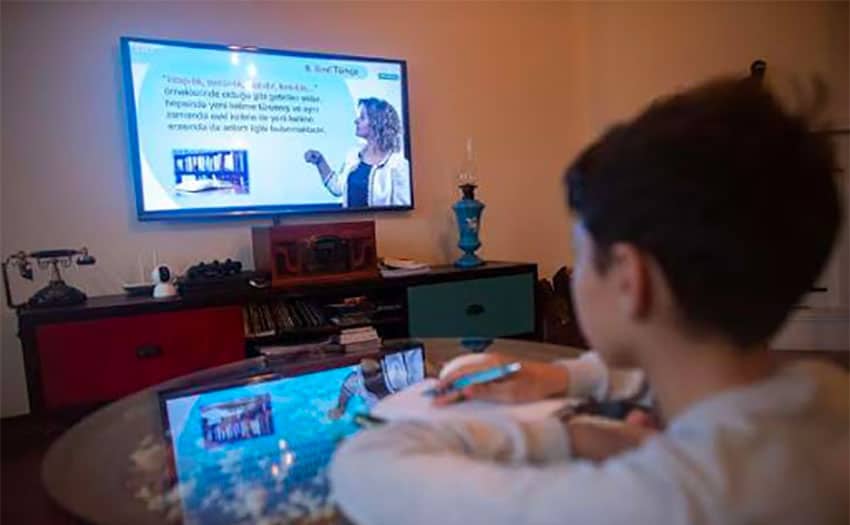
More than 30 million students across Mexico were scheduled to return to school by attending virtual classes on Monday but not all of them have access to the technology they need to study remotely amid the coronavirus pandemic.
The federal government announced in early August that four broadcasters had agreed to screen virtual classes and other educational content but learning via television is not an option for students in many indigenous communities, including hundreds if not thousands in the southern states of Chiapas, Oaxaca and Guerrero.
In Chiapas, the free-to-air television signal reaches only three in 10 homes, according to the Federal Telecommunications Institute. Some communities don’t even have electricity or supply is unreliable, creating an additional barrier for students to learn remotely using technology.
Herminia Hernández, an educational consultant in San Cristóbal de las Casas, said the federal government’s virtual education model, which also includes online content, is not feasible for 1.5 million students in Chiapas.
“In the majority of homes, even those that are near cities, the television signal doesn’t even arrive,” she said.
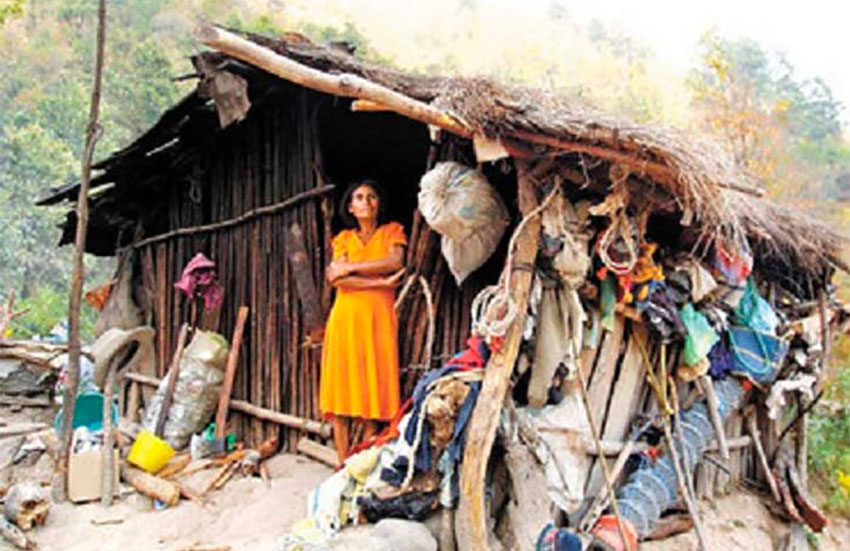
In Oaxaca, one in four homes doesn’t have a television, according to state government statistics cited by the newspaper El Financiero. Electricity supply is also a problem in the state, not just in remote communities but even for some homes near Oaxaca city, the state capital.
El Financiero reported that some homes in impoverished neighborhoods in the municipality of Zaachila, located just south of Oaxaca city, don’t have electricity.

A woman only identified as Antonia who lives with her family in the Guillermo González neighborhood – where many residents scavenge in the local dump to get by – acknowledged that the absence of electricity in her home will make it impossible for her children to watch televised classes or study online.
Some students in Guerrero face the same situation, with electricity supply unreliable or non-existent in more than 600 rural, mostly indigenous communities.
About 65% of the population of the southern state doesn’t have access to the internet in their homes, El Financiero reported, while the figure is close to 90% in rural areas.
Teachers and parents said that the government’s pandemic learning model will only increase educational inequality in Guerrero, which includes coastal cities such as Acapulco and Zihuatanejo and small, isolated towns in mountainous regions.
Manuel Venancio, a local education union leader, said that access to television, computers and the internet is “not part of the reality for many students in Guerrero.”
“If there is a high percentage of students in the state’s main cities who don’t have their own computer, imagine … [the situation] in other places like the Sierra and Montaña [regions],” he said.
The Organization for Economic Cooperation and Development (OECD), the United Nations and the World Economic Forum agree that the coronavirus pandemic and the consequent shift to virtual education will widen inequality between technology haves and have-nots.
The OECD said that fewer than 5% of Mexican students classified as “poor” have a computer and internet connection in their home whereas the vast majority of “rich” households have both.
The education of students from poor socio-economic backgrounds will suffer more as a result of the shift to virtual learning and they will face long-term negative consequences as a result, the OECD said.
The UN Development Program said “the reality in Mexico” is that many students, especially those who live in rural locations and/or are indigenous, don’t have the technology they require to keep up with their classes and deliver their schoolwork to their teachers virtually.
The World Economic Forum said that the transition to virtual classes “has disproportionately affected the most vulnerable communities” and widened the inequality gap.
Karen Lizette Matias López of a Mexican NGO called Women United for Education said much the same.
“The inequality gaps were already very wide before this pandemic but they will be more evident than ever after it,” she said.
“Those who don’t have access to a television, computer or internet will miss out on the opportunity to access a more solid form of education.”
David Calderón of Mexicanos Primero, an education advocacy group, said that one of the most serious consequences of the situation will be that many students without access to technology will drop out of school, thus limiting their future educational and employment opportunities.
Source: El Financiero (sp), El Universal (sp)