Authorities in at least three states have announced beach closures in response to the Covid-19 pandemic.
Baja California Sur closed every beach in the state, where municipal police will be responsible for ensuring that the closure is upheld. It could prove challenging during the normally busy Semana Santa (Holy Week) vacation in April.
In Baja California the municipal governments of Tijuana and Mexicali decided to close their beaches in order to avoid large gatherings of people.
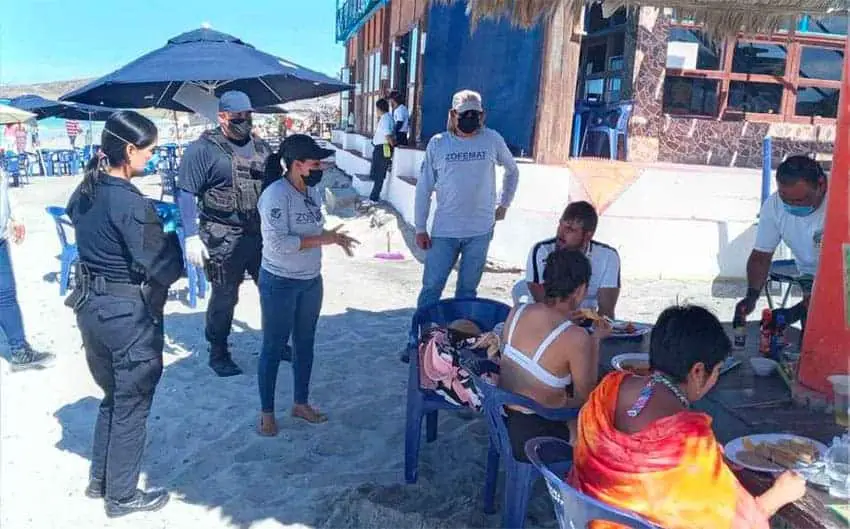
Police patrolled the Playas de Tijuana beach area on Monday and urged citizens to leave at the order of Mayor Arturo González Cruz.
“I have decided to suspend all activities on the beaches of the region. … It’s important that citizens respect these measures for their protection,” said González.
The city of Mexicali is on the border with California, but the municipality extends far enough south to include the popular Gulf of California tourist destination San Felipe. It recently saw its number of cases rise from 14 to 20, leading Mayor Marina del Pilar to take the same action.
“We have seen how people have not been complying with isolation measures, and that’s why the contagion curve has been growing in our city,” said Del Pilar.

“It is therefore my obligation to introduce stricter measures. We’ve determined to close the tourist beaches of San Felipe, and install a patrol that will monitor [them],” she said.
In the south of Mexico, local authorities on the Oaxaca coast decided to close Zipolite, the country’s only nudist beach, due to the large number of tourists who usually visit during the Semana Santa holiday.
Many indigenous communities on the coast that offer tourist services like lagoon and mangrove tours and cabin stays have cancelled all tourist services completely.
Held in February, Zipolite’s Nudist Festival brings around 8,000 visitors to the 1 1/2-kilometer-long stretch of beach and boosts hotel business in the surrounding towns of Mazunte, Puerto Ángel, San Agustinillo and Pochutla.
Sources: Milenio (sp), El Universal (sp)