Health workers fear breakdown of system in Mulegé, BCS

Located in the northern part of Baja California Sur, (BCS) seven hours by car from the state’s capital of La Paz, Mulegé is, quite literally, an oasis in the desert. 

Founded by Jesuits in the early 1700s on the banks of the Santa Rosalía river, the town of around 4,000 people has seen its economy shift from fishing and agriculture to tourism in recent years. 

But these days visitors are decidedly not welcome. Townspeople have barricaded the road. 

The threat of coronavirus became a reality when Mulegé registered its first case last week, and an outbreak could easily decimate the municipality’s nearly nonexistent medical structure. 

“We don’t have any specialists, we don’t have labs, we don’t have x-rays, we don’t have supplies. We are being sent to war without weapons,” said Doctor Jose Antonio Espinoza Tirado. 

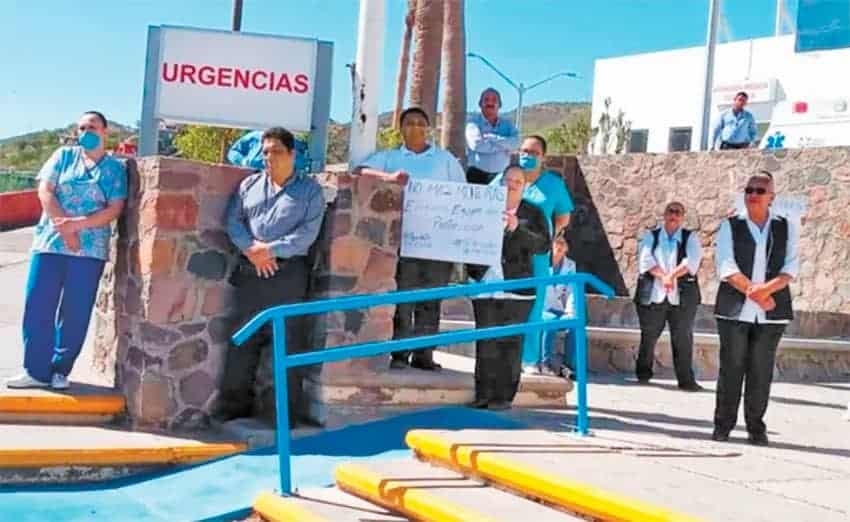
Espinoza and around 100 doctors from the nearby town of Santa Rosalía, population 15,000, are working under protest due to the pandemic, taking five minutes of silence each day to express their dissatisfaction. They have been asking the government for adequate medical supplies for the past year, even before coronavirus became a reality. 

The municipality of Mulegé has about 60,000 residents, but the hospital only has three ventilators, says Espinoza.  

“Imagine if a patient were to become seriously ill, and we don’t have what we need here,” he said. “What they have sent us isn’t enough.”

On April 15, Mayor Felipe Prado Bautista railed on social media against residents who are not respecting the quarantine and refuse to stay at home. 

“This Saturday and Sunday, whoever walks the streets without any justifiable reason, instead of an economic sanction, what do you think about 12 hours of social service [in the cleaning area] of a hospital or clinic in the municipality?” he posted. 

The entire state of BCS is reeling from the effects of coronavirus, with the highest number of cases per capita in all of Mexico — 20.38 per 100,000 residents. The state currently has 158 confirmed cases and has recorded six deaths.  

Source: BCS Noticias (sp), El Universal (sp)

Have something to say? Paid Subscribers get all access to make & read comments.
Manzanillo, Colima, México, 13 de marzo de 2026. La doctora Claudia Sheinbaum Pardo, presidenta Constitucional de los Estados Unidos Mexicanos en conferencia de prensa matutina, “Conferencia del Pueblo” desde Colima. La acompañan Indira Vizcaíno Silva, gobernadora Constitucional del Estado de Colima; Omar García Harfuch, secretario de Seguridad y Protección Ciudadana (SSPC); Raymundo Pedro Morales Ángeles, secretario de Marina (Semar); Bulmaro Juárez Pérez, divulgador de lenguas originarias, presentador de la sección “Suave Patria”; Ricardo Trevilla Trejo, secretario de la Defensa Nacional (Sedena); Jesús Antonio Esteva Medina, secretario de Infraestructura, Comunicaciones y Transportes; Bryant Alejandro García Ramírez, fiscal general del Estado de Colima; Fabián Ricardo Gómez Calcáneo; Rocío Bárcena Molina, subsecretaria de Desarrollo Democrático, Participación Social y Asuntos Religiosos de la Secretaría de Gobernación; Efraín Morales López, director general de la Comisión Nacional del Agua (Conagua); Marcela Figueroa Franco, secretaria ejecutiva del Sistema Nacional de Seguridad Pública (SESNSP) y Guillermo Briseño Lobera, comandante de la Guardia Nacional (GN). Foto: Saúl López / Presidencia

Mexico’s week in review: Congress deals Sheinbaum her first legislative defeat

1
The week of March 9 in Mexico was marked by standoffs between allies in Congress and adversaries at the airport. Here's what you missed.
A soldier displays seized handguns

The US and Mexico, growing together and growing apart: A perspective from our CEO

1
From a historic drop in homicides to opposite bets on electric vehicles, Mexico News Daily's CEO breaks down where the U.S. and Mexico are converging — and where they're not.
Veracruz Gov.

Veracruz governor blames private vessel for 200-kilometer Gulf Coast oil spill

1
The spill, which has spread to over 200 kilometers of Mexico's Gulf Coast beaches, has been traced to a private oil tanker off the coast of Tabasco.
BETA Version - Powered by Perplexity