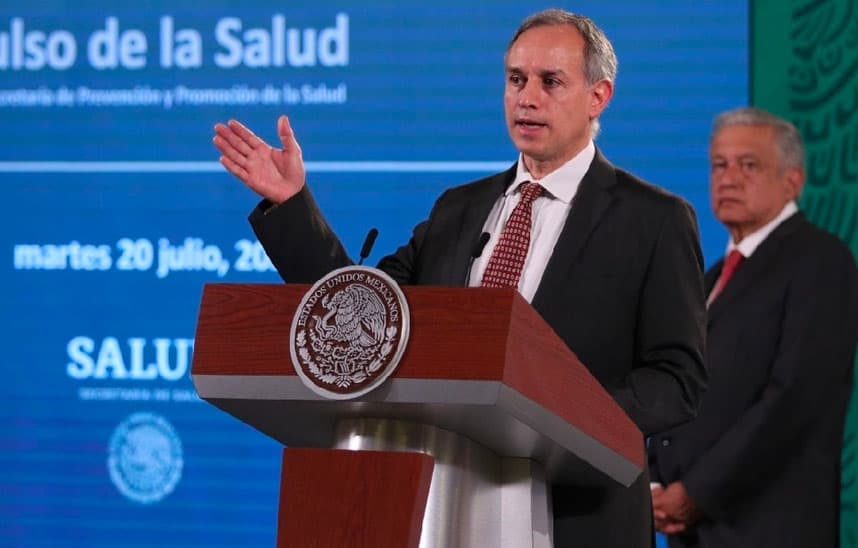
There will be no “total closures” of public spaces despite the recent increase in coronavirus cases in many parts of Mexico, Deputy Health Minister Hugo López-Gatell said Tuesday.
Mexico is currently amid a third wave of the pandemic as the highly infectious Delta strain takes hold in many states.
But the federal government’s coronavirus point man said the implementation of lockdown measures such as those mandated at the start of the pandemic are no longer viable.
“We have a tired society, fatigued from having these long months of the epidemic. What one can ask of society in terms of the reduction of mobility is not the same today as it was in February 2020,” López-Gatell told reporters at the president’s regular news conference.
He stressed that the government can’t force people to stay at home and noted that strict restrictions have an economic impact at both the individual level and in general terms for the entire country.
“… There are public places that remain open. The [recommended] confinement is no longer going to imply total closures like those … at the beginning of the [the voluntary lockdown from March-May 2020],” López-Gatell said.
Sinaloa has already espoused that philosophy, announcing an increase in the state’s official risk level to red light maximum but declining to impose any new restrictions.

“… It shouldn’t surprise you that there are public spaces that remain open even when there is growth in the epidemic, like in Quintana Roo. But what is very, very important is that the different health security measures are complied with completely in those public spaces,” the deputy minister said.
He emphasized that the third wave of the pandemic is a very different proposition to the first and second waves because the majority of people who are most vulnerable to serious illness are vaccinated against Covid-19. López-Gatell said 43% of the population is vaccinated with at least one dose and most recent cases were detected among young people, many of whom have not yet had the opportunity to get a shot.
The majority of Covid patients currently in hospital are younger than 52 and 97% have not been vaccinated, he said, stressing that vaccination protects people against serious disease and death.
López-Gatell urged young people to get vaccinated when the opportunity arises. The government’s online vaccination registration platform is now open to all people aged 18 and above.
Meanwhile, Mexico’s accumulated case tally increased to 2.66 million on Monday with 5,307 new infections reported, while the official Covid-19 death toll rose by 138 to 236,469.
Mexico News Daily