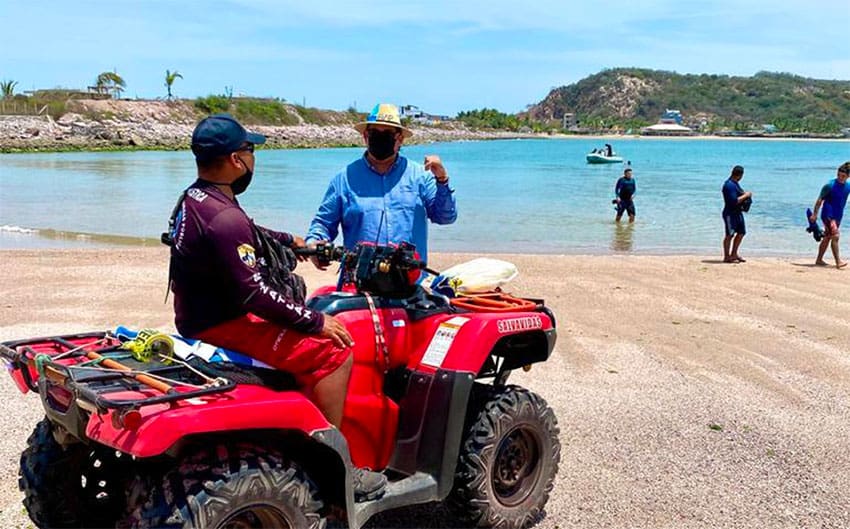
Authorities in Mazatlán have removed over 3,600 people from the municipality’s beaches during the quarantine period ordered in response to the Covid-19 pandemic.
The municipality’s closed beaches operation has observed an increase in the number of people removed from the beaches as the quarantine continues into May.
A total of 798 people were removed in the week of April 27 to May 3, 160 more than the week before. In total, authorities have removed 3,648 people from the beaches during the quarantine period.
The majority of those gathering on the beaches were locals, but authorities did report small numbers of tourists as well.
The closed beaches operation is one of the primary actions taken to mitigate the spread of Covid-19 in the city by the Mazatlán government, which reiterated its call to residents to remain in their homes and practice physical distancing when outside on essential business.
The federal government closed all of the country’s beaches on April 2, but enforcement has been a point of contention between authorities, tourists, locals and members of the media.
Authorities in Puerto Vallarta were forced to step up their quarantine measures after a video of Canadian tourists verbally and physically attacking a local reporter went viral in early April.

Meanwhile, other coastal tourist destinations are looking to the future. Preparing to see visitors return on June 1, hotels in Quintana Roo recently announced a promotional campaign to attract tourists when they are allowed to travel safely again.
Source: Milenio (sp)