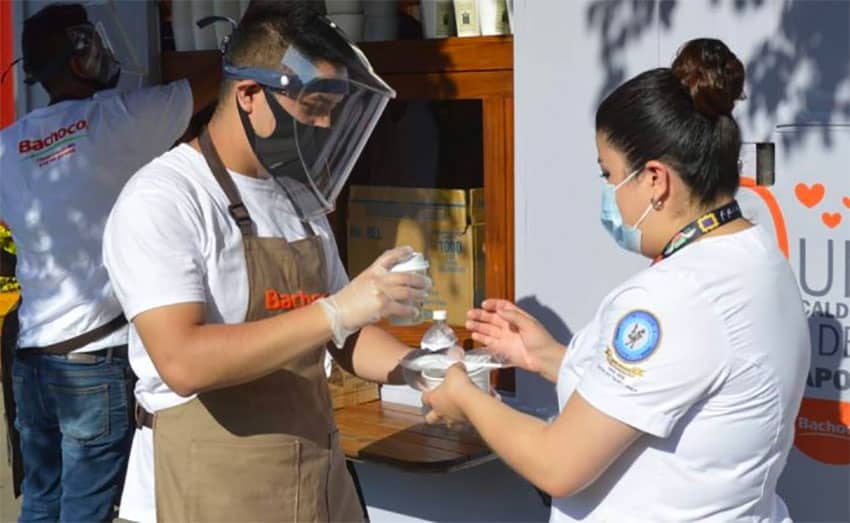
Poultry producer Bachoco is on its way to serving over 50,000 bowls of chicken soup to doctors, nurses and relatives of Covid-19 patients outside hospitals in Mexico City, Puebla and Monterrey.
Playing on the rhyme in the Spanish words for chicken (pollo) and support (apoyo), the Caldito de Apoyo program has been feeding hungry bellies outside hospitals since April 30.
The program has donated an average of 1,500 bowls of chicken soup daily since it began. But the meals aren’t reserved exclusively for those directly affected by the coronavirus. Bachoco employees are feeding every hungry person who approaches and asks for food.
“This program allows us to send an emotional message of support to everyone in order to show them that we are with them today more than ever,” said Bachoco sales director Andrés Morales Astiazarán.
“… we’ll do what is in our power to reduce the negative impacts of this pandemic on the people,” said Arvizu.
Companies both big and small have found ways to help those in need during the coronavirus emergency. The American Legion bar in Mexico City has devoted its kitchen to making meals for vendors, homeless and other hungry people on the streets during the quarantine period.
Source: Excélsior (sp)