Mexico’s “new normal” due to the coronavirus pandemic means a rather somber 210th celebration of the country’s declaration of independence from Spain.
Whereas in other years parties, mariachis, parades, streets flooded with people and food vendors that accompany the “cry of independence” were de rigueur, this year health measures mean the celebrations have been mostly canceled.
Many state governments are opting for a virtual commemoration of independence or a simple ceremony that will be broadcast on local television and social media networks Tuesday evening.
In Michoacán, the entire ceremony has been canceled by Governor Silvano Aureoles, who has tested positive for coronavirus, and no alcohol will be sold on Tuesday.
Veracruz is also under a dry law for the occasion, effective Monday and Tuesday. In Aguascalientes, a statewide dry law has been decreed from September 13 to 20 in order to discourage large public and private events.
In Dolores Hidalgo, Guanajuato, where priest Miguel Hidalgo y Costilla delivered the speech that started the independence movement in 1810, a solemn ceremony will be held in which Governor Diego Sinhue Rodríguez will ring the bell of the Parish of Nuestra Señora de Dolores.
Restaurants and entertainment centers in Cuernavaca, Morelos, must close tonight at 11 p.m., and operations will be carried out to prevent private gatherings.

In Culiacán, Sinaloa, only 500 people will be allowed to gather in front of city hall for the cry of independence ceremony. Normally some 20,000 people crowd together for the event.
Around 80 specially-lit drones are being used in Hidalgo’s celebrations, and residents are invited to celebrate and view the show from their balconies and rooftops.
Doctors and nurses who have been working in the fight against the coronavirus will be the only guests invited to Jalisco’s official ceremony, which residents can view on television.
Veracruz, Sonora, Baja California Sur, Tabasco, Durango, Colima and Nayarit have all planned virtual ceremonies.
Zacatecas will launch fireworks from the top of La Bufa hill, while in the city of Puebla eco-friendly pyrotechnics have been announced.
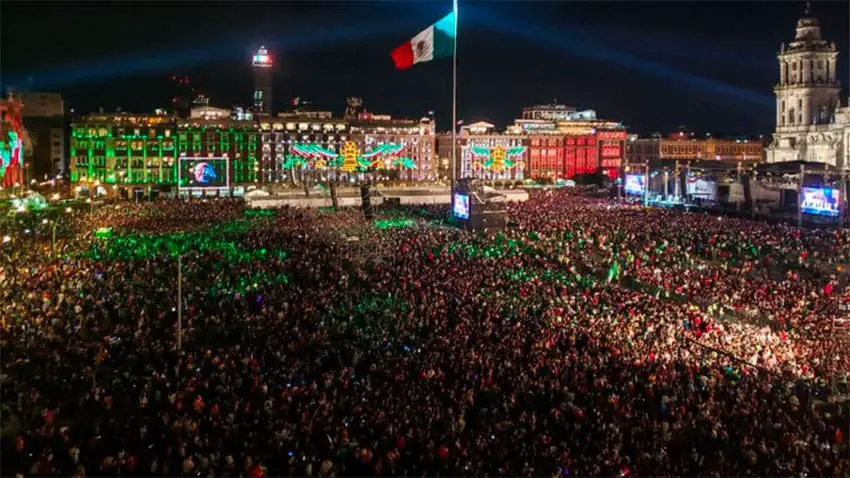
A torch will be lit tonight in Mexico City’s zócalo, symbolizing hope, and a map of Mexico will also be laid out using LED lights.
Six months into the coronavirus pandemic in Mexico, large conglomerations of people must be avoided, officials say.
“I recommend that the public stay at home. National holidays can be celebrated from home. The Cry of Independence will be without people in the zócalo.” Deputy Health Minister Hugo López-Gatell said. “The epidemic has not ended, we entrust you to follow general precautionary measures. Do not forget about handwashing, healthy distancing and the proper use of a mask.”
The president expressed a similar sentiment and asked that people celebrate from home.
“I invite everyone to celebrate our national independence … there will be music and fireworks, it is going to be an interesting night,” President López Obrador said Tuesday morning. “We are suffering from the pandemic, we are going to remember that, too. Remember the deceased, hug their relatives, always keep them in our hearts but at the same time we must lift our spirits because of the greatness of Mexico.”
As of Monday, there have been 671,716 accumulated cases of the coronavirus and 71,049 deaths, placing Mexico in seventh place worldwide for the number of cases, and in fourth place for the number of fatalities.
Source: El Universal (sp)