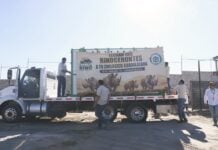
Day laborers from the mountains of Guerrero are migrating by the thousands to the fields of Baja California, Chihuahua, Sinaloa, Guanajuato, Michoacán and Zacatecas despite stay-at-home orders due to the coronavirus pandemic and high levels of infection in some of those areas.
Some farmworkers are even traveling to the United States to look for work. In San Pedro de la Laguna, 250 of the town’s 1,000 inhabitants are working on the other side of the border.
Residents of the poverty-stricken region have no choice but to leave if they and their families are to eat. Around 8,000 men, women and children in Guerrero are predicted to migrate north to find work this season, where they will toil in the fields for between 120 and 250 pesos a day (US $5.40 to $11.18).
“Migration does not stop despite the pandemic. There is an increase in the number of migrants because there is an economic situation of extreme poverty in the mountain communities, which have poverty levels similar to those of sub-Saharan Africa, which is now worsened by the increase in food prices due to Covid-19,” says Paulino Rodríguez Reyes of the Tlachinollan Human Rights Center.
He said buses leave every Tuesday, Thursday and Saturday, carrying as many as 150 workers each.

Around 2,000 people have already left the state this month.
Each year around 30,000 mainly indigenous day laborers from the Guerrero mountains earn their living this way, and this year they are traveling without masks or hand sanitizer and in crowded conditions.

Sometimes large agricultural export companies will recruit them and send buses, but this year many are making the journey on their own dime.
The first season lasts from September to January, with a second season beginning in May.
Doctor Alejandro Morales Ibarra, who helps care for rural workers, says this year has been atypical, with a 50% increase in migration, especially among students aged 14 to 20 who have taken the opportunity generated by the suspension of classes to earn money.
Activist Abel Barrera Hernández proposes that the Ministry of Labor help protect day laborers who travel to other states and those who return to their towns against the coronavirus, as well as compel employers to do the same.
A coalition of day laborer organizations, experts and activists released a report earlier this month detailing a number of steps governments and employers can take to help keep those who travel to the fields safe, including enforcing hygiene measures and offering workers access to health care.
In the poorest areas of Guerrero, others hope the federal government will step in with scholarships, subsidies and food, as raising corn in the region is no longer a viable solution to staving off hunger.
According to the National Network of Day Laborers, there are almost 3 million migrant day laborers in Mexico, of which 2.5 million are indigenous.
Source: Contra Réplica (sp), La Jornada (sp)