Expanding a train line that will take people from downtown Mexico City to the new Felipe Ángeles International Airport (AIFA) will cost twice what was originally planned, the newspaper El Universal reported Tuesday.
The paper obtained what it called classified information revealing the cost of the suburban train project has increased from 12.48 billion pesos (US $626.7 million) to 25 billion pesos (US $1.26 billion).
The cost projections were updated on June 1 by the Ministry of Infrastructure, Communications and Transportation (SICT), El Universal reported.
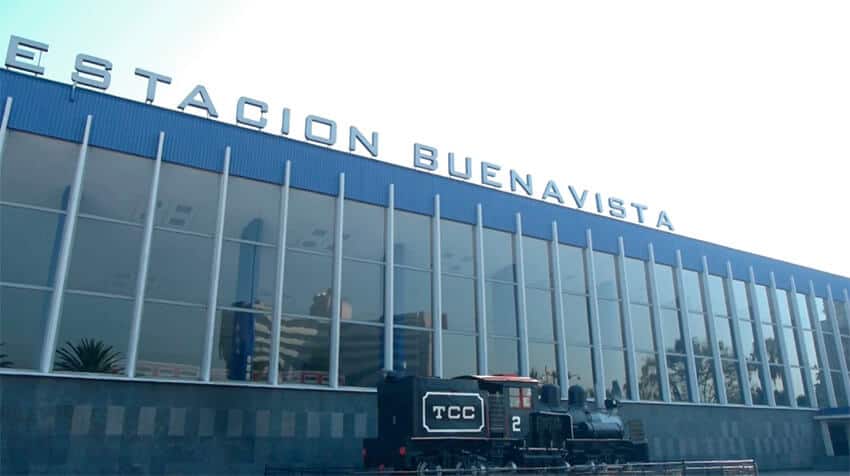
The expansion of the suburban train line that currently runs northward from the Buenavista station in central Mexico City to the Cuautitlán station in México state will include six new stations and a terminal at AIFA, which opened in March after being built by the army.
The new tracks, which will come off the Lechería station, will allow travelers to reach the new airport from the center of the capital in 45 minutes, a fact that a train-riding President López Obrador proudly proclaimed in a video posted to social media in December. Such a trip will cover approximately 50 kilometers, and El Universal reports it will take just 39 minutes.
According to a report in Mexico Business News, only 14% of the expansion works were complete when AIFA opened on March 21 on the site of the Santa Lucía military base in Zumpango, state of México. That report added that the new train line isn’t expected to go into operation until approximately September 2023. (El Universal’s reporting on Tuesday did not provide a projected opening day.)
The train line is expected to carry a lot of passengers to the new airport, since driving there can be a headache, with early reports of journeys from 90 minutes to 2½ hours from central Mexico City. In April, Mexico News Daily’s Lydia Carey wrote about her travails of getting to AIFA from the Roma neighborhood of Mexico City, writing “several signs pointed us in one direction, yet GPS took us in another” in one area and “signage was nil” in another. The trip ended up taking 1 hour and 45 minutes.

As for the rail line extension, El Universal noted that if the total cost of the work is considered — including operation and maintenance costs — then the cost of the project skyrockets to 35.6 billion pesos (US $1.8 billion), which is 2.8 times more than initially planned.
Part of the reason for the increase was “due to the use of two parallel tracks, instead of one,” according to a letter from a Ferrocarriles Suburbanos’ representative to the SICT, according to El Universal. Ferrocarriles Suburbanos is the concessionaire of the current Buenavista-Cuautitlán line.
The project will connect the Lechería station to AIFA through a length of 23 kilometers of double electrified track, three elevated viaducts, nine vehicular crossings, two railway bridges over the Grand Canal, 10 pedestrian crossings and four intermediate stations (plus two more in a second stage). Seven contracts have been awarded to do the work.
With reports from El Universal