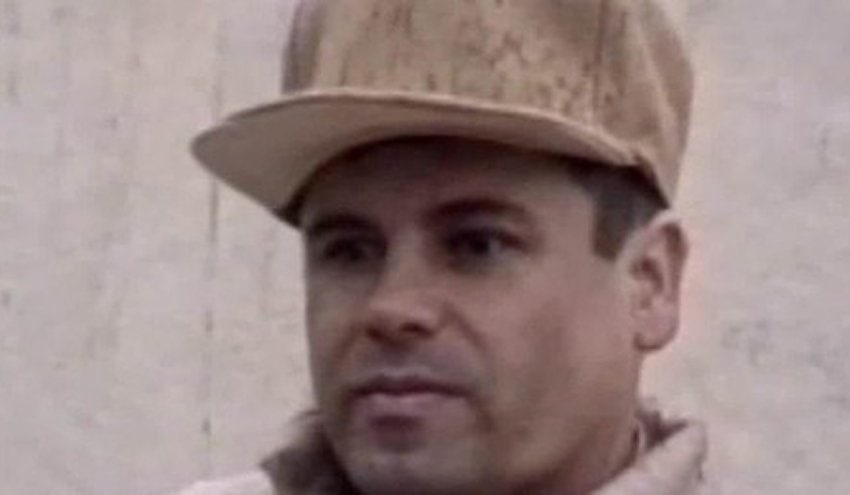
A former technology guru for the Sinaloa Cartel told jurors this week at the New York trial of Joaquín “El Chapo” Guzmán that he spent three days with the former drug lord in the Sinaloa mountains while on the run from the Mexican army.
Cristian Rodríguez, a Colombian info-tech expert who set up an encrypted communications system for Guzmán, told the court that in 2009, the military raided the kingpin’s secret hideout in the northern state.
Rodríguez said that he, Guzmán, other cartel leaders and a band of heavily armed bodyguards fled into the mountainous terrain to evade capture.
The witness said the gunmen carried both large weapons and one enormous weapon “capable of shooting down a helicopter.”
After their first day on the lam, the men slept in a small house, Rodríguez said. The second night was spent exposed to the elements.
“Chapo was very calm,” the I.T. specialist told jurors. “He was always very sure, calm, tranquil.”
Asked by a prosecutor how he felt during the ordeal, Rodríguez responded: “Very afraid.”

On their third day on the run, the 32-year-old witness said, they reached another house where they were given a meal, after which they got a lift to Culiacán, the Sinaloa state capital.
After that experience, Rodríguez said, he worked for the cartel remotely from Colombia.
However, according to court testimony Tuesday by Federal Bureau of Investigation special agent Stephen Marston, Rodríguez started cooperating with the FBI in 2011 by helping it to infiltrate the encrypted communications system he developed.
He sent recordings of Guzmán’s calls to the FBI and also installed an automatic recording system that allowed United States authorities to listen in to the kingpin’s conversations almost in real time.
This week, jurors heard excerpts of self-incriminating telephone calls the suspected former Sinaloa Cartel chief made to business partners, criminal associates, hired guns and corrupt officials.
Marston said Tuesday that undercover FBI agents had posed as Russian mobsters at a meeting with Rodríguez in a New York hotel in 2010, where one agent told him that he was interested in acquiring an encrypted communications system so that he could speak to criminal associates without law enforcement listening in.
Rodríguez said yesterday that he agreed to work for the FBI after two federal agents approached him in Bogotá, Colombia, the following year, saying that they knew he worked for Guzmán and that he was “in serious trouble.”
Rodríguez also installed a GPS system on the cell phone of Jorge Cifuentes, a criminal associate of Guzmán’s who had recommended him for the IT job. Cifuentes was arrested shortly after. He has also testified against Guzmán.
The tech guru told jurors that after the Sinaloa Cartel became aware that he was cooperating with the FBI, he panicked and fled to the United States, where he had a “nervous breakdown.”
Rodríguez has not faced any criminal charges and, according to a report by the Associated Press, has received US $480,000 from the United States government in exchange for his cooperation.
Guzmán, who was extradited to the United States in January 2017, is facing multiple charges of drug trafficking, conspiracy, money laundering and weapons offenses.
Since his trial started in mid-November, several cartel witnesses have testified against him, giving testimony about bribes the kingpin paid to corrupt officials, the life of luxury he led, his first prison break inside a laundry cart, multi-tonne drug shipments and bitter cartel wars, among other tales.
If convicted, Guzmán faces probable life imprisonment. The trial resumes Monday.
Source: The Associated Press (sp), The New York Times (en)