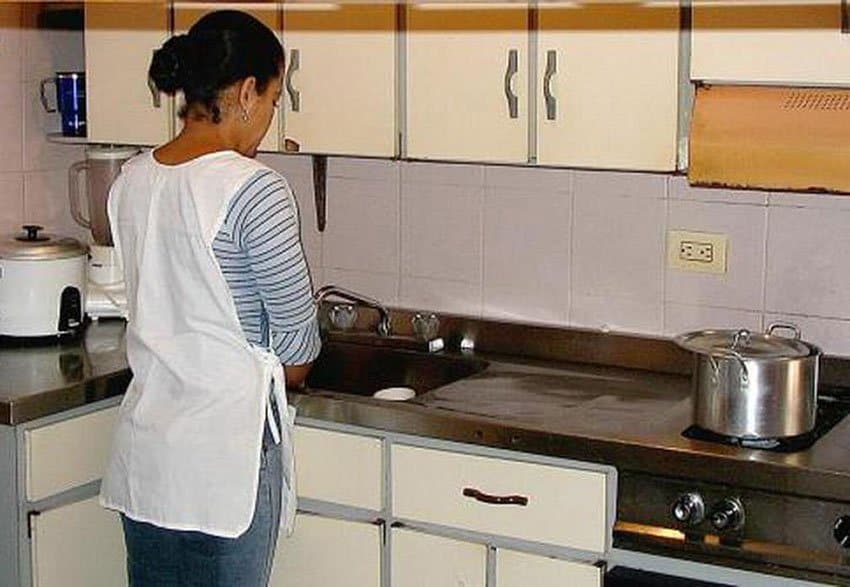
Justice Alberto Pérez Dayán has recommended that the second chamber of the court rule against an article in the federal Social Security Law that states that paying benefits to housekeepers is voluntary.
The law as it stands has resulted in most domestic workers not receiving benefits that other employees are legally entitled to.
Pérez’s proposal argues that there is no constitutional justification to exclude the mostly female workers, commonly known as muchachas or maids, from the social security system.
“[It’s not just] a discriminatory action that perpetuates and reinforces the social marginalization of women who work in homes but also a violation [of their rights] that cannot be overcome simply because said workers can access the voluntary regime,” the proposal states.
The initiative recommends that the government and the Mexican Social Security Institute (IMSS) introduce a pilot program over a period of 18 months that is easy for employers to implement and that Congress make the necessary legislative reforms to ensure that domestic workers’ right to access benefits is enshrined in the law.
The newspaper Reforma said today that it is unclear if a majority of judges will support the proposal because some have shown that they are not inclined to support court rulings that include recommendations or suggestions to other authorities.
The December 5 session will be the last time the second chamber of the SCJN sits in 2018, meaning that if the proposal is rejected, an examination of an amended version would not happen before the middle of January.

According to a 2016 employment poll conducted by the National Statistics Agency, 95% of domestic workers are women and only 4% of those workers are employed under the terms of a contract in which their rights and obligations are clearly stated.
Source: Reforma (sp)