The daily death rate in Mexico City – the country’s coronavirus epicenter – is expected to return to 2019 levels in September, the capital’s health minister said on Tuesday.
Oliva López said there are currently around 230 deaths per day in Mexico City, 53% more than the daily average of 150 in 2019.
She said authorities expect to see daily Covid-19 deaths start to decrease once the capital has been allocated an orange light on the federal government’s stoplight system to determine which coronavirus restrictions can be lifted and where.
Along with every state in the country except Zacatecas, Mexico City was allocated a red light for the first week of “the new normal” after federally mandated social distancing measures concluded on Saturday.
López said the capital could be allocated a green light once death rates stabilize in September.
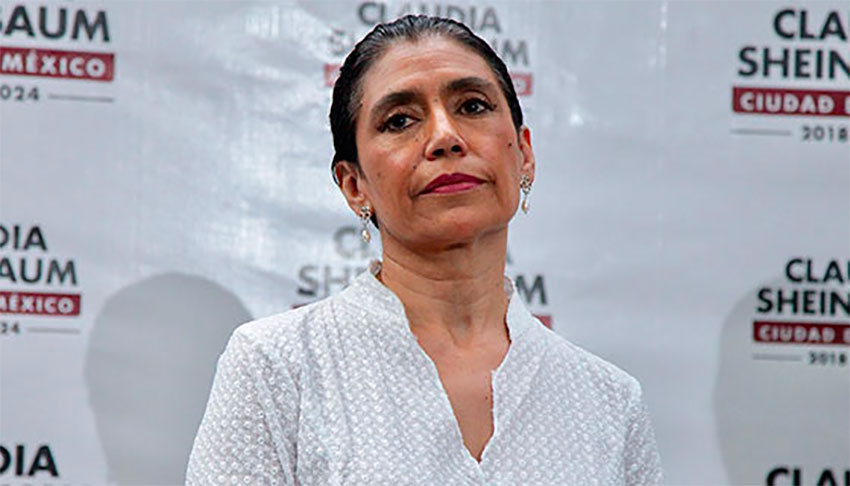
The health minister explained that the predictions about future Covid-19 death rates are based on an epidemiological model developed by the Mexico City government.
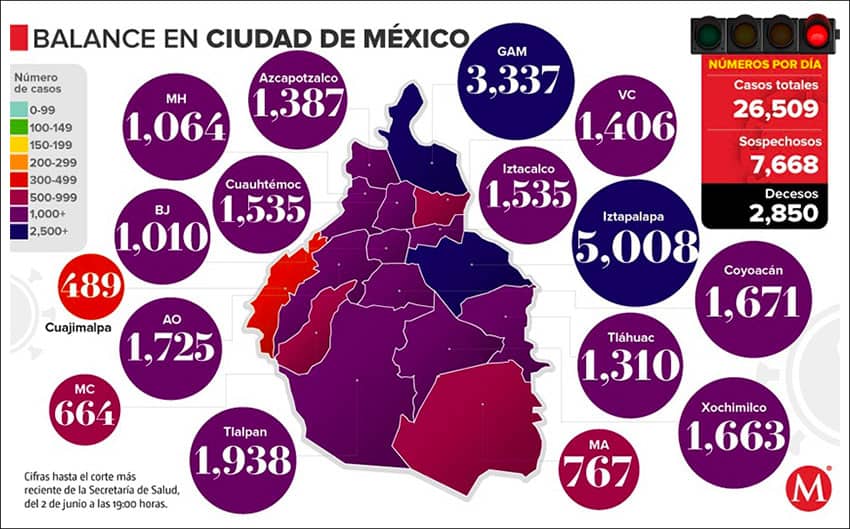
Mexico City had recorded 2,850 Covid-19 fatalities as of Tuesday, according to official data, but the real number of deaths is widely believed to be much higher.

López said that hospital admissions of coronavirus patients are still increasing and that hospital occupancy levels need to be below 65% before an orange light will be allocated to the capital.
Data presented by the federal Health Ministry on Tuesday night showed that 80% of general care beds set aside for patients with serious respiratory symptoms in Mexico City are currently occupied while 66% of those with ventilators are in use.
Hospital occupancy levels are also well above the national average in México state, which includes several municipalities that are part of the greater Mexico City metropolitan area.
Deputy Health Minister Hugo López-Gatell said last night that the possibility of allocating the same color stoplight to six federal entities in central Mexico — Mexico City, México state, Morelos, Puebla, Hidalgo and Querétaro – was under consideration because large numbers of people and goods frequently move between them.
He said that Hidalgo Governor Omar Fayad, Mexico City Mayor Claudia Sheinbaum and other state leaders had expressed their support for one sole stoplight to be allocated to the central Mexico region.
“If that’s what they decide, we think it’s an excellent idea,” López-Gatell said.
Querétaro, however, has not agreed to be lumped in with the other states. Governor Francisco Domínguez said Wednesday that Querétaro “has not accepted [the plan] to use a single stoplight.”
“I respectfully ask the [federal] health authorities to abstain from publishing said stoplight without our agreement and consent. We will continue … attending to the reality of our state during the evolution of the Covid-19 crisis,” he wrote on Twitter.
Source: El Universal (sp), Milenio (sp), El Financiero (sp)