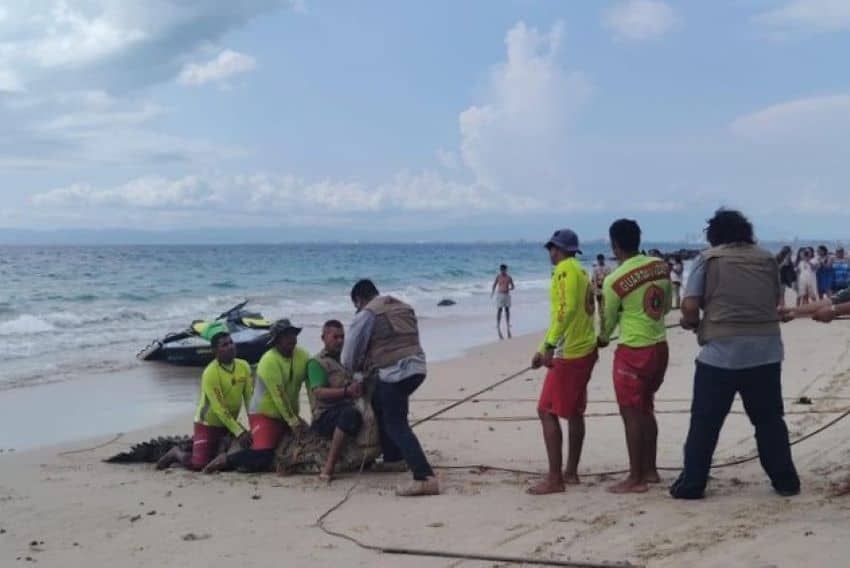
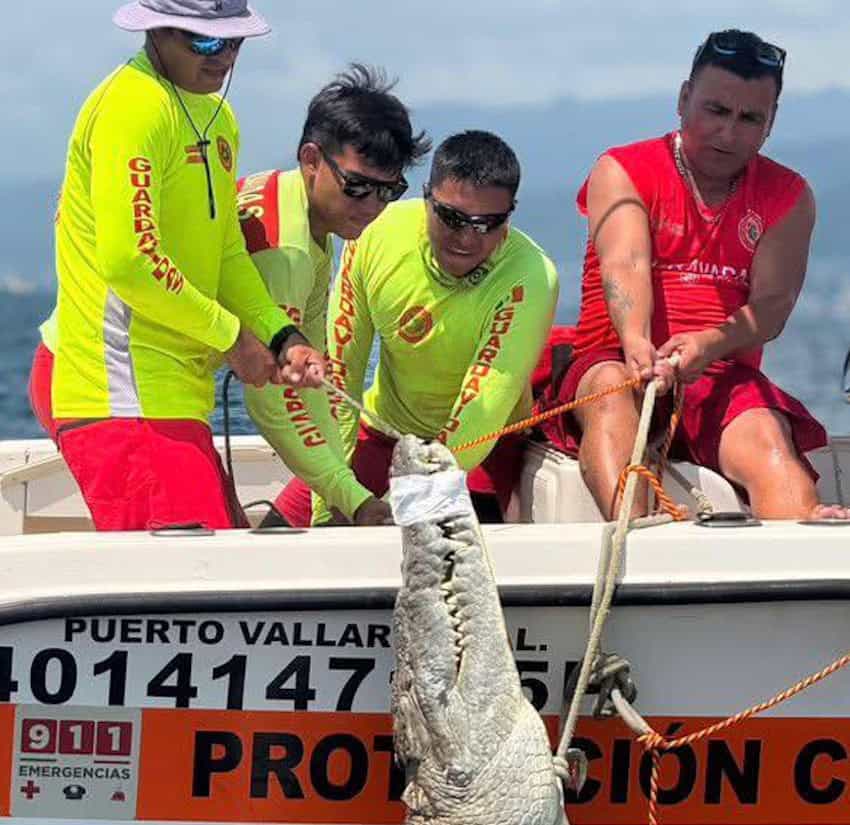
The capture of a 3.7-meter (12-foot) crocodile by lifeguards on a southern Puerto Vallarta beach this week has brought renewed attention to the growing presence of these reptiles along the city’s coastline.
The incident follows the killing of two adult crocodiles in the city within a week, including one found decapitated, with some of its tail cut offas well, inside the protected El Salado estuary.
In the Ladrillera area, a crocodile measuring 1.62 meters (5.3 feet) was discovered tied and shot in the head, leading to the arrest of two suspects, according to the Municipal Civil Protection Department.
Authorities say the captured crocodile was safely relocated outside the tourist zone. However, the frequency of such encounters is raising concerns among residents and visitors alike.
Experts attribute the increase in crocodile sightings to a combination of seasonal and human-driven factors.
In general, Puerto Vallarta and its beaches are places of transit for crocodiles, according to Pablo Hernández Hurtado, technical manager of the Cipactli reptile house at the Centro Universitario de la Costa, a regional campus of the University of Guadalajara in Puerto Vallarta.
He explained that the rainy season expands local waterways, encouraging crocodiles to seek new feeding and breeding grounds.

More critically, “the crocodile moves through the sea because the estuaries have shrunk due to urban growth.”
That leads to crocodiles coming into closer contact with humans.
Urban expansion and tourism have encroached on wetlands and mangroves, historically the natural habitat of the American crocodile.
As a result, sightings are now common at beaches near river mouths, such as the Ameca and Pitillal rivers, and in areas like Marina Vallarta and Holi Beach. Recent weeks have seen crocodiles spotted in the Pitillal River and even walking among bathers at Holi Beach, with some tourists attempting to feed them — a practice experts warn is dangerous.
Local experts and university researchers including Hernández estimate that the Puerto Vallarta region — especially around Boca de Tomatlán and Boca Negra — hosts 200 to 250 American crocodiles (Crocodylus acutus). Approximately 30 to 40 are adults.
Authorities urge the public to maintain a safe distance, avoid feeding wildlife and respect posted warnings. While crocodiles generally avoid humans, they may attack if threatened.
With reports from La Jornada, Informador, Milenio and Excelsior