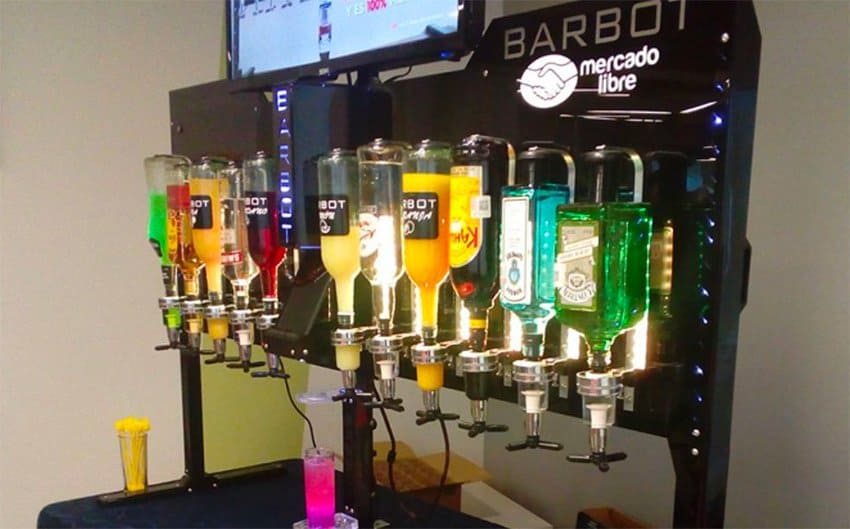
Fancy being served a shot of tequila or a margarita without having to make small talk with a bartender? A Mexican company has the solution.
Cuernavaca-based MiniFab has designed and produced a robotic bartender called Barbot, which is capable of serving shots of any liquor as well as making more elaborate mixed drinks and cocktails.
In fact, the robot can be programmed to serve whatever a customer wants, meaning that it’s not limited to alcoholic beverages.
MiniFab, whose core business is making 3-D printers and selling 3-D printing filament, is now selling its drink-serving robot, the first ever made by a Mexican company. The price: 38,000 pesos (US $2,000).
“There are machines that do the same thing in other countries but not with the same cost efficiency. There is a robotic bar on a Royal Caribbean cruise ship that does exactly the same thing but that machine costs US $2 million,” MiniFab founder Fabien Legay told the newspaper El Economista.
Barbot doesn’t completely replace the need for human bartenders, however.
While the robot can make and serve drinks with precision, it needs someone to change the bottles it uses. It is also incapable of garnishing drinks with the same intricacy as a human.

MiniFab has already sold 12 robotic bars and Legay is now considering making a few tweaks to his creation that will enable it to serve beer and accept electronic payments.
Source: El Economista (sp)