Day of the Dead is one of Mexico’s great traditions. The holiday smells of copal and marigolds, streets are filled with elaborate altars and enchanting parades and cemeteries are lit up with candles and song.
This year, the emblematic event, which UNESCO has named Intangible Cultural Heritage of Humanity, will continue in Mexico City, albeit with some coronavirus modifications.
While some places in Mexico have banned Day of the Dead celebrations outright, residents of the capital city have several options to honor the memory of their loved ones.
Mexicráneos
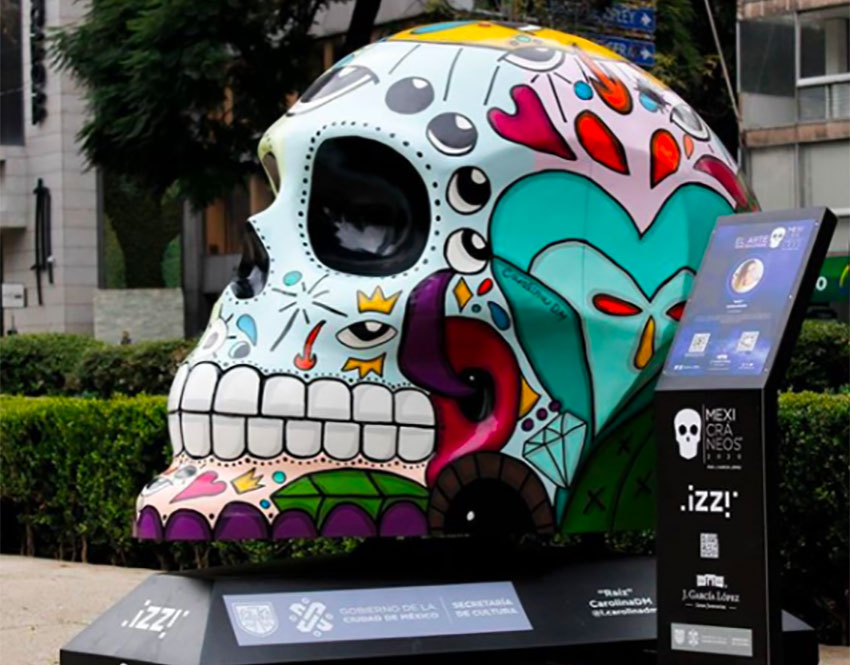
One way to take in Day of the Dead is to visit Paseo de la Reforma, which is not only adorned with yellow and orange marigolds but also with 55 giant, elaborately painted skulls, part of the “Mexicráneos” public art project sponsored by a funeral home.
The skulls were first presented over the Day of the Dead holiday in 2017, and have since traveled to exhibitions in other parts of the country and to France as a proud representation of Mexican culture and the significance of Day of the Dead to the country’s heritage.
The skulls, which are on display until November 10, can also be seen on Paris and France streets in the Juárez neighborhood.
Virtual parade
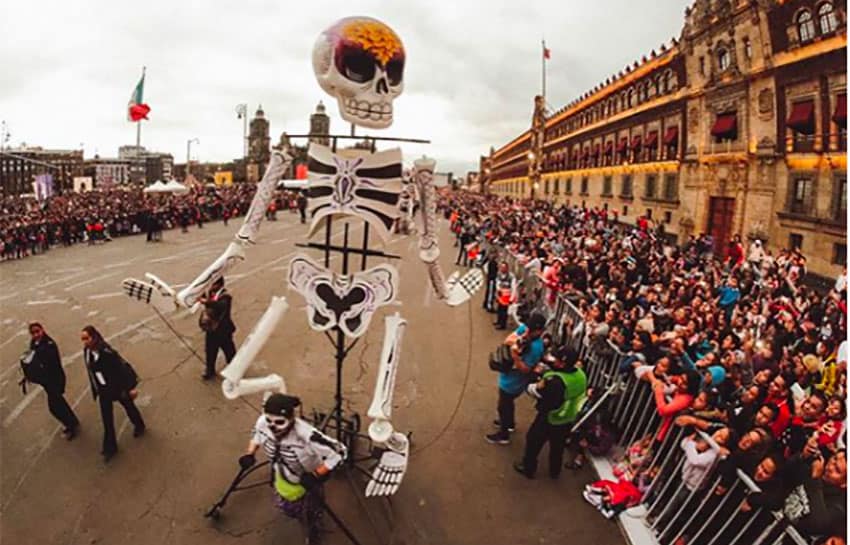
Mexico City’s iconic Day of the Dead parade typically draws a crown of millions along the parade route, cheering the gloriously macabre costumes and floats. Authorities have decided that this year the parade will be virtual to avoid a conglomeration of viewers.

The Mixed Fund for Tourism Promotion (FMPT) and show producer Vuela Corp. have chosen to carry out the traditional parade in a totally virtual format, inviting citizens to pay tribute from their homes to the people who have died from the coronavirus.
“This 2020 has been a difficult year for everyone, in economic, labor and family matters. Many of us have lost loved ones, so it is important to pay tribute to them and say goodbye to them with the love and respect they deserve. Mexico has the ideal tradition to give this message, the Day of the Dead and our parade by making it all virtual,” the FMPT said.
The parade will be held in a large, empty stadium and filmed for viewers to watch from home through an app called “Xóchitl y El Mundo de los Muertos,” or “Xóchitl and the World of the Dead.”
The platform will broadcast the parade as well as other cultural materials related to the holiday.
Dance of the dead
Lovers of dance can also enjoy a performance of the Mexican Folkloric Ballet in a show called Y a dónde irán los muertos? (And Where Will the Dead Go? as performers lead the audience through different concepts of death related to indigenous and Hispanic cultural influences as well as those of today’s society.
The troupe will perform on October 31 at 7 p.m. at the Esperanza Iris Theater in Mexico City. Space is limited and tickets cost 163 pesos (US $7.70).
Altar viewing by reservation
Day of the Dead altars are one of Mexico’s most charming traditions and one that continues at Museo del Carmen, just on a smaller scale and with social distancing.
This year’s Day of the Dead offering to Mexican painter and sculptor Manuel Felguérez as well as health personnel will take place on October 27 from noon to 3 p.m. for free, but visitors must email to request a reservation and will be provided with an assigned time.
Otherwise, the altar can be viewed Tuesday through Saturday from 10 a.m. to 3 p.m. at a cost of 65 pesos (US $3.00). Access is free for children, seniors, teachers and students, and is free for all on Sunday.
Socially-distanced La Llorona
The classic retelling of the legend of La Llorona, a banshee of a woman who weeps for her drowned child, will be held in Xochimilco for the 27th year, but also with strict coronavirus hygiene measures in place.
The show, which combines music, dance and theater, is held on an island and attendees are taken there in the typical small boats called trajineras that have been disinfected. Social distancing will be maintained throughout the boat ride and performance, and only 12 people will be allowed to board each boat.
The ride to and from the island and the subsequent show begins at 7 p.m. and costs 387 pesos (US $18.30) per person.
Source: El Universal (sp)