
Defense Minister Luis Cresencio Sandoval has announced a plan to “seed” clouds in an attempt to break the drought in Mexico City.
The Ministry of National Defence (Sedena) will work with the National Water Commission (Conagua) to carry out the chemical process, which involves discharging an acetone solution containing supercooled silver iodide into clouds to produce rain.
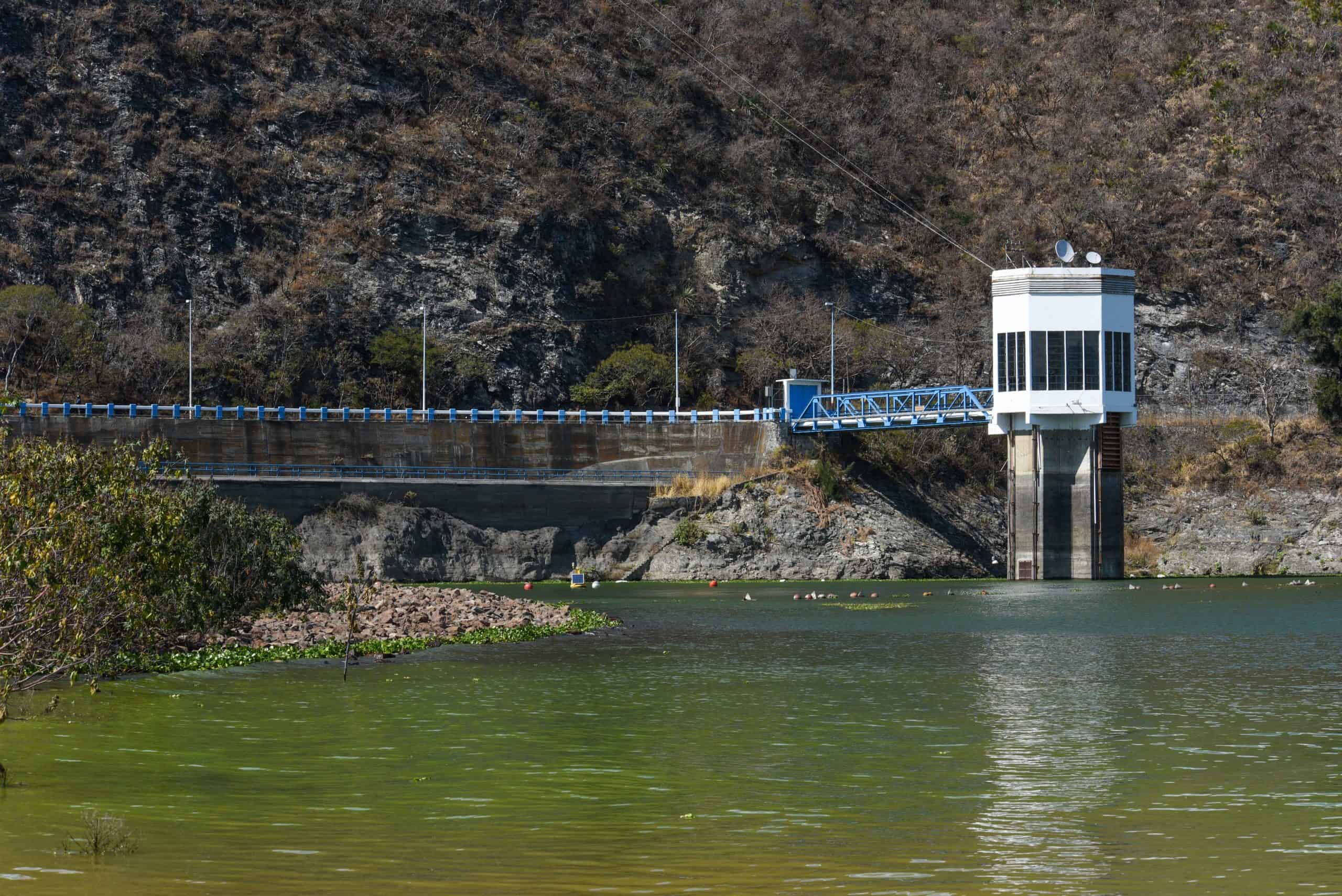
“Considering that we have a plane with all the equipment to seed clouds … we checked with Conagua to see whether we could support [them] with the plane in the area where they needed to be able to make it rain,” Sandoval said.
He explained the plane normally works in northern Mexico and is now in Baja California but could be brought to Mexico City to tackle the capital’s current water crisis.
“The conditions in the Cutzamala area are very good because there is humidity, there is cloudiness,” Sandoval said.
Sedena’s announcement came after Mexico City Mayor Claudia Sheinbaum said that water pressure in the Valley of Mexico would be reduced in March, April and May due to low water levels in the reservoirs that supply the capital.
According to Conagua, the Cutzamala reservoir system is currently at only 47.6% of storage capacity — the lowest level recorded in its history. Rain is desperately needed in order to refill the dams that keep the water flowing to Mexico City.

The cloud seeding process works by discharging supercooled silver iodide into certain types of rain clouds. This causes water particles in the cloud to bunch together until they are heavy enough to fall. It can only work on existing clouds and cannot create more water in the sky.
Mexico first used this process to control a forest fire in Coahuila and Nuevo León in April 2021.
It has since been employed to induce rains in the drought-stricken states of Baja California, Sinaloa, Sonora, Chihuahua, Durango and Zacatecas, but has never yet been used near the capital.
Mexico has faced increasingly serious droughts over the last decade. Annual rainfall has fallen from 10,000 cubic meters in 1960 to 4,000 since 2012, and the World Resources Institute now ranks the country 24th for water stress. The problem is worsened by poor water management systems and misuse of water extraction rights.
Twelve million Mexicans currently do not have access to clean drinking water, and the Water Advisory Council (CCA) nonprofit has warned the issue is likely to cause social and economic conflicts over the coming years.
With reports from El Financiero and Infobae