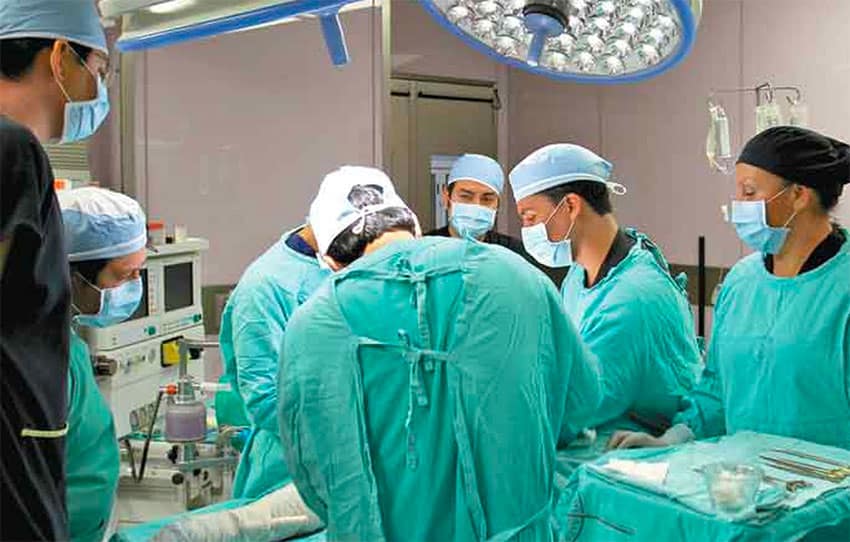
Now more than ever medical personnel around the world are viewed as heroes, risking their lives and fighting tirelessly to combat coronavirus on the front lines of the deadly global pandemic.
Yet a new study commissioned by the Mexican Senate reveals that in this country doctors and nurses are substantially underpaid given the services they perform, their level of education and the long working hours.
“Although they perform functions that make a difference between life and death and are among the most loved and respected professions, medical and nursing personnel’s compensation in Mexico is significantly lower than in other countries of the world and it is also less than other occupations that require fewer years of study,” the document states.
The study, released in March by Mexico’s Belisario Domínguez Institute, paints a grim financial picture of how medical personnel in this country are compensated.
The study cites a 2019 Physician Compensation Report from the website Medscape revealing that, on average, Mexican doctors earn around 16,146 pesos (US $670) per month, about one-third of what doctors make in countries like Brazil and Italy. Doctors in the United States make 14 times the salary of their Mexican colleagues.
Nurses, meanwhile, earn around 9,909 pesos (US $409) a month, a salary that lands them on the list of the 10 poorest paid professions in Mexico. Veterinarians, for example, are better paid than nurses, as are musicians.
“It is not a question of undermining the morale of our health professionals due to the modest salary they receive, but rather of emphasizing and recognizing that at the moment there is an army of brave and committed women and men who are giving everything to save people’s lives and that they are doing it, fundamentally, out of a vocation for service and love of the profession,” said the study.

The study also noted that although nurses and doctors are the third and fifth most respected professions in Mexico, there simply aren’t enough of them to go around.
In July 2019, the Health Ministry announced that Mexico needed 195,000 more doctors and 730,000 more nurses to meet the country’s medical needs, and those numbers were pre-coronavirus.
“One of the lessons we must learn from this epidemiological crisis is the need to improve working conditions for the people who take care of our health,” the study concluded.
Mexico News Daily