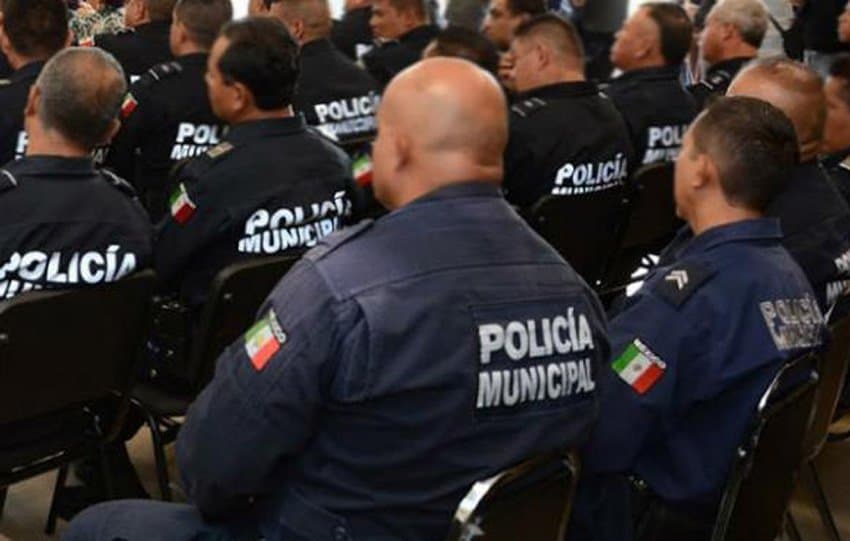
Guanajuato’s new governor promised in July to address last year’s surge in violent crime with a new security strategy that would increase the salaries of police officers.
But four months after Diego Sinhué Rodríguez was sworn in, many officers are earning less than domestic workers, according to a survey by the newspaper Milenio.
On average, it found, people employed to clean houses earn an average of 250 pesos (close to US $13) for working four hours a day, or 6,000 pesos per month. Yet a municipal police officer in Pueblo Nuevo is paid 4,800 pesos.
A welder can earn 10,000 pesos per month, while the municipal police force in Apaseo el Grande pays its officers 9,500.
Conditions are also inadequate, according to police interviewed in Apaseo el Grande, Apaseo el Alto, Celaya, León, Irapuato and Pueblo Nuevo.
A patrol car in Apaseo el Alto bears evidence of the criminal violence in the municipality with more than five bullet holes scoring the bodywork, and is missing one of its windows.
He added that life as a police officer is complicated and risky, yet they don’t always have what they need to perform their jobs properly. “We sometimes have to lend each other [bulletproof] vests, we buy our own shoes and mend our uniforms.”

His colleagues in the neighboring municipality of Apaseo el Grande have it even more complicated: average monthly salaries are 6,000 pesos.
Mayor María del Carmen Ortíz Terrazas says she plans to change that and offer salaries between 11,000 and 13,000 pesos per month.
At the other end of the salary scale are police officers in Celaya and Irapuato.
Lower-ranking police officials in Celaya earn about 12,000 pesos, while their superiors can earn over 30,000. In Irapuato, average salaries are above the 14,000-peso mark, but police officers report that they still have to pay for their uniforms and shoes.
Source: Milenio (sp)