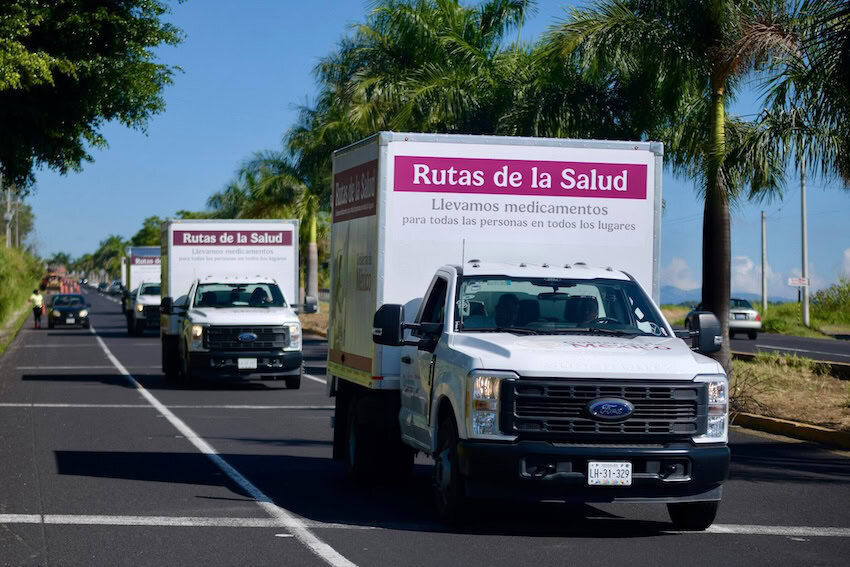
Mexico’s health authorities have started delivering medications and medical provisions to government run health centers, under a new program designed to resolve lingering supply shortages.
On Tuesday, the first day of the new Rutas de la Salud (Health Routes) program, 3,801 kits of medications and medical supplies were delivered.
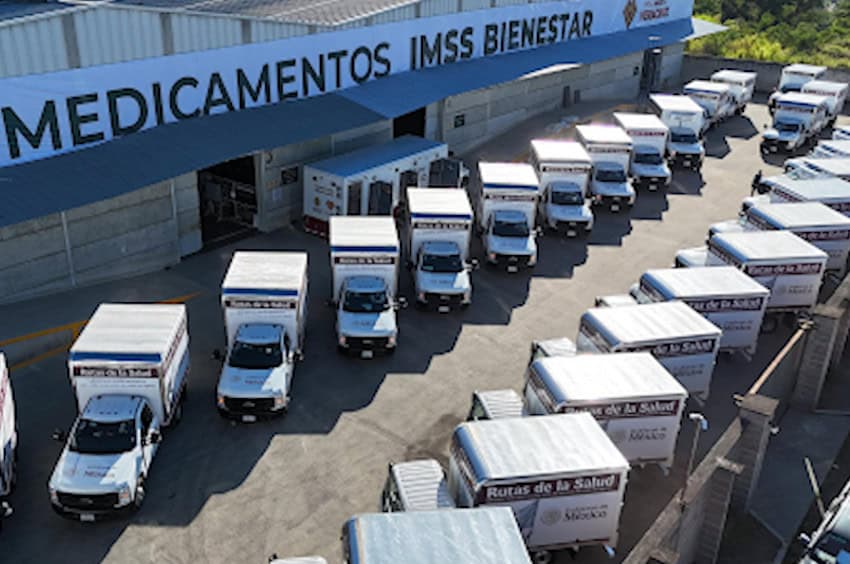
“Medications and medical supplies were delivered to 3,043 health centers in the 23 participating states,” President Claudia Sheinbaum said. “As a result, 37.7 percent of primary care units are now stocked.”
Deliveries to the remainder of the 8,061 Mexican Social Security Institute (IMSS) units will continue through Saturday, Sheinbaum said, while distribution to all of the nation’s hospitals will begin next week.
Targeted disbursements of cancer drugs were delivered last week.
Reforms to Mexico’s health care system introduced in 2019 by then-President Andrés Manuel López Obrador were found to be poorly conceived and poorly implemented, resulting in the disruption of acquisition and deliveries, as well as severe shortages at the state-owned mega-pharmacy. The shortages hit cancer patients particularly hard, according to the medical journal The Lancet.
López Obrador scrapped the first version of his health reform and replaced it in 2023, but nine of Mexico’s 32 states opted out of the new programs.

Last November, Sheinbaum introduced a new health plan in an effort to improve coverage, quality and accessibility of medical services in Mexico. Rutas de la Salud is an outgrowth of that plan.
IMSS director Alejandro Svarch said Tuesday that the Health Routes strategy was jointly designed by the Health Ministry and IMSS’s regional teams with the goal of ensuring that every doctor has all necessary supplies.
“The goal is that every patient finds what they need during their medical consultation, with a focus on primary care,” he said, adding that Health Routes will deliver 15 million units comprising top-grade pharmaceuticals and first-level medical supplies by Saturday.
“Previously, medications were delivered in installments. Now, they will be delivered in a logistics package containing all the medications each clinic requires for a month,” Svarch said.
More than 1,000 delivery routes have been mapped out and packages will be delivered monthly to each IMSS Bienestar medical unit.
Svarch said each kit contains 1,900 articles and features 147 essential medical items, including treatments for hypertension and diabetes, as well as basic painkillers.
With reports from El Economista and La Jornada