As residents across Tabasco and Chiapas continue to struggle with the effects of flooding, donations have begun to pour in — not only from Mexico but from as far away as Europe.
The DIF family services agency of Tamaulipas has sent 20 tonnes of food, clothes, and cleaning and sanitary supplies donated by Tamaulipas residents to aid thousands of Tabasco families left homeless and without possessions in shelters and in small communities where residents did not or could not leave their homes.
According to Mexico City Mayor Claudia Sheinbaum, the capital has sent 67 civil servants — 40 0f them city water department employees — as well as vehicles and machines to aid Tabasco. The city has also set up collection centers in every borough to allow residents to donate food and supplies.
Meanwhile, the Ministry of Foreign Affairs, the National Transparency Institute and the Senate have set up their own collection centers in the city.
Donations are also coming in from Germany and France.
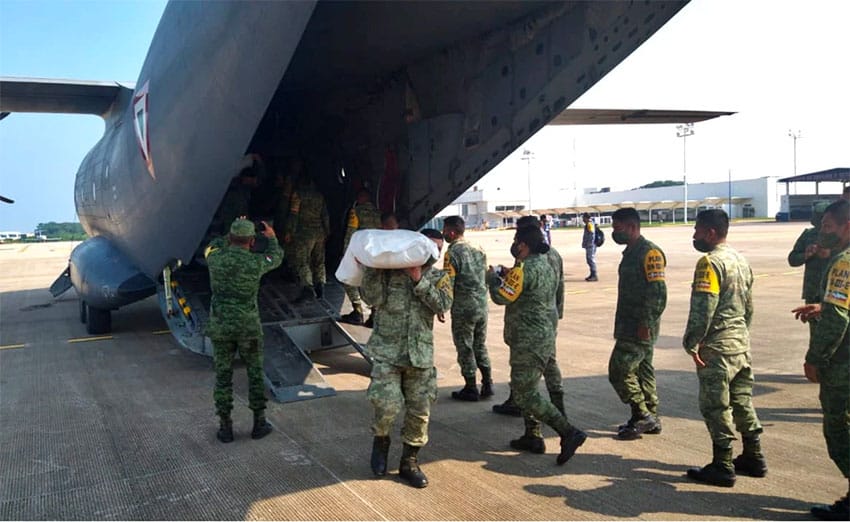
Thursday afternoon, seven tonnes of provisions arrived at the Villahermosa International Airport in Tabasco and were distributed to affected residents in shelters by the Mexican Air Force.
In response to a call for international help by the Ministry of Foreign Affairs, the government of France donated 60,000 euros to the Mexican Red Cross to help families in Tabasco and Chiapas. Officials say the money will go to help some 1,200 families in the two states.

The donations by France and Germany were both shepherded by the countries’ ambassadors to Mexico, according to officials.
The floods have damaged at least 35,000 homes in Tabasco where many residents have been stranded in water for days in communities that have not been reached with aid.
The flooding is the result of the combined effects of two cold fronts and Tropical Storm Eta, which dumped heavy rains on Tabasco, Chiapas, and Veracruz last week, causing rivers to overflow and triggering landslides. Another factor was the release of water from Las Peñitas dam.
Source: El Universal (sp), 24 Horas (sp)