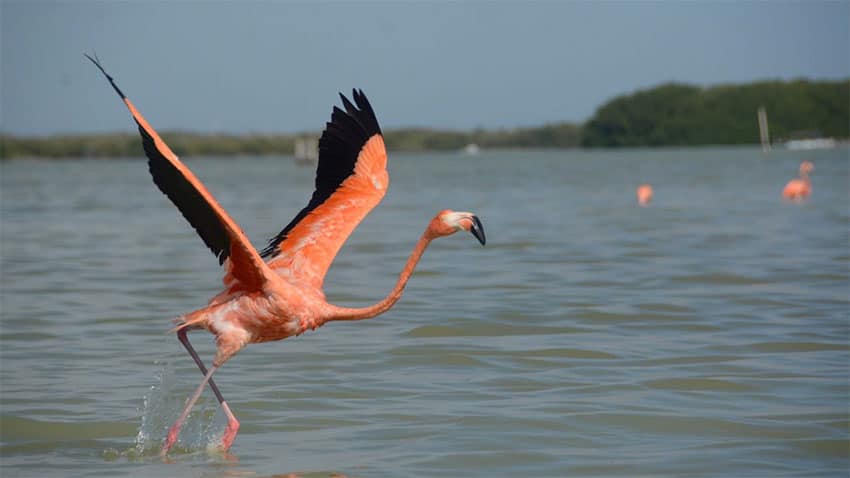
A Mexican startup is using drones to aid conservation of the pink flamingo on the Yucatán peninsula.
Ornitronik, a company founded by National Autonomous University biology graduate Esaú Villareal, has developed an automatic observation and detection system that uses drones to count flamingos and monitor their behavior.
Called FlaminGO!, the system can capture a single image of as many as 1,000 flamingos in 30 seconds. The automatic census of the flamingo population saves time and drones can count birds in areas that are difficult to reach.
Data and images that the system collects are passed on to public and private organizations that can use the information to develop better conservation plans for the pink flamingo, which is classified as an endangered species.
DJI, the company that makes the drones used in the Ornitronik system, said in a statement that FlaminGO! helps to understand the behavior of flamingos, adding that the size of their population is indicative of the health of the ecosystem in which they live.
The system can identify information such as where Yucatán peninsula flamingos rest and nest, the company said.
Villareal said that care is taken to ensure that the use of drones in flamingo habitats doesn’t disturb the species.

“It’s important to consider that the use of drones for the monitoring of wild fauna has to be carried out with knowledge and ethics so as to not to disturb any species. There are some groups [of flamingos] that are more susceptible to stress and their well-being must come first,” he said.
Villareal said that he plans to use the FlaminGO! system to conduct accurate censuses of other animal species in Mexico.
According to DJI, the drone system, which makes use of thermal vision technology and zoom, is between 90% and 95% accurate.
Source: El Financiero (sp)