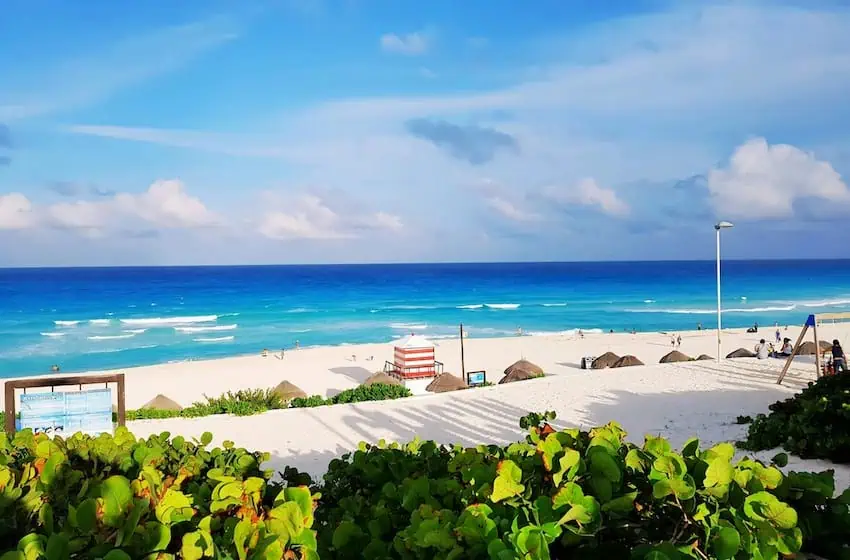
Heading to your favorite Mexican beach anytime soon? If so, you might first want to check Playas MX, a new smartphone application designed to provide real-time updates on seawater quality at 289 beaches in 17 coastal states.
Available for free through both Google Play and the App Store, the app was developed jointly by the Ministry of Environment and Natural Resources (Semarnat) and the Federal Commission for the Protection against Sanitary Risks (Cofepris).
During the platform’s official launch earlier this month, Semarnat head Alicia Bárcena said the app will allow “people to have timely information about the water quality of our beaches from their cell phones … Mexicans [have a] right to know which beaches they can go to without problems.”
Bárcena said the new app is in line with a government initiative launched on World Environment Day last month: the National Campaign for the Cleanup and Conservation of Mexico’s Beaches and Coasts, 2025-2030.
“We would like to achieve plastic-free beaches, and that’s why working in synergy with Cofepris seems fantastic to demonstrate the quality of the seawater that residents will encounter,” Bárcena said. “We want to reduce coastal pollution and, of course, restore ecosystems like mangroves.”
During her speech, Bárcena emphasized that “in Mexico, we have 12,000 kilometers of beaches and 3 million square kilometers of maritime surface, equivalent to 62% of the national territory.”
With the app, people can get information — or provide it.

“People can tell us if a beach isn’t as clean as reported, or give us suggestions,” Bárcena added.
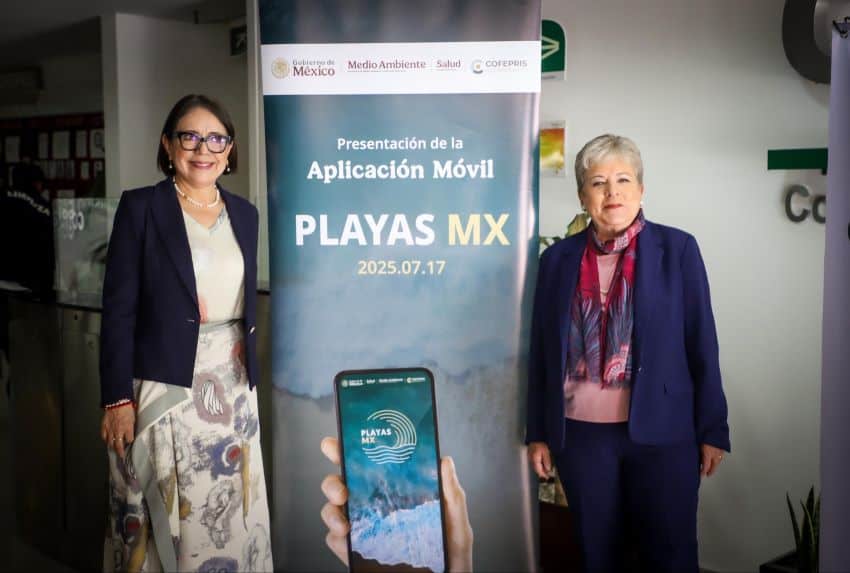
The app displays monitoring results from 393 sampling points, reflecting data collected during the 2025 summer vacation season.
According to Cofepris, 94% of the beaches tested meet World Health Organization (WHO) standards: fewer than 200 colony-forming units of fecal enterococci per 100 milliliters. In all, there are 273 such “clean” beaches (some beaches had more than one testing point) — including a top 10 cited in Mexico News Daily.
The remaining 16 beaches — located mainly in Guerrero, Michoacán and Jalisco — were deemed unsuitable due to bacterial contamination exceeding safe limits.
The worst-rated beaches are Tijuana Beach I (Baja California); El Real Beach (Tecomán, Colima); Carabalí, Hornos, Caletilla and Papagayo beaches (Acapulco, Guerrero); Cuale and Camarones beaches (Puerto Vallarta, Jalisco); Mismaloya Beach (south of Puerto Vallarta); La Bocana Beach (Huatulco, Oaxaca); and Nexpa, Boca de Apiza, Jardín, Las Peñas, Chuquiapan and Caleta de Campos (Michoacán coast).
National Beach Cleanup Strategy aims to eliminate plastic pollution
“Samples collected during the July period indicated that bacterial concentrations exceed the permissible limit of 200 MPN/100 ml, which represents a risk to the health of bathers,” authorities noted.
Exposure may cause “gastrointestinal, dermatological and respiratory infections.”
Armida Zúñiga Estrada, the head of Cofepris, the federal agency charged with protecting the public by regulating health-related risks, called the Playas MX app “a technological innovation that offers reliable data on the microbiological monitoring of primary contact water.”
The app features geolocated search, color-coded suitability indicators and a feedback section for users.
With reports from Milenio, El País and Sin Embargo