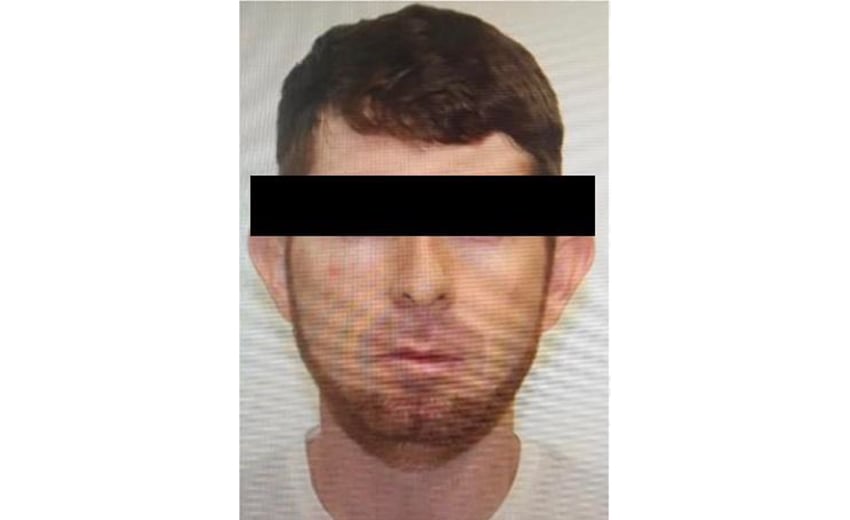
Security Minister Omar García Harfuch announced on Tuesday that a nephew of convicted drug lord Joaquín “El Chapo” Guzmán Loera had been arrested in the northern border city of Nogales, Sonora.
García Harfuch wrote on social media that federal forces detained “Isai N’, nephew of ‘El Chapo,'” but didn’t provide additional details explaining his relation to Guzmán Loera, who is serving a life sentence in a U.S. prison after he was found guilty of drug trafficking by a U.S. jury in early 2019.
Derivado de trabajos de inteligencia militar central de @Defensamx1 y en coordinación con @FGRMexico, a través de la Agencia de Investigación Criminal, @GN_MEXICO_ e instituciones del @GabSeguridadMX, se realizaron dos acciones relevantes contra estructuras criminales.
En… pic.twitter.com/HjW5gZCPM0
— Omar H Garcia Harfuch (@OHarfuch) May 26, 2026
He said that the suspect — identified in media reports as Isaí Martínez Cepeda, aka “El Chinacate” — is subject to an extradition order.
The Security Ministry (SSPC) said in a statement that the suspect is “identified as a logistics operator for a criminal group,” reportedly the Sinaloa Cartel, which Guzmán Loera formerly led. Martínez reportedly works for the Chapitos faction of the cartel, which is led by sons of Guzmán Loera.

The SSPC said that Martínez was in charge of “the production and distribution of synthetic drugs to the United States and Costa Rica.”
He is reportedly accused of trafficking a shipment of some 10,000 fentanyl pills to the U.S. last year.
The SSPC said that the suspect was detained at a property in the Casa Blanca neighborhood of Nogales. It said he was subject to an arrest warrant for the purpose of extradition to face organized crime and drug trafficking charges, presumably in the United States. The SSPC said that two firearms and cartridges were seized from Martínez when he was detained.
García Harfuch reported earlier this month that, during the current term of government, more than 52,000 people had been arrested for allegedly committing high-impact crimes. Compared to the previous federal government, the Sheinbaum administration has taken a more proactive approach to combating organized crime. Earlier this year, the Mexican Army carried out an operation that resulted in the death of Nemesio “El Mencho” Oseguera Cervantes, leader of the Jalisco New Generation Cartel.
Since taking office in October 2024, the Mexican government has sent more than 90 organized crime figures to the United States in three separate transfers. Among those sent north is notorious drug lord Rafael Caro Quintero, the convicted murderer of United States DEA agent Enrique “Kiki” Camarena.
Who is Isaí Martínez Cepeda?
While Martínez Cepeda was described as a “nephew” of “El Chapo”, his two surnames indicate that neither his father or his mother is a sibling of Guzmán Loera. It is possible that he is the son of a cousin of Guzmán Loera, but referred to as the drug lord’s “nephew,” a common usage of the word in Spanish.
According to media reports, Martínez Cepeda’s brother is Enoc Martínez Cepeda, a man known as “El Vocho” (a colloquial name for a VW bug) who is also allegedly affiliated with the Sinaloa Cartel.
The media outlet Latinus reported that Isaí Martínez was previously arrested in Culiacán, Sinaloa, in June 2008 when he was 25. Therefore, he would now be in his early 40s.
With reports from El Universal, Reforma, El Financiero and N+