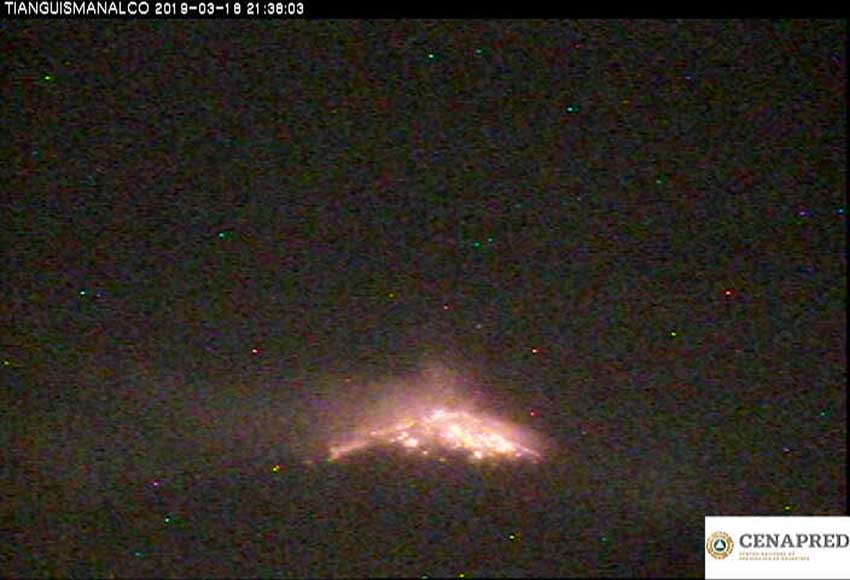
One of the strongest explosions recorded in recent years at the Popocatépetl volcano occurred last night, expelling incandescent rock fragments in a 2.5-kilometer radius around the crater and triggering an ash fall alert in the city of Puebla and 11 other municipalities.
Recorded at 9:38pm, the explosion expelled a plume that rose 1.2 kilometers above the crater. The mobile seismic alert SkyAlert reported that the blast could be heard 40 kilometers away.
The ash expelled in the explosion started to drift toward northeastern Puebla state and was followed by an ash fall alert issued by the state Civil Protection office for the municipalities of Atlixco, Cuauhtlancingo, Huaquechula, Ocoyucan, Puebla, San Andrés and San Pedro Cholula, San Diego la Mesa Tochimiltzingo, San Gregorio Atzompa, San Jerónimo Tecuanipan, Santa Isabel Cholula and Teopantlán.
Civil Protection authorities reiterated that a 12-kilometer security radius is in place around the volcano, as it is expected to continue exploding and expelling fragments.
That radius was breached a week ago when several people climbed to the top of the volcano and filmed video of the crater, drawing rebukes from authorities.
With regard to the ash fall, authorities advise the use of wet face masks in case of exposure, keeping pets indoors and windows closed, and sweeping up ash instead of washing it away.
Source: Reforma (sp)