Rising electricity and gasoline prices coupled with insecurity are hitting Cancún restaurants hard.
Juan Pablo Aguirre, head of the restaurant industry association Canirac, believes that between 30 and 50 restaurants in the Caribbean coast resort city could close by the end of the year due to the economic pressure faced not only by businesses but also by local residents.
“September was a very complicated month for the whole sector, we’re waiting to see how the year ends. We hope that there will be a slight rebound during the December holiday season but it definitely won’t make up for how difficult the whole year has been for us,” he said.
“What is hitting us are issues at the national level, like the increase in gasoline prices, the increase in electricity tariffs, the depreciation of the peso compared to the [US] dollar although at a local level the increase in insecurity [is also a factor]. All this together is stopping people from going out and eating in restaurants and all kind of establishments in general.”
Aguirre said that a lot of businesses have had to take on debt in order to pay their electricity bills.
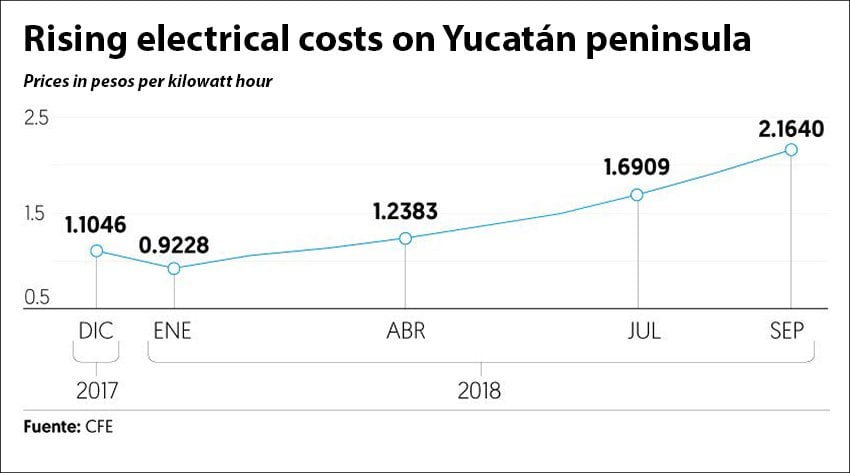
Prices have increased significantly recently, prompting Canirac to seek exemptions from the municipal government that would help restaurants to reduce their electricity bills.
Inna Germán Gómez, president of the Caribbean branch of the Business Coordinating Council (CCE), described the increase to electricity prices as “scandalous.”

She explained that a National Energy Control Center (Cenace) levy had added 3% to 4% to monthly electricity bills and that customers are also being charged more for distribution and transmission.
“. . . In some cases, they’re raising monthly electricity bills by up to 50%,” she said.
Germán said the CCE will file at least 1,000 complaints with the Federal Consumer Protection Agency (Profeco) in relation to the price hike.
She added that the Federal Electricity Commission (CFE) has repeatedly blamed the increases on the Energy Regulatory Commission.
Source: El Economista (sp)