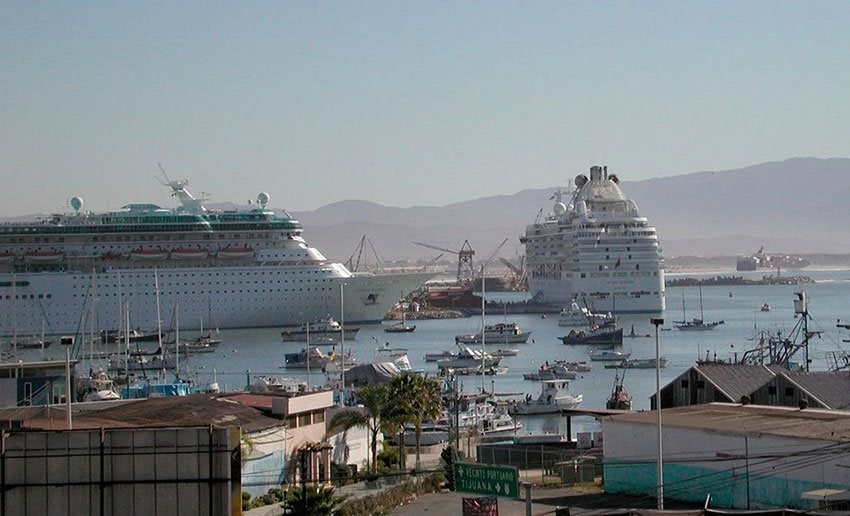
Ensenada, Baja California, will be included in the new northern border free zone to be implemented by the federal government although it is located beyond the official limits.
President López Obrador confirmed Ensenada’s inclusion during a speech to thousands of supporters at Mexico City’s central square Saturday evening just hours after he was sworn in.
The free zone, which is scheduled to go into effect on January 1, will generally extend around 30 kilometers south of Mexico’s border with the United States and run from Matamoros, Tamaulipas, to Tijuana, Baja California.
Ensenada is located about 100 kilometers south of Tijuana and the Mexico-United States border.
The value-added tax rate (IVA) is slated to be cut in the free zone from 16% to 8% while the maximum income tax rate (ISR) will be reduced from 30% to 20%.
Baja California Governor Francisco Vega de la Madrid said he was pleased that Ensenada – the state’s third biggest city behind Tijuana and Mexicali – would be included in the zone.
“It’s with satisfaction that we see from the first day of the new federal administration that Baja California is considered a strategic region for the development of Mexico,” he said.

Business groups including the Mexican Employers Federation (Coparmex), the Business Coordinating Council (CCE) and the National Chamber for Industrial Transformation (Canacintra) had warned that excluding Ensenada would have a negative effect on the city and surrounding municipality’s main commercial activities of tourism and trade.
The private sector lobbied strongly for Ensenada’s inclusion in the free zone, and sent a letter to López Obrador in October.
The president of Coparmex in Ensenada said the area depends heavily on tourism and investment from municipalities located closer to the border as well as the United States and it was important to ensure that it didn’t lose competitiveness.
“The municipality is geographically and commercially isolated from the rest of the country, being 940 kilometers from Hermosillo in Sonora and La Paz in Baja California Sur . . . there’s no kind of economic contact,” Marco Navarro said.
If Ensenada wasn’t included in the border region free zone, there were fears that the city’s workforce could be lured away and that shoppers would chose to spend their money closer to the border, or in some cases, in the southern United States.
An economic loss of 900 million pesos (US $44.3 million) had been predicted in the free zone’s first year of operation.
CCE Ensenada president Jorge Cortés Rios welcomed the government’s decision, saying that it would allow the city to maintain economic growth and position itself as one of the nation’s premier tourist destinations.
Other cities that will benefit from the zone are Ciudad Juárez, Chihuahua; Nogales, Sonora; and Reynosa, Tamaulipas.
Source: El Economista (sp)