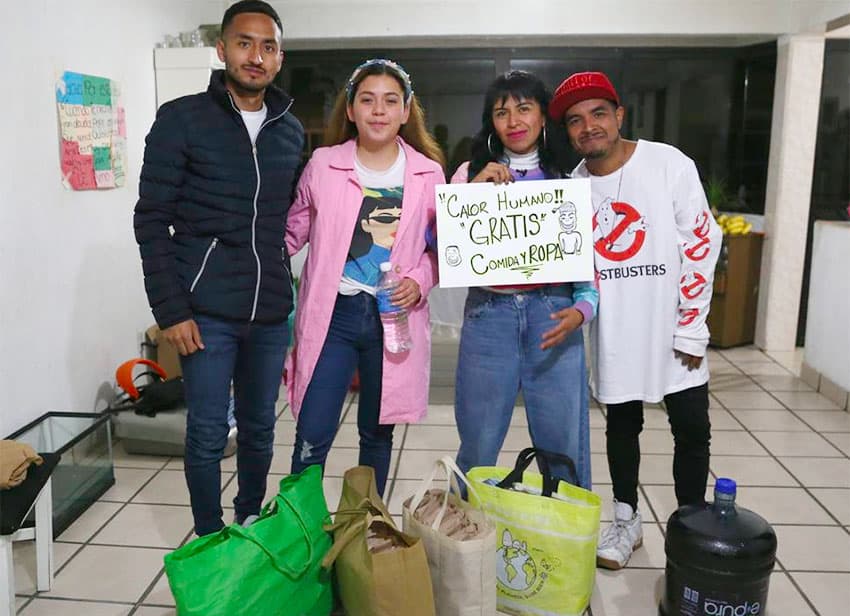
It’s 7:00 p.m., and Mexico City resident Jessica Castillo Zepeda and her friends Rodrigo, Paulina and Miguel are hunting the streets of Mexico City in a Jeep, looking for people less fortunate than themselves.
Castillo, who lost her job in a clothing shop earlier this year, used her savings to buy merchandise and started a clothing business in September on the internet. At the time, the entrepreneur promised herself that if she managed to survive the setback, she would give a percentage of her earnings to help others.
Now, since September, she has been making good on that promise by regularly traveling Mexico City’s streets with friends who were inspired by her example. Together they look for homeless people and offer them tortas (sandwiches) and coffee along with clothing and blankets.
But perhaps what they offer most of all on these forays is summed up by the phrase Castillo emblazons on each paper sandwich bag in black marker: “Calor Humano,” or “Human Warmth,” the name she eventually gave to her initiative to help.
“I think that the pandemic should touch everyone’s heart a bit to want to help others,” she told the newspaper El Universal. “We don’t all have the same opportunities.”
Though her personal story in 2020 is one of both resilience and generosity, Castillo might have easily ended up in the same situation as people she now helps. She is just slightly older than the age group in Mexico that has been most affected by unemployment since the start of the coronavirus pandemic — people aged 20–29. According to social security figures, nearly 345,000 Mexicans in that demographic have lost their jobs.
A survey by Iberoamerican University and UNICEF found that in 37.7% of Mexican households, one or more family members have lost a job and that one in three families have seen their incomes reduced by 50% or more.

While one might feel that Castillo has done her part to help others, she has been inspired by her success and has ambitions to expand her reach to other vulnerable groups. She and her friends continue to set aside a percentage of their incomes and plan to provide support to children with cancer and to street animals, as well as buy gifts for children from poor families who will not receive a gift on Three Kings’ Day on January 6.
“Helping people makes you want to keep moving forward,” she said.
Source: El Universal (sp)