Three years before a ban on genetically modified (GM) corn takes effect, the federal government is delaying import permits for the crop, according to the head of Mexico’s leading agricultural lobby.
National Farm Council president Juan Cortina told the news agency Reuters that among hundreds of agricultural product import permit applications awaiting resolution are at least eight for GM corn.
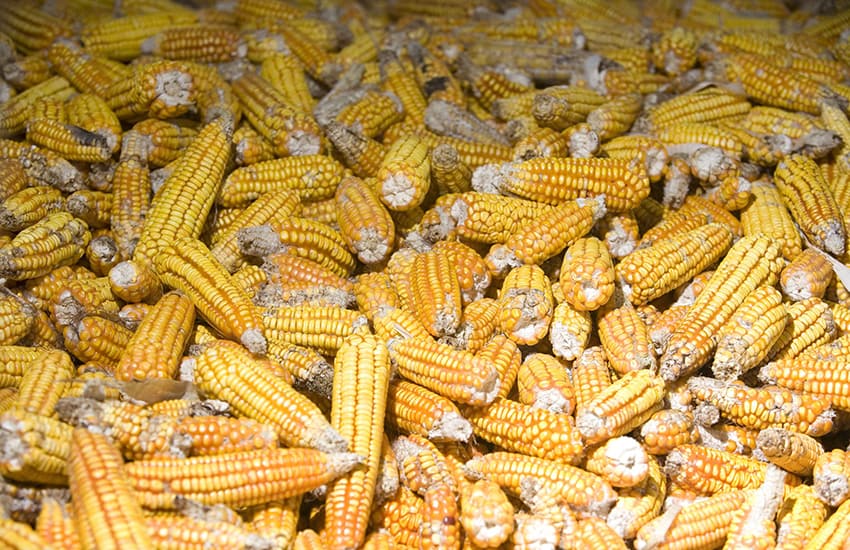
Mexico imports large quantities of GM yellow corn, mostly from the United States, the majority of which is used as livestock fodder.
But the government announced by executive order on the final day of 2020 that it aims to replace approximately 16 million tonnes of those imports with new, local production by 2024, the final year of the current administration’s six-year term.
It mandated the phasing out of imports by January 2024 and decreed the elimination of glyphosate, a controversial herbicide, by the same date.
However, Cortina said the health regulator Cofepris, which is responsible for approving import permits, is currently delaying approvals by up to two years, effectively bringing forward the ban.
“They’re not giving us extensions, there haven’t been any administrative changes, they just don’t respond,” he said.

Reuters said Cofepris didn’t respond to its request for comment. If the ban on GM imports goes ahead, the news agency said, the current multi-billion dollar grains trade between Mexico and the United States will be upended.
President López Obrador’s aim is to achieve food self-sufficiency without the use of toxic chemicals or genetically modified crops. His decree was unclear about whether GM corn for livestock would also be banned or whether the prohibition would only apply to corn grown for human consumption.
Agricultural leaders in both Mexico and the United States have consequently been seeking clarity over what exactly the decree will ban.
United States Agriculture Secretary Tom Vilsack said he received an assurance from his Mexican counterpart, Víctor Villalobos, that the ban wouldn’t apply to GM corn used as animal fodder. But Cortina said he hasn’t received such an assurance, telling Reuters he believed that the government was planning a blanket prohibition.
“Ideologically charged” officials are advocating a broad interpretation of the decree, he said, adding that the National Farm Council will continue to challenge the government’s ban on GM corn and glyphosate in the courts, despite recent losses. He predicted that the Supreme Court will ultimately have to rule on the legality of the prohibition.
“We’re fighting this in the courts and we’re also fighting it in talks with the government,” Cortina said.
He said the farm lobby and companies including Bayer, the German pharmaceutical and crop science firm that makes Roundup and other glyphosate-based weedkillers, are pursuing more than a dozen legal challenges against the ban.
Deputy Agriculture Minister Víctor Suarez, a key architect of the ban, told Reuters in February that GM corn and glyphosate are dangerous and that the government is forging ahead with its plan to prohibit their import.
But Cortina countered that decades of scientific research has shown both products to be safe. He said there would be “huge damage” to trade relationship with the U.S. if the bans are implemented fully.
Permit delays have also stopped shipments of glyphosate, he said, even though the government has pledged to develop an alternative herbicide before imports cease.
The farm council chief said that the National Council of Science and Technology flagged that glyphosate imports would be reduced this year but the government didn’t indicate that GM corn imports would be cut.
Cortina asserted that grains buyers, especially those within Mexico’s large livestock sector, won’t be able to substitute current GM corn import levels with domestically grown corn by 2024, as the government believes can occur.
With reports from Reuters (en)