Private energy companies yesterday rejected President López Obrador’s claim that contracts they were awarded by the Federal Electricity Commission (CFE) to build gas pipelines were one-sided and unfair.
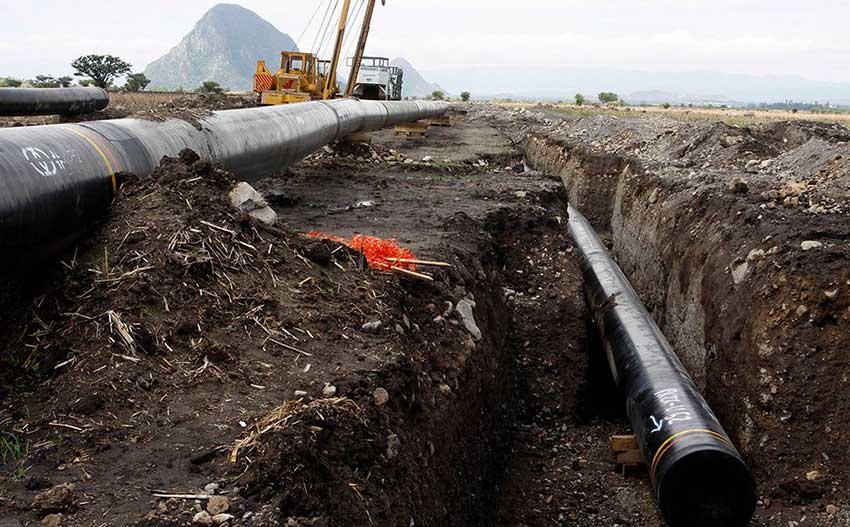
A total of six contracts were awarded to IEnova, TransCanada and Grupo Carso during previous governments for the construction of seven gas pipelines for which the CFE is to pay the companies 16 billion pesos (US $831.2 million) this year even though the projects are incomplete.
Speaking at his morning press conference, López Obrador charged that “juicy business has been done under the protection of public power, unfair contracts favoring private companies have been signed.”
He also took aim at the Energy Regulatory Commission (CRE), asserting that it played a role in awarding contracts to private companies and thus contributed to the “privatization” of the national energy sector.
The CRE later rejected the claim, stating that while it approved the CFE’s tendering processes, it didn’t participate in them in any way.
Work on the pipelines has been delayed for between two and five years due to opposition from several communities through which they are to run.
The CFE has already paid the companies more than 60 billion pesos (US $3.1 billion at today’s exchange rate) for the construction of the pipelines, which are intended to supply natural gas to electrical generation plants.

CFE chief Manuel Bartlett said that if the government is forced to continue paying out billions of pesos under the terms of the current agreements, the state-owned electric utility will go bankrupt.
He also threatened to sue the companies if they refused to show flexibility in agreeing to new terms.
Later in the day, the three companies all said separately that the contracts they signed are both legal and transparent and that social conflicts and/or legal challenges are responsible for the delays.
TransCanada said it cannot complete pipelines it was contracted to build in Hidalgo because communities are opposed to the work while Grupo Carso, owned by Mexico’s richest man, Carlos Slim, cited the same reason for delays to its projects in the north of the country.
IEnova said in a statement to the Mexican Stock Exchange that one of its pipelines began operations in 2017 but “sabotage” interrupted supply to the CFE.
Shares in all three companies fell following the remarks made by López Obrador and Bartlett, with IEnova suffering a 4.72% loss while TransCanada and Grupo Carso stock dropped 1.03% and 0.46% respectively.
Amín Vera, director of economic analysis at investment consultancy Black Wall Street Capital, said that “confidence in Mexico is being systematically degraded” by the government.
At yesterday’s press conference, Bartlett also named nine former public officials, including ex-president Felipe Calderón, who he said awarded energy contracts to private companies at which they would later work.
Source: El Financiero (sp), El Economista (sp)