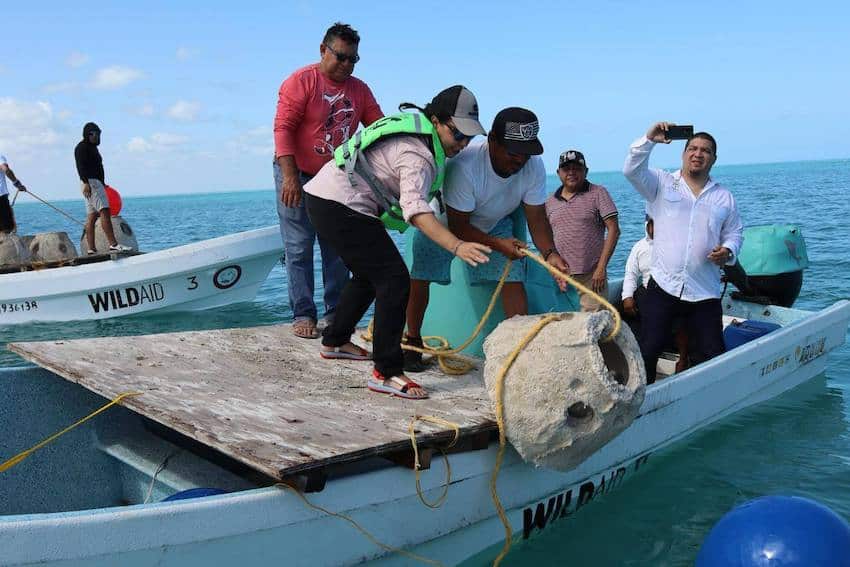
Giving life to a new underwater landscape off the coast of Río Lagartos, Yucatán state officials on Saturday oversaw the installation of an artificial reef in the hopes of transforming the state’s environmental, fishing and tourism future.
Local fishermen participated in the project, guiding the transport and placement of 30 enormous concrete blocks about three miles offshore, anticipating that they will become shelters full of color and movement in a matter of months. By summer, the authorities believe the site could be a snorkeling hotspot.
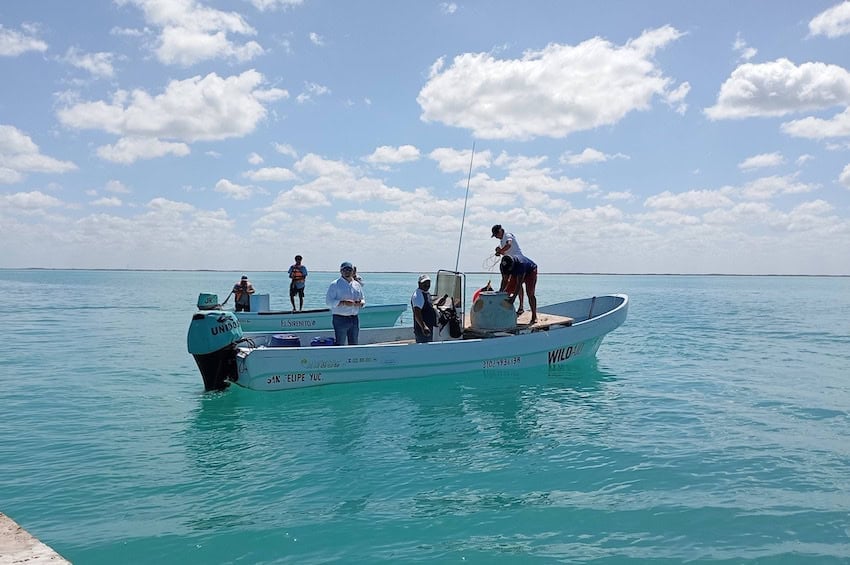
Beneath the surface, a veritable underwater mountain range was taking shape, awaiting the inevitable natural process — the arrival of algae and small organisms, followed by curious fish checking out the nooks and crannies, and eventually the region’s emblematic species will begin to call it home.
The stated objective of the new structure is to promote marine restoration, strengthen fishing and boost ecotourism, while also benefiting species such as grouper, octopus and lobster.
The area for the reef was carefully chosen, taking into account the stability and delicate balance of the marine ecosystem, the authorities said.
State officials say Yucatán’s 370 kilometers of coastline and 15 fishing ports provide “a historic opportunity to project this system of artificial reefs while promoting the economic development of local communities in harmony with nature.”
Lila Frías, the state minister of sustainable fisheries and aquaculture, spoke of the long-term vision and multiple benefits of the project.

“It’s not just about the biological benefits these structures provide to marine biodiversity, but also about consolidating them as a great tourist attraction and environmental awareness tool for those who visit our state,” she said.
Yucatán officials envision installing up to 500 artificial reefs along the shoreline by 2030.
As the federal Environment Ministry noted in 2017, artificial reefs help conserve natural reefs by reducing the pressure on ecosystems that are overexploited by resource extraction and diving.
Artificial reefs also create additional spaces to accommodate underwater flora and fauna species and can help promote sustainable tourism.
At the same time, they support academic research and discourage illegal fishing. While scientists can study the colonization of organisms and monitor reef evolution, the artificial structures make it difficult to use trawling nets, the use of which violates environmental laws and can wipe out whole species.
With reports from La Jornada, El Universal, Sol Yucatán and Yucatán Magazine