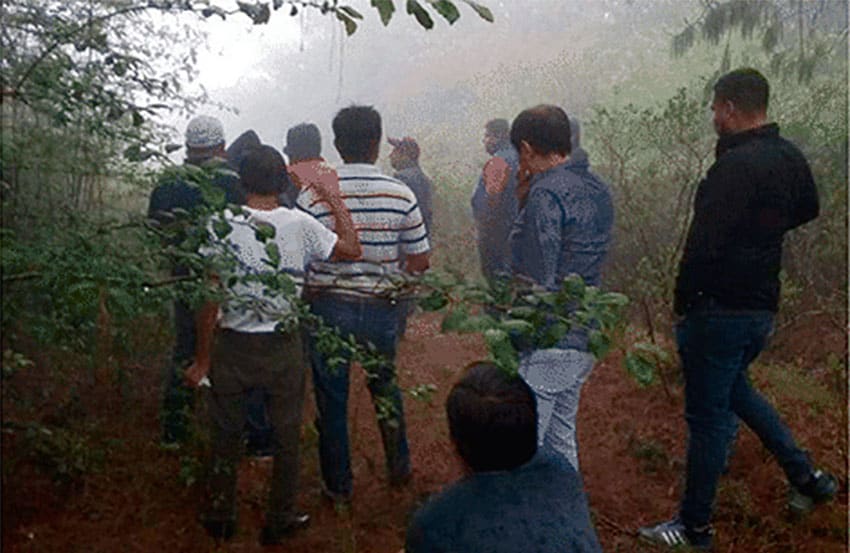
In a scene that is becoming more and more common in certain parts of the country, a band of 15 masked men armed with high-powered rifles stopped and assaulted transport trucks on the Veracruz-Puebla highway late Thursday night as truck drivers sent urgent messages requesting intervention by the Federal Police and National Guard.
Some truckers report they had their entire rigs stolen, and many drivers fled into the brush nearby to avoid being physically attacked during the incident, which occurred on a foggy stretch of highway between Ciudad Mendoza, Veracruz, and Acatzingo, Puebla.
In the first seven days of May, there have been at least seven instances where buses, private citizens and truck drivers have been the victims of highway robbery on the road between Puebla and Veracruz, and other areas in the state of México reportedly have it far worse.
A spokesman for the Mexican Employers Federation (Coparmex) estimates that truck drivers on Federal Highway 150D, a toll road connecting Orizaba and Mexico City, are been robbed and assaulted at a rate of four times a week. Truckers along that route have stopped driving at night in order to avoid being robbed.
Fernando Treviño Núñez said that despite the danger of the route that leads from the south to the center of the country, armed assaults along the highway have been occurring for the past three years and police have proven ineffective in combating criminal gangs in the area.
Treviño says the thieves look for trucks carrying household appliances, clothing, mobile phones, groceries, toys and other products that are easily resold on the black market. Drivers have started using smaller, less conspicuous vehicles and incurring the added cost of making three times as many trips in order to escape the attention of the highway robbers.
Carlos García Álvarez, a representative of the Mexican Transport Alliance Organization (Amotac) in the state of México, puts the number of assaults at an even higher rate than that of Coparmex. He says that between 20 and 30 occur on a daily basis on highways connecting Toluca to Naucalpan and Atlacomulco. García says this is a 70% increase compared to the first two months of this year.

García has noted that since the coronavirus restrictions began thieves have also been targeting trucks transporting food and cleaning products, and even hijacked an alcohol tanker.
While he hopes the frequency of the attacks will decrease once Mexico begins to emerge from the pandemic, Treviño has called on the federal government to intervene in the interest of public safety.
Source: El Sol de Toluca (sp), Diario de Xalapa (sp), El Economista (sp)