The coronavirus pandemic is taking a heavy financial toll across Mexico’s petroleum sector: crude prices have slumped, gasoline sales have plummeted and oil tankers are stranded off the country’s Gulf coast.
The price of Mexico’s export crude fell into negative territory for the first time ever on Monday as demand for oil remains low due to the global spread of Covid-19.
A barrel of Mexican crude recovered to US $7.12 at the close of trading on Tuesday – a 400% increase compared to Monday’s closing price of -$2.37 – but is only about one-eighth the price a barrel was selling for in the middle of January.
Although the federal government and state oil company Pemex have hedging programs in place, Mexico’s oil revenue is expected to decline significantly this year. Pemex, saddled with $105 billion in debt, has now been downgraded to junk status by both Fitch Ratings and Moody’s Investors Service.
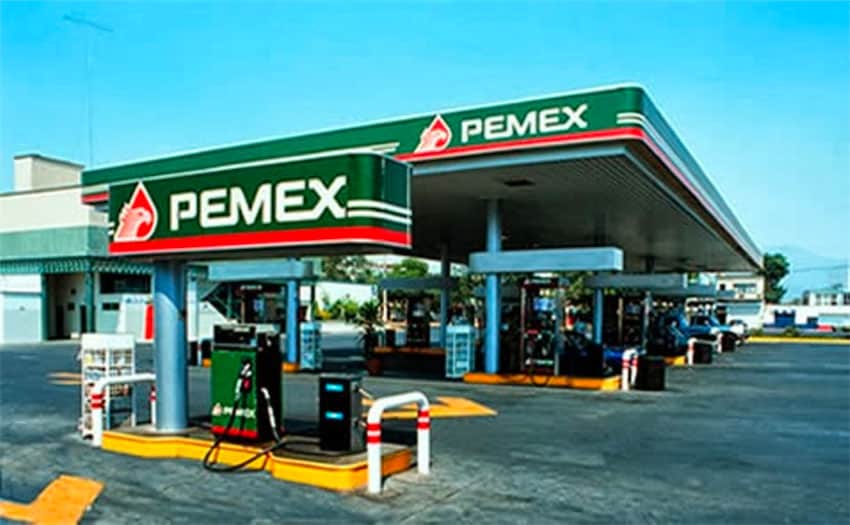
Mexico’s gas stations are also in a precarious position: fuel sales at stations affiliated with the national gas station trade organization Onexpo declined 70% between April 10 and 18, the biggest slump ever.
According to an Onexpo document obtained by the newspaper Milenio, the ongoing viability of some gas stations is at risk due to the downturn in demand caused by the coronavirus crisis. Many of Mexico’s gas stations are run as small businesses although they sell fuel under the banner of large companies.
With Mexico now in phase three of the coronavirus pandemic, the demand for fuel at gas stations is expected to fall even further.

In that context, Onexpo is calling for assistance from the federal government that will help gas stations to survive and avoid a massive loss of jobs. It is asking that the government give gas stations more time to install new volume controls on pumps and allow them to delay employers’ contributions to the Mexican Social Security Institute so that they can maintain the minimum liquidity required to stay in operation.
Meanwhile, at least 15 tankers were stranded off the coast of Tuxpan, Veracruz, on Tuesday, according to the ship tracking website VesselFinder. The tankers are unable to offload the fuel they are carrying due to a lack of storage space in the Tuxpan port.
The drop in demand for fuel has led to a glut, which in turn means that there is scant space to store it. The absence of both demand and storage space sent oil prices into negative territory on Monday.
The oil tankers stranded off the Gulf coast, each carrying about 5,000 barrels of fuel, are losing up to $30,000 a day because they cannot unload and get back to work, according to petroleum sector experts cited by Milenio.
Source: Milenio (sp)