President López Obrador announced Wednesday that illegally imported cars would be regularized.
An amnesty agreement would be signed this weekend, he confirmed at his morning news conference.
The president said crime prevention was a key motive for the amnesty. “[The cars] are going to be regularized because they are sometimes used to commit crimes, and they are not registered. We are going to regularize all of them, a permit will be given, possession will be recognized,” he said.
López Obrador added that the registration of such vehicles would be low in cost, given that many of the owners of illegal vehicles have low incomes and bought those cars due to the lower price tag. “They are going to pay a fair amount … They are going to pay a fee, a contribution,” he said, before adding that the money would go toward a national program to reduce potholes.
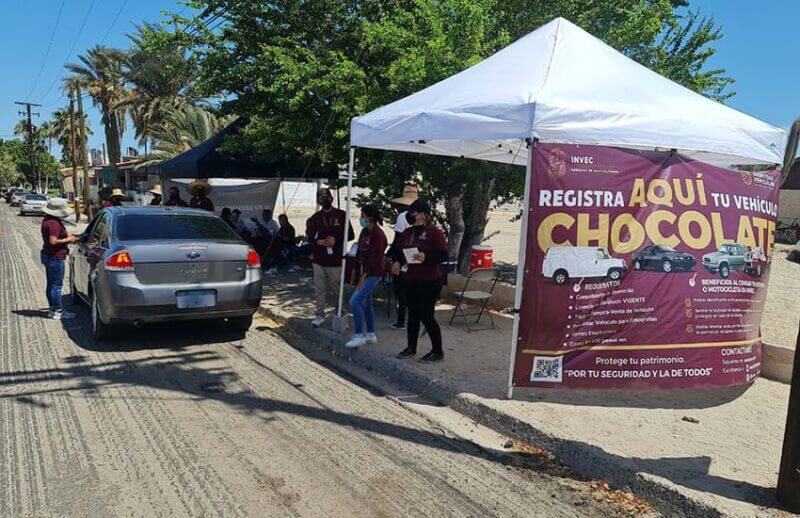
The president apparently got the idea for the program from officials in Tijuana. In June, on a tour of Baja California, he mentioned to reporters that before the election officials had requested such a program.
Currently, Baja California is running an amnesty program, which it started in September. It ends October 31.
Other border states will be among the first to implement similar amnesty programs, the president said Wednesday. Once those programs are concluded, other states would follow suit, López Obrador said.

However, some in the automotive industry have voiced their skepticism.
The Mexican Association of Automotive Distributors (AMDA) called the president’s plan “a blow to the automotive trade” and that it motivated the wrong behaviors. “As long as the regularizations are given periodically, the illegal importation and the corruption that we continue to see for the customs sectors is encouraged,” it said in a statement.
Illegal cars are sold in car lots — mainly in central Mexico — for 15,000 pesos (about US $730) to 60,000 pesos (about $2,919), although most of their parts are difficult to find in Mexico, news site Infobae reported.
With reports from Infobae