The federal government and the private sector presented details on Monday of an agreement to collaborate on the construction of 29 infrastructure projects worth 228 billion pesos (US $11.3 billion).
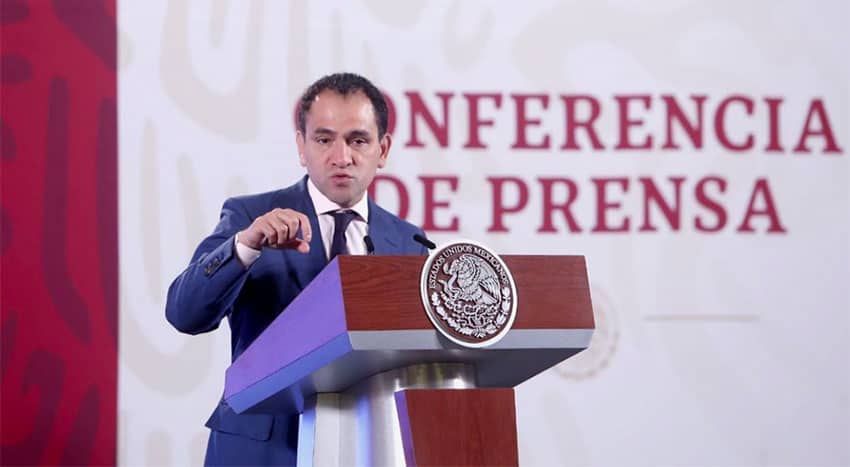
Finance Minister Arturo Herrera said that 10 projects worth a combined 43 billion pesos are already underway and that the other 19 are to start soon.
“The idea is … to announce the projects that are very close to starting,” he told reporters at President López Obrador’s morning press conference, asserting that they will have an “immediate impact” on employment and investment.
He said the largest new project is a 47-billion-peso natural gas plant to be built by the Mexican energy company IEnova in Ensenada, Baja California. Construction is slated to commence in January 2021.
Among the other projects presented Monday were the 20-billion peso Naucalpan-Ecatepec highway in México state, the 4.2-billion-peso Cuapiaxtla-Cuacnopalan highway in Tlaxcala and Puebla, a 9-billion-peso gas pipeline on the Isthmus of Tehuantepec and the 5.2-billion-peso Silao-San Miguel de Allende highway in Guanajuato.
There are also several Federal Electricity Commission projects and two projects that are part of the construction of a desalination plant in Los Cabos, Baja California Sur.
Including the projects presented Monday, the government has agreements with the private sector to build 68 infrastructure projects with an investment of 525 billion pesos (US $26 billion) Herrera said. Details of 39 of them were presented in early October.

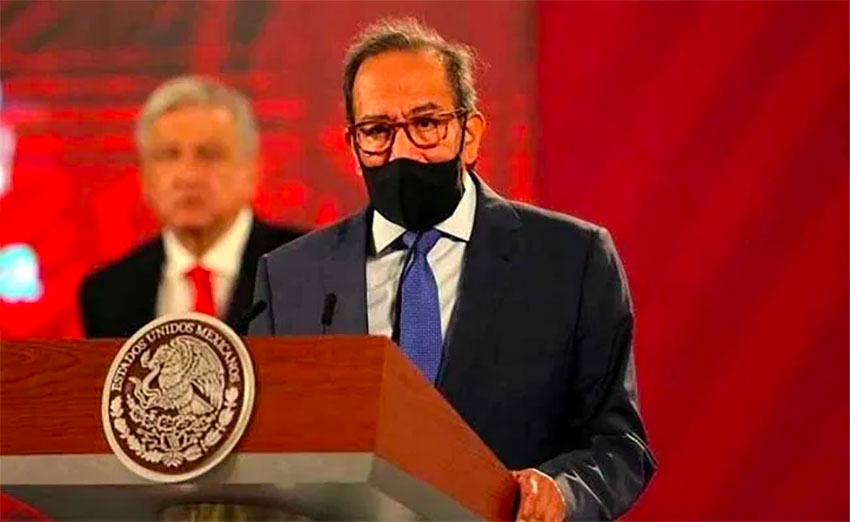
The president of the Business Coordinating Council (CCE), an umbrella organization representing 12 business groups, said that the new bundle of 29 infrastructure projects will create 400,000 jobs.
“This is the number we need to recoup the [formal sector] jobs that were lost [due to the pandemic],” Carlos Salazar said.
He said that the investment associated with the 29 projects is equivalent to 2.3% of Mexico’s GDP.
Salazar also said that the best way to strengthen the economy – which in 2020 appears likely to suffers its worst contraction since the Great Depression due to the coronavirus pandemic and associated restrictions – is for both the private sector and the government to invest in it.
“We [the private sector] are very interested … in supporting the kind of projects” announced today, he said.
The CCE chief added that the government and private sector are working on another bundle of projects but didn’t say when it would be presented.
The two parties presented a US $42.95-billion National Infrastructure Plan just over a year ago that included 147 projects including several large ones in the tourism sector.