Details have emerged of another case of alleged corruption involving former cabinet secretary Rosario Robles.
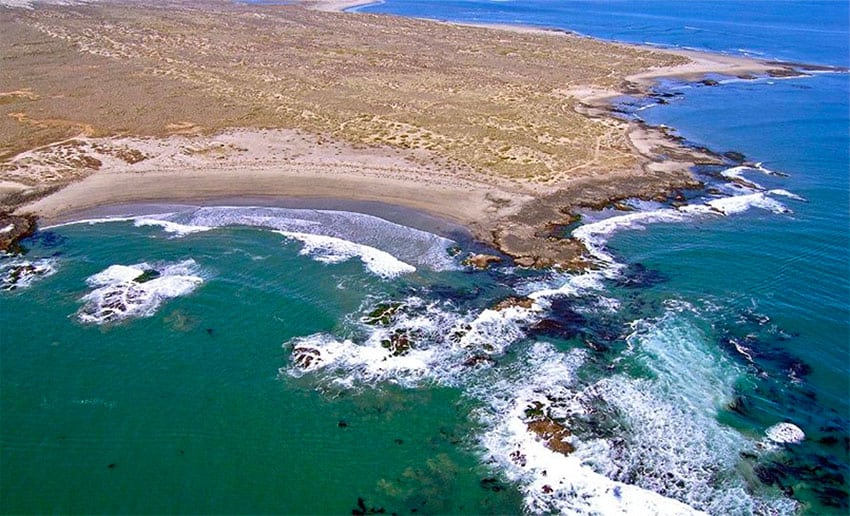
The previous federal government sold off two coastal nature reserves in Baja California at bargain prices without the knowledge of a conservation group that owned them.
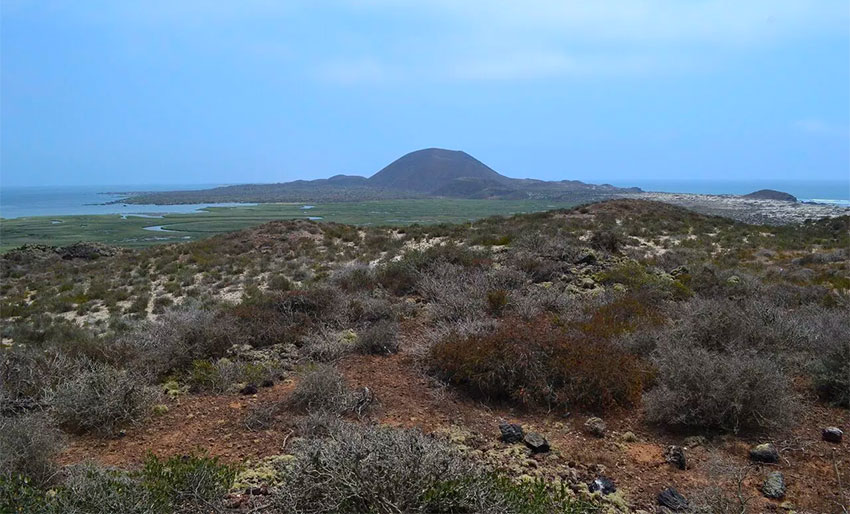
The sale of more than 1,600 hectares of land in the Punta Mazo and Monte Ceniza national reserves, both of which are located near San Quintín in Ensenada, occurred while Robles was secretary of agrarian development and urban planning in the Institutional Revolutionary Party (PRI) government led by Enrique Peña Nieto.
Robles is currently in preventative custody as she awaits trial on charges that, through omission, she allowed over 5 billion pesos to be misappropriated from the federal budget while she was leading the Secretariat of Social Development and later, the Secretariat of Agrarian Development and Urban Planning.
The two reserves were subdivided into 10 lots and sold to nine individuals, one of whom was Héctor Bojórquez, a former leader of the National Farmers Confederation, which has close ties to the PRI.
The land was sold for 127,523 pesos (US $6,400 at today’s exchange rate). The purchasers of the lots paid between 55 and 75 pesos (US $2.75 to $3.75) per hectare of land.
For a 300-hectare lot in the Monte Ceniza reserve, Bojórquez paid just 16,700 pesos (US $843), the newspaper Milenio reported.

The total price for the two reserves is a tiny fraction – 0.06% – of the US $10 million that the non-profit conservation organization Terra Peninsular paid for the land.
The group’s director, César Guerrero, told Milenio that neither he nor anyone else at Terra Peninsular was aware of the government’s sale until they went to pay property tax at the land registry office in Ensenada at the start of 2017.
“. . . They told us, ‘you don’t owe anything because there are titles that have just been assigned that supersede your property titles,’” he said.
“It turned out that nine individuals, without any legal process and with a corrupt procedure, approached the then secretary of agrarian development [Robles] and obtained 10 property titles . . . [for] these hectares which were our property,” Guerrero added.
The purchasers claimed that the reserves were part of federally-owned lands within the so-called Tecate-Ensenada-Tijuana triangle. However, Milenio pointed out that they are located some 120 kilometers outside that area.
Terra Peninsular launched legal action that resulted in the organization once again being recognized as the legal owner of the two nature reserves. The group also filed criminal complaints against Robles and the nine purchasers.
The buyers initiated their own legal action, claiming that they were illegally dispossessed of their land. That claim has not yet been resolved.
“We’re afraid that the ruling will go against us,” Guerrero said, adding that if that occurs, “the land will be lost . . . because we know that it will later be sold to developers.”
The Terra Peninsular director said the two reserves are of significant environmental value.
In May 2018, a team of researchers from the conservation group discovered that the San Quintín kangaroo rat was still living in the Monte Ceniza reserve. The rodent was previously thought to be extinct.
Wetlands in the reserves – which are both located on San Quintín bay – are considered internationally important under the Ramsar Convention, an intergovernmental treaty that provides the framework for the conservation and use of wetlands and their resources.
Source: Milenio (sp)