The federal government will release thousands of previously-classified police files next week including those relating to political persecution, human rights violations and corruption.
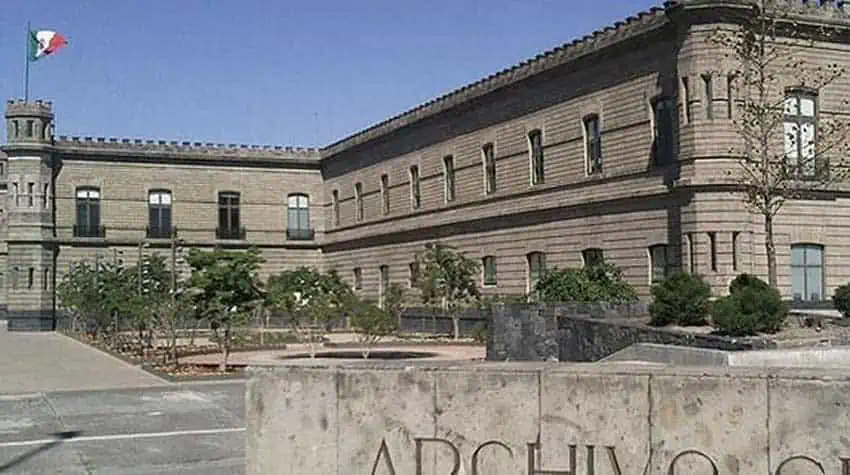
President López Obrador signed a decree this week that will see files predating 1985 that were held at the recently-disbanded Center for Investigation and National Security (Cisen) made available to the public at the National Archives (AGN).
Speaking at his morning press conference, the president said today that there will be complete transparency in the opening of the files but stressed that the government will not seek to prosecute people named in them, explaining that “scapegoats should not be sought.”
However, if people who were politically persecuted or spied on want to file criminal complaints, that will be a matter for them, López Obrador said, explaining that “within the framework of the law” they have complete freedom to do so.
The president explained that the only limitations on access to the files will be those established by law and related to the protection of children and family members of victims.
Files which “may affect or harm people’s dignity, their human rights” will not be released, López Obrador said.
The president also said that “my file will be released next week but let it be clear that it will be [that with information] from 1985 back.”

Zoe Robledo, an Interior Secretariat undersecretary, said that in about a month the government will announce details about the release of police files relating to years from 1985 to the present time.
All government secretariats that currently hold such files will also have to submit them to the AGN, she said.
“All of the files that were protected will be . . . opened so that citizens can have access to them, particularly researchers. It’s part of the program to strengthen our historic memory,” Robledo said.
The undersecretary charged that the release of police files by past governments was only a simulation because it was Cisen itself rather than the AGN that stored and managed them.
Now, Robledo said, “the aim is maximum publicity, putting public interest and the truth first,” pledging that “no kind of simulation will be allowed.”
Carlos Enrique Ruiz, director of the National Archives said the agency “will apply a process to order and classify the files so that everyone interested can access what they’re looking for.”
The public will be able to start making requests to access them as of Monday, he said.
Source: Notimex (sp), El Financiero (sp), Milenio (sp), La Jornada (sp), Noticieros Televisa (sp)